
Brass Ball Valve for Water Tank – Full Port for Max Flow, Weatherproof
Shop brass ball valve for water tank with full port design for maximum flow. Corrosion-resistant brass withstands outdoor sun, rain & heat. Threaded ends for easy tank installation.
Description
For various water‑storage vessels including rooftop water tanks, bulk storage tanks, solar hot‑water systems, fire‑water reservoirs and rain‑harvesting tanks, the brass ball valve for water tank performs dual functions of inlet water regulation and outlet shut‑off. As a critical fitting linking tank piping to external pipelines, its reliability directly governs the operational stability and service‑friendliness of the entire water‑storage installation.
Superior Weather Resistance: Material Performance for Severe Outdoor Conditions
Water tanks are frequently mounted on rooftops or in open‑air / semi‑exposed locations, enduring persistent solar irradiation, rain infiltration, drastic temperature shifts and wind loads. Conventional plastic valves suffer polymer‑chain cleavage under UV exposure, leading to brittleness and cracking; high ambient temperature may trigger softening and deformation, while freezing conditions raise risks of frost‑induced rupture.
Brass‑bodied ball valves deliver marked weather‑resistant advantages under such harsh service environments. Forged brass remains immune to ultraviolet radiation and will not degrade under long‑term sunlight exposure. It features a low thermal‑expansion coefficient and maintains stable physical dimensions across the broad‑range temperature window of ‑20 °F to 250 °F, preventing thread loosening or body distortion caused by thermal fluctuation. A naturally‑formed surface patina further boosts corrosion resistance, protecting hardware against structural rust even in coastal salt‑fog atmospheres or high‑humidity surroundings. While plastic alternatives typically offer only 3‑5 years of outdoor service life, brass ball valves are engineered for over 20‑year service cycles and greatly cut long‑term maintenance overhead.
Full‑Port Construction: Preserve Peak Flow Capacity for Water‑Storage Systems
Water tanks accumulate water during low‑demand periods and discharge stored volume during consumption peaks to balance flow fluctuation across supply networks. During morning and evening water‑usage surges, tank outlet pipelines must deliver large‑volume outflow within short timeframes to satisfy downstream demand. Extra pressure drop introduced by reduced‑bore components will degrade the tank’s peak water‑delivery capability.
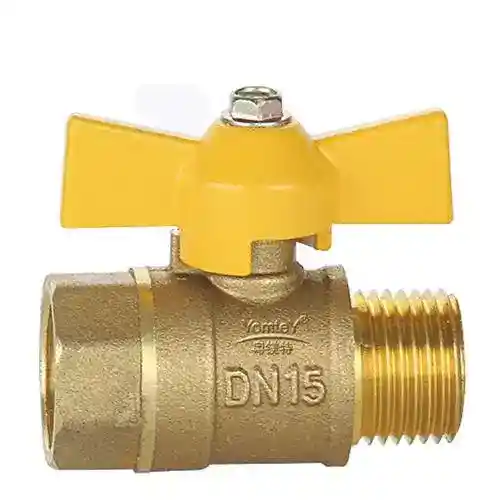
This product adopts a full port ball valve design, whose internal bore precisely matches pipe inner diameter. When fully opened, fluid passes through without abrupt flow‑path transition and generates minimal pressure loss, allowing the tank to release water at its maximum design‑rated throughput. This benefit carries particular weight for gravity‑fed rooftop tanks, which often operate with limited available hydraulic head; any unnecessary pressure drop may result in insufficient water pressure for end‑users.
Another merit of the full‑port ball valve for tank outlet lies in shortened tank refilling cycles. Under conditions of high power‑supply expense or low municipal inlet water pressure, faster refilling translates into lower energy consumption and elevated overall system efficiency.
Connection Options & Application Compatibility
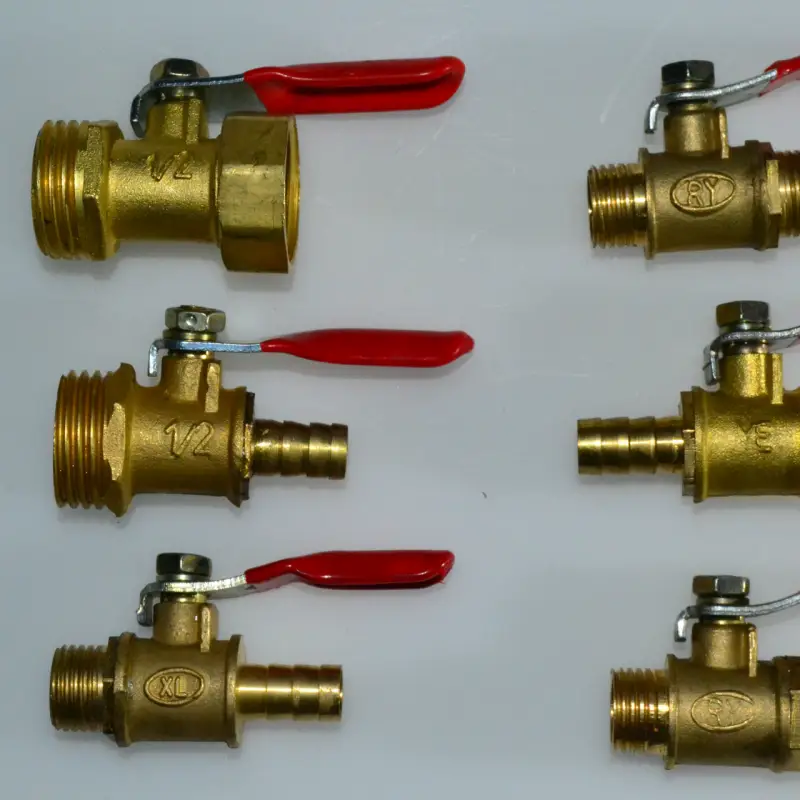
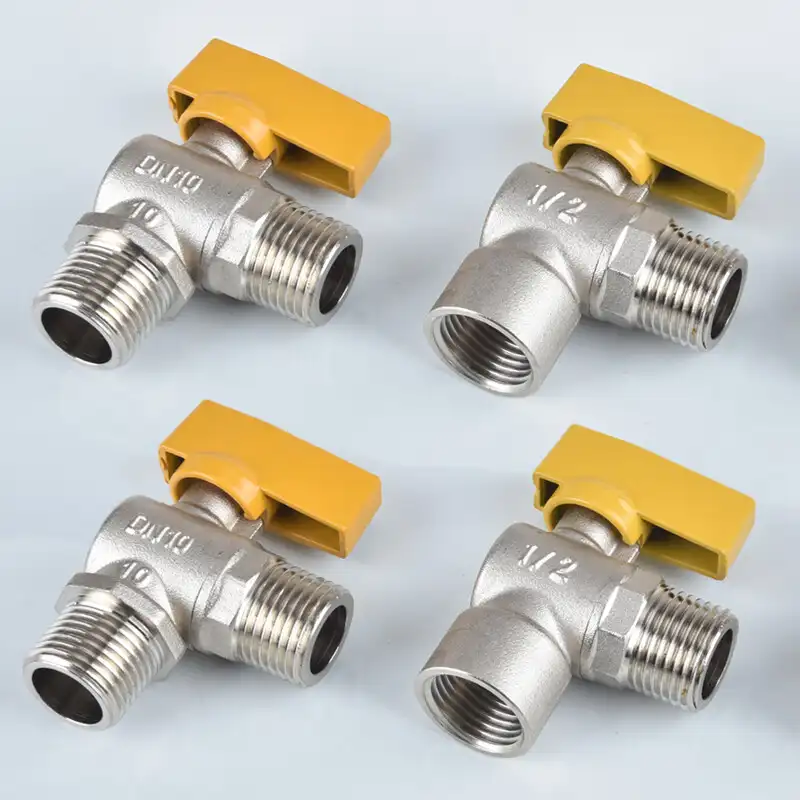
Multiple end‑connection configurations are available to satisfy diverse tank interface requirements: ‑ NPT Female Thread: Standard joint for metal piping and tank flange connections ‑ Male Thread: Matches tanks and accessories equipped with female threaded ports ‑ Barb: Enables rapid assembly for PE flexible hose connections to storage tanks
Specification Table
| Item | Specification |
|---|---|
| Application | Tank inlet control / Tank outlet shut‑off |
| Sizes | 1/2″, 3/4″, 1″ |
| End Connections | NPT Female Thread, Male Thread, Barb |
| Pressure Rating | 600 WOG |
| Flow Path | Full Port |
| Operating Temperature | ‑20 °F to 250 °F |
| Body Material | Forged Brass, ASTM B124 |
| Seat Seal | Reinforced PTFE |
| Handle Type | Galvanized‑steel or brass handle, 1/4‑turn operation |
| Certifications | NSF/ANSI 61 available for potable‑water applications |
Typical Application Scenarios
‑ Inlet‑and‑outlet line control for rooftop tanks and elevated water‑storage vessels
‑ Circuit isolation for circulation and supply piping of solar thermal storage tanks
‑ Automatic refill and drain‑line regulation for fire‑water reservoirs
‑ Inlet and outlet management for agricultural irrigation storage ponds
‑ Pipeline control for rain‑harvesting storage tanks
‑ Line isolation for raw‑water tanks and purified‑water storage vessels within water‑treatment facilities
Field Project Reference
A rooftop‑tank secondary‑water‑supply system serves the Desert Ridge residential community in Phoenix, Arizona, USA. Eight large‑capacity rooftop storage tanks deliver stable water pressure to household units throughout this sizable housing development. Reliable shut‑off valves are fitted on every tank’s inlet and outlet piping for routine maintenance and emergency repair work.
Phoenix features summer temperatures regularly exceeding 110 °F, intense solar radiation and substantial diurnal temperature swings. Legacy plastic valves deployed across the community aged rapidly under high heat and UV exposure. Handle fracture and micro‑cracking on valve bodies commonly emerged within 2‑3 years, triggering frequent maintenance work‑orders. Moreover, reduced‑port geometry brought persistent water‑pressure shortages during daily consumption peaks.
Within the community’s 2019 system‑revamp project, all tank inlet and outlet valves were replaced with CHCV‑supplied brass ball valve for water tank, with outlet ports uniformly configured as full port ball valve. After four consecutive summers of extreme‑temperature operation, the brass valves show only faint surface patina, retaining intact structures and smooth actuation, with zero reports of aging‑related failure or leakage. Meanwhile, the full‑port ball valve for tank outlet eliminates pressure‑drop bottlenecks caused by restricted bores. Tank outlet pipelines sustain adequate throughput during morning and evening usage peaks, and resident complaints regarding insufficient water pressure dropped by over 90 % after the upgrade.
According to feedback from the community facility manager: although brass valves carry higher upfront procurement cost versus plastic equivalents, their service life multiplies under Phoenix’s harsh climate. When accounting for reduced replacement labor, service‑interruption risks and complaint‑handling workload, brass solutions deliver distinctly superior long‑term comprehensive economic returns.