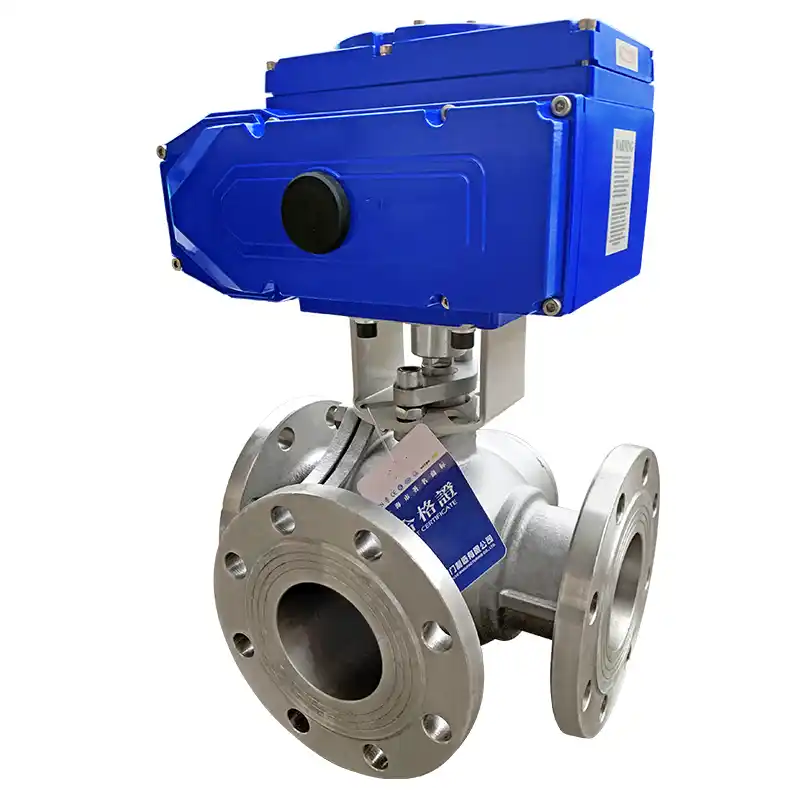

China 3 Piece High Vacuum Ball Valve – 10⁻⁷ Pa Leak Rate
China three piece high vacuum ball valve with 316L body, CF/KF flanges, leak rate ≤5×10⁻¹⁰ Pa·m³/s, helium mass spectrometry tested for UHV systems.
Description
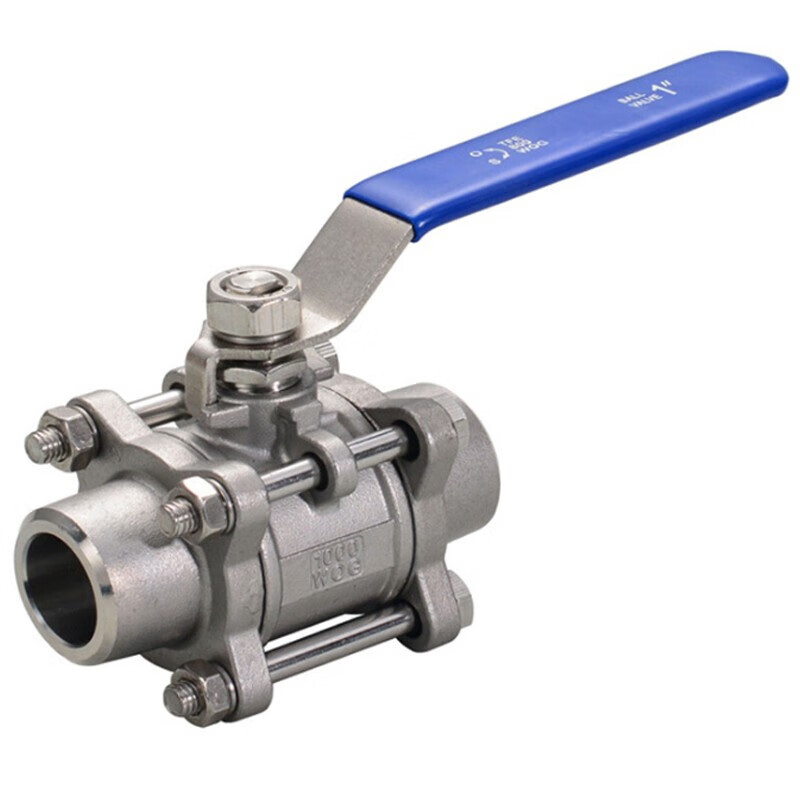
The china three piece high vacuum ball valve is a dedicated shut‑off component engineered for vacuum systems, operating within high‑vacuum and ultra‑high‑vacuum (UHV) conditions ranging from 10⁻⁵ Pa down to 10⁻⁸ Pa. Its valve body consists of three separate assemblies‑‑left flanged body, central body and right flanged body‑‑secured by bolted connections. A floating‑type ball sits inside the valve cavity; stem‑driven 90‑degree rotation governs pipeline opening and closure.
End interfaces adopt KF, ISO or CF vacuum flanges for direct mating against standard vacuum piping hardware. Unlike conventional industrial ball valves, this vacuum ball valve follows stringent vacuum‑specific requirements throughout material screening, surface finishing, sealing‑structure design and factory acceptance testing.
Low‑outgassing stainless steel, vacuum‑grade sealing gaskets, electropolished internal surfaces, high‑temperature bake‑out procedures and helium mass‑spectrometer leak detection collectively prevent the valve from acting as a system leak source or contamination source. Thanks to its three‑piece layout, service personnel can replace sealing components on‑site without detaching vacuum flanges, lowering overall vacuum‑system maintenance overhead. This ball valve three piece design delivers structural convenience for periodic seal replacement within vacuum hardware.
Material and Technical Specifications
| Parameter Item | Specification Range |
|---|---|
| Valve Body Material | 316L Stainless Steel / 304 Stainless Steel |
| Ball Material | 316L Stainless Steel |
| Stem Material | 316L Stainless Steel |
| Seat Material | PTFE / PEEK (metallic seat optional) |
| Gasket Material | Viton (FKM) / Kalrez (perfluoroelastomer) / Oxygen‑free copper (metal‑sealing for CF flanges) |
| Nominal Size | DN16 ~ DN200 (1/2″ ~ 8″) |
| Applicable Vacuum Level | 10⁻⁵ Pa (high vacuum) ~ 10⁻⁸ Pa (ultra‑high vacuum) |
| End Connection | KF (quick flange) / ISO (vacuum flange) / CF (metal‑sealed flange) |
| Leak Rate | ≤ 5×10⁻¹⁰ Pa·m³/s (helium mass‑spectrometer leak test) |
| Body Structure | floating type, adopting ball valve three piece design |
| Internal Surface Treatment | Mechanical polishing + electropolishing + vacuum‑grade chemical cleaning + high‑temperature bake‑out degassing |
| Internal Surface Roughness | Ra ≤ 0.8 μm (vacuum grade) |
| Bake‑out Temperature (valve body) | 150 ℃ (Viton seal) / 300 ℃ (metal‑to‑metal seal) |
| Bake‑out Temperature (actuator) | Remove actuator prior to bake‑out, or deploy high‑temperature resistant pneumatic actuators |
| Mounting Orientation | Universal installation; stem‑up or horizontal mounting is recommended |
| Material Certificate | EN 10204 3.1 (available upon request) |
| Factory Test | 100 % helium mass‑spectrometer leak inspection with test reports supplied |
Structural Highlights: Vacuum‑Grade Sealing Performance
Vacuum‑grade sealing capability of this china‑manufactured three‑piece high vacuum ball valve is realised through multi‑layer controls covering raw‑material selection all the way through final validation tests.
- Low‑outgassing material selection: Greases, lubricants and ordinary rubber seals deployed inside standard industrial valves will emit volatile organic compounds (VOCs) and moisture under high‑vacuum circumstances. Such contaminants pollute vacuum chambers and prolong pump‑down durations. This high vacuum ball valve adopts dry assembly without grease or lubricants. Sealing gaskets are selected from Viton (FKM) or Kalrez perfluoroelastomer, both exhibiting far lower outgassing rates compared with generic rubber formulations and releasing negligible contaminants under vacuum service. For UHV‑grade workflows, full metal‑to‑metal sealing (metallic seats plus oxygen‑free copper gaskets) can be specified to completely eliminate outgassing originating from polymer sealing parts.
- Vacuum‑oriented surface finishing: Internal wetted surfaces of valve body, ball and stem undergo three sequential workflows: mechanical polishing, electropolishing and vacuum‑grade chemical cleaning. Mechanical and electrolytic polishing bring surface roughness down to Ra ≤ 0.8 μm, erasing tooling marks and micro‑cavities that serve as gas‑adsorption and outgassing sites. Chemical cleaning strips residual machining oils, processing debris and free iron. Prior to assembly, valve bodies receive high‑temperature vacuum bake‑out (150 ℃‑400 ℃, sustained for hours to dozens of hours) to further suppress gas desorption from inner walls.
- Helium mass‑spectrometer leak detection: quality validation for vacuum valves: Every finished unit undergoes 100 % helium leak screening at the factory. During testing, the valve is coupled to a helium mass‑spectrometer tester. After evacuating the valve cavity, helium spray is applied across all sealing interfaces including stem packing, central‑body joints and flange mating surfaces. The detector captures helium permeating through defective sealing boundaries. The threshold ≤ 5×10⁻¹⁰ Pa·m³/s translates to less than 0.001 mL of total gas leakage per year under atmospheric pressure, fully satisfying high‑vacuum and UHV operational requirements.
- Maintenance merits of three‑piece architecture for vacuum systems: O‑rings and valve seats within vacuum valves degrade under sustained vacuum loading and thermal cycling and demand periodic renewal. This three piece ball valve enables technicians to loosen central‑body bolts, extract the middle cartridge and swap seals while vacuum flanges remain assembled. This practice prevents flange‑face scratching and conserves consumable metal gaskets for CF connections that would otherwise wear out from repeated disassembly‑reassembly cycles.
Application Scope
The three piece high vacuum ball valve finds wide deployment in the following fields:
‑ Semiconductor & vacuum coating: Gas‑supply and pumping pipelines for PVD, CVD, sputtering deposition and electron‑beam evaporation equipment.
‑ Vacuum metallurgy & thermal processing: Vacuum and gas‑charging circuits for vacuum melting, vacuum annealing and vacuum brazing furnaces.
‑ Particle accelerators & synchrotron radiation: Pipeline isolation and process‑gas introduction for accelerator vacuum subsystems.
‑ Space‑environment simulation: Vacuum piping inside spacecraft thermal‑vacuum test chambers.
‑ Scientific research setups: Pipeline shut‑off for surface‑analysis instruments and laboratory vacuum test rigs.
‑ Vacuum metrology & calibration: Circuit isolation for vacuum reference standards and vacuum‑gauge calibration platforms.
Field Reference Case
China‑built china three piece high vacuum ball valve is implemented as gas‑inlet and isolation valves inside calibration‑chamber piping at the Anhui Institute of Metrology (No. 13 Yan’an Road, Baohe District, Hefei, China). Covering DN25‑DN50 sizes, these 316L stainless‑steel valves adopt full metal‑to‑metal sealing (metallic seats paired with oxygen‑free copper gaskets for CF flanges), with mixed KF and CF flange configurations. They govern chamber pump‑down, reference‑gas admission and segmented vacuum‑chamber isolation throughout vacuum‑gauge calibration workflows.
Representing Anhui province’s highest‑tier vacuum metrology standard, this facility calibrates vacuum‑measurement instruments for local and neighbouring‑region customers. Its baseline vacuum performance must surpass 10⁻⁷ Pa (UHV range). Attainable vacuum level directly determines calibration precision and traceability‑chain reliability.
Valve ball and seat surfaces are precision‑lapped to establish metal‑on‑metal sealing interfaces; CF flanges realise compression‑driven metal sealing via oxygen‑free copper gaskets. Post‑assembly, every valve undergoes 400 ℃ high‑temperature vacuum bake‑out lasting 48 hours to eliminate adsorbed gas molecules and manufacturing residues. Subsequent helium leak testing confirms leak rates ≤ 5×10⁻¹⁰ Pa·m³/s. The whole installation has obtained assessment accreditation from the National Institute of Metrology, China, and delivers vacuum‑instrument calibration services for Anhui and adjacent provinces. Throughout operational cycles, the installed valves maintain stable sealing behaviour; no vacuum‑level drift or calibration‑result deviation triggered by excessive valve leakage has been recorded.