
Three Piece Flanged Trunnion Ball Valve Body – Class 900-2500
Three piece flanged trunnion ball valve body with fixed ball bearings, API 6D design, Class 900-2500. Flanged ends, metal/PEEK seats, for high pressure pipeline applications.
Description
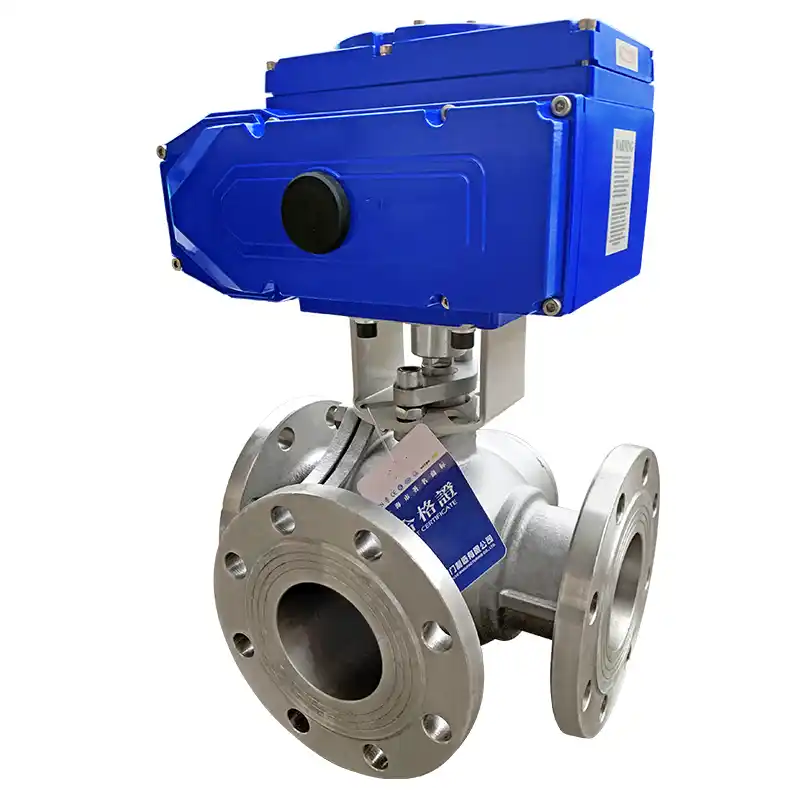
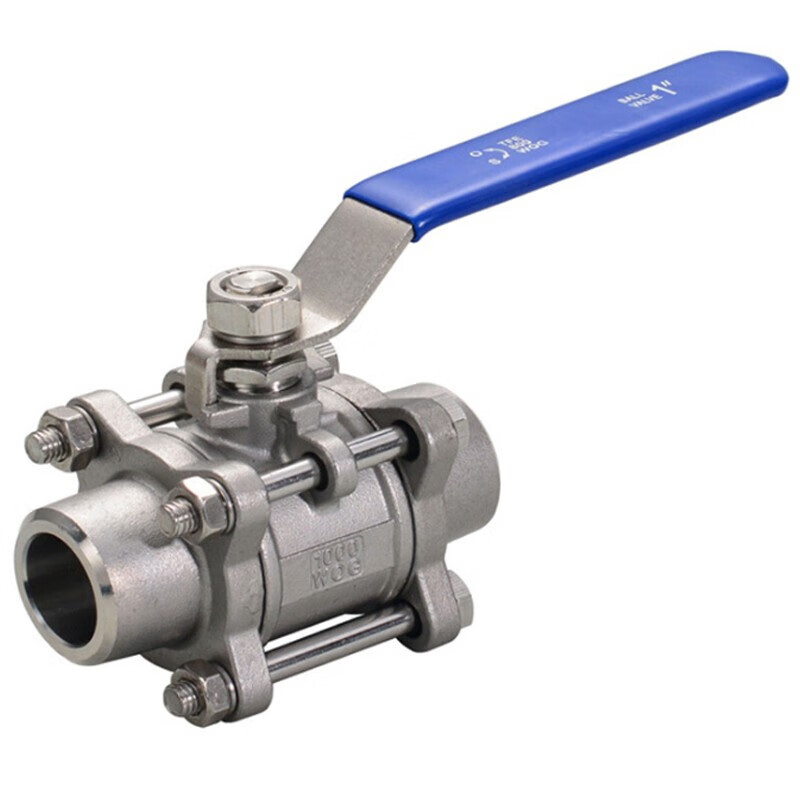
A three piece flanged trunnion ball valve body serves as the core pressure‑containing component for ball valves deployed in large‑size, high‑pressure piping systems. It is assembled from three independent components: left flanged body, central body and right flanged body, fastened together by high‑strength bolts. Different from floating‑ball designs, the trunnion mounted configuration anchors the ball via upper and lower support bearings inside the valve chamber. The ball does not drift under process‑media pressure; axial thrust generated by differential pressure is absorbed by bearings instead of being transferred onto valve seats.
This trunnion ball valve body geometry delivers stable operating torque regardless of rising differential pressure, guaranteeing smooth opening and closing performance for large‑bore high‑pressure valves. Flanged end connections simplify on‑pipeline installation and removal, while the three‑piece construction enables on‑line extraction of the central cartridge for seat and seal replacement without loosening flange bolts. This three piece trunnion ball valve body construction is engineered for service conditions with DN ≥ 200 and Class ≥ 900.
Material and Technical Specifications
| Parameter Item | Specification Range |
|---|---|
| Valve Body Material | WCB Carbon Steel / CF8M (316 Stainless Steel) / A350 LF2 Low‑temperature Carbon Steel / F91 Chromium‑Molybdenum Steel / Duplex Stainless Steel 2205 |
| Ball Material | Body‑equivalent material / 316L / Stellite hard‑facing |
| Stem Material | 316L / 17‑4PH / Inconel 718 |
| Support Bearing Material | Stainless steel / Hard alloy / Bronze alloy |
| Seat Material | PTFE / RPTFE / PEEK / Metallic seat (Stellite / Tungsten carbide) |
| Nominal Size | DN200 ~ DN600 (8″ ~ 24″) and above |
| Pressure Class | Class 900 / 1500 / 2500, dedicated for high‑pressure service ≥ Class 900 |
| End Connection | Flanged (ASME B16.5 / EN 1092‑1 / JIS B2220), standard configuration for flanged trunnion ball valve |
| Body Structure | Trunnion mounted — ball restrained by upper and lower support bearings |
| Face‑to‑Face Standard | ASME B16.10 / API 6D |
| Anti‑Static Design | Standard provision (between stem and ball) |
| Fire‑Safe Design | API 607 / ISO 10497 (optional) |
| Operation Method | Worm‑gear gearbox / Pneumatic actuator / Electric actuator (ISO 5211 mounting platform) |
| Applicable Standards | API 6D trunnion ball valve / ASME B16.34 / ISO 17292 |
| Material Certificate | EN 10204 3.1 / 3.2 (available upon request) |
| Non‑Destructive Testing | PT / RT / UT inspection performed in accordance with ASME Section V |
Structural Advantages: High‑Pressure Resistant Performance
The high‑pressure endurance of the three‑piece flanged trunnion ball valve body stems from synergistic optimisation of trunnion‑supported ball assembly, wall‑thickness calculation and flanged end geometry.
- Trunnion‑mounted ball support: stable torque under high differential pressure: Within trunnion‑type layouts, upper and lower bearings fix the ball at the centre of valve cavity. Axial load induced by high‑pressure media is borne by bearings and transmitted to the valve body rather than pressing against valve seats. Operating torque remains steady even under large differential pressure, as the ball will not be forced against downstream seats and friction between ball and seats does not escalate with growing system pressure. For DN300 Class 900 working conditions, a trunnion‑mounted valve delivers merely 40%‑50% of the torque required by its floating‑ball counterpart. When conducting floating vs trunnion ball valve selection evaluation, nominal size ≥ DN200 or pressure rating ≥ Class 900 acts as the critical threshold for trunnion‑style adoption.
- Body wall thickness and pressure‑bearing capacity: Wall thickness is calculated following ASME B16.34 to cover Class 900 through 2500 pressure classes. Valve bodies are manufactured via forging or casting processes. Critical pressure‑bearing zones undergo RT / UT non‑destructive examination to rule out casting voids or forging laps that would compromise pressure resistance.
- Flanged end connections: industry‑standard interfaces for high‑pressure pipelines: Flanged ends are engineered per ASME B16.5. Flange thickness, bolt sizing and gasket groove dimensions are all computed matching corresponding pressure classes. Flanged joints provide robust sealing for high‑pressure pipelines while facilitating valve mounting and disassembly. For a three piece flanged trunnion ball valve body, flanged ends constitute the core feature enabling demountability within high‑pressure process loops.
- Three‑piece layout: maintainability solution for large‑size high‑pressure valves: Full‑valve removal for multi‑tonne heavy‑duty large‑bore valves calls for lifting apparatus and multi‑person field crews. The three‑piece design lets technicians loosen central‑body bolts and pull out the central cartridge on‑site without undoing flange fasteners to inspect or replace seats. This eliminates full‑valve hoisting operations and cuts maintenance labour and overhead for large high‑pressure valves.
Application Scope
The three piece flanged trunnion ball valve body is widely utilised in the following sectors:
‑ Long‑distance oil‑and‑gas transmission pipelines: Main‑line block valves for natural‑gas, crude‑oil and refined‑product transport lines, DN200‑DN600, Class 900‑1500.
‑ Refining & petrochemical high‑pressure units: Reactor inlet‑outlet piping for hydrocracking and catalytic reforming processes, Class 900‑2500.
‑ High‑pressure steam & power generation: Main‑steam and reheat‑steam circuits inside power plants, Class 900‑2500, operating temperature above 540 ℃.
‑ Urban high‑pressure gas gate stations: Block valves for high‑pressure incoming natural‑gas piping, Class 600‑900.
‑ High‑pressure chemical reactors: Polymer‑process piping for high‑pressure polyethylene and polypropylene production, Class 1500‑2500.
‑ High‑pressure water systems for seawater desalination: RO reverse‑osmosis high‑pressure feed lines, working pressure 6‑8 MPa.
Field Reference Case
Three piece flanged trunnion ball valve body was adopted as line block valves and vent valves within valve‑chamber isolation systems of the China‑Russia East‑Route Natural‑Gas Pipeline (Heihe‑Shanghai). Stretching over 3000 km from Heihe in Heilongjiang Province down to Shanghai, this trunk‑line features a design pressure of 12 MPa, nominal sizes DN400, DN500 and DN600 with Class 900 pressure rating. Valve bodies are fabricated from A350 LF2 low‑temperature carbon steel, fitted with metallic seats implementing double‑piston‑effect sealing and paired with worm‑gear operators.
Classified as a high‑pressure natural‑gas long‑distance pipeline, this project relies on trunnion bearings to hold the ball centrally. Axial force brought by 12 MPa differential pressure is absorbed by bearings instead of being transferred onto seats, achieving steady torque without sharp escalation under full‑pressure service. Body wall thickness complies with ASME B16.34 Class 900 specifications. A350 LF2 retains sufficient tensile strength and impact toughness at ‑29 ℃. Flanged ends follow ASME B16.5 Class 900, with bolt specification and gasket groove geometry dimensioned for the 12 MPa design pressure.
Traversing multiple climate zones across Northeast, North and East China, the pipeline encounters ambient temperatures dropping to ‑40 ℃. A350 LF2 passes low‑temperature impact testing at ‑46 ℃ to guarantee structural integrity under extreme cold conditions. Since commissioning in 2019, these valves have completed more than 200 full‑differential‑pressure open‑close cycles under 12 MPa service pressure, with zero recorded deformation or leakage of pressure‑containing components. Its three‑piece architecture allows field technicians at remote valve chambers to extract the central cartridge for seat inspection and renewal without releasing flange bolts, removing the operational burden of deploying heavy lifting equipment in isolated sites.