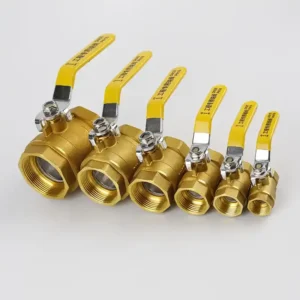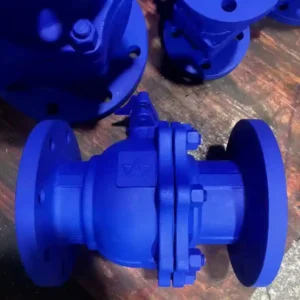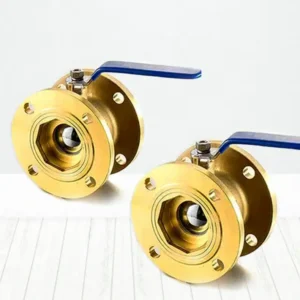

A proportional ball valve is not an ordinary on/off ball valve that becomes a modulating valve simply by adding power. The procurement task is to check the valve flow characteristic, actuator torque, control signal, and controller input and output in one table. Proportional control suits a branch that needs continuous flow adjustment, but not every electric ball valve has modulating capability.
Start by identifying whether the field uses on/off control, three-point floating control, or a modulating signal such as 0–10 V or 4–20 mA. Then confirm valve size, connection, material, and seal combination. The exact signal and voltage must come from the selected model documentation.
For model and connection details, see CHCV valve resources.
20ma motorized ball valve flow control: What must the signal loop confirm?
The 20ma motorized ball valve flow control search intent commonly points to a 4–20 mA loop, but input, output, and feedback definitions differ between devices. Confirm whether the signal is a setpoint or position feedback, and confirm loop power, shielding, grounding, and signal-loss behavior so that a normal signal does not hide an incorrect valve position.
📌 Real Case | CHCV evaluates a utility proportional ball valve for Yakin Sedap’s sauce line
Yakin Sedap is a sauce manufacturer in Selangor, Malaysia. It planned to introduce proportional valves on non-product-contact utility branches such as CIP wash water and an equipment-cooling bypass for more precise flow adjustment. The project team did not simply specify a brand or choose a larger size. It first mapped the controller output signal (4–20 mA), actuator input, valve size, and ASME-flange connection, and defined the medium as ambient clean water and a mildly alkaline cleaning solution, with a provisional 304 stainless-steel body and PTFE seals.
The team then sent those boundary conditions and the piping P&ID to the cooperating supplier CHCV and asked it to propose a matched model from the Samson proportional-ball-valve line, such as a V-port control ball valve. The requested documents focused on the position/opening curve, actuator torque at different pressure drops, and field commissioning steps for positioner self-calibration and fail-safe settings. CHCV provided an initial selection recommendation and material certificate for the utility-service review.
electric proportional ball valve: Separate on/off from modulating control
The electric proportional ball valve distinction depends on whether the controller signal corresponds to valve position, not on the word “electric.” An on/off valve only reaches open or closed; a modulating valve also needs signal range, zero, span, and feedback definitions. State the control mode as a separate line in the purchase order.
electric proportional ball valve steel: Set the material boundary
The electric proportional ball valve steel query emphasizes the body material and actuator combination. Steel or stainless-steel suitability still depends on medium, temperature, corrosion, and connection standard. A steel body is not proof of compatibility with every medium; seats and seals require their own review.
electric modulating ball valve: Match movement time to the process
An electric modulating ball valve requires a balance between movement time, positioning accuracy, and permitted adjustment frequency. Faster is not automatically better, and a slow response may not follow process changes. Ask for actuator movement time, control signal, feedback form, and permitted valve operating mode before ordering.
modulating control ball valve: Record the commissioning result
After a modulating control ball valve is installed, record zero, full scale, the valve position associated with each control signal, and the observed flow response. Commissioning should check stem direction, position indication, control-cabinet display, and actual pipe response—not only whether the actuator turns.
✅ Five proportional-control selection checks
- Control mode: on/off, three-point floating, or continuous modulation.
- Signal range: setpoint, feedback, and signal-loss behavior.
- Valve material: medium, temperature, corrosion, and seal combination.
- Torque and movement: actuator output, movement time, and valve resistance.
- Commissioning documents: wiring diagram, parameter table, and zero/full-position record.
Frequently Asked Questions
Can a proportional ball valve directly replace an ordinary on/off ball valve?
Not without checking the control purpose. Confirm the controller signal, actuator function, valve characteristic, and system objective. If the branch only needs isolation, a proportional configuration may add unnecessary wiring and commissioning work.
Is a 4–20 mA signal universal for all proportional ball valves?
No. 4–20 mA is one common signal form. Confirm input and output direction, power arrangement, feedback definition, and the model-specific wiring diagram.