
Brass Ball Valve Open or Closed: How to Check
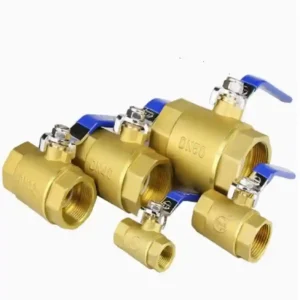
The key to a brass ball valve open or closed instruction is to connect the handle position with the actual flow path. On a common two-way valve, a handle near the pipe direction often indicates open and a handle across the pipe often indicates closed. That is not a universal substitute for the model instruction: installation direction, a removed and refitted handle, stop design, and special body construction can change the reading. Three-way valves require their own port-position logic.
Before operating, confirm pressure, medium safety, throttling permission, and the downstream equipment condition. When the valve is designed for on-off service, avoid leaving it in an unclear intermediate position. A system that needs flow control should be checked against the exact model and a dedicated control method.
What Should a “ball valve open or closed drawing” Show?
A useful ball valve open or closed drawing should show handle direction, body flow direction, open position, closed position, and the applicable valve type. For a three-way valve or a valve with a drain port, show the connected ports and discharge direction at each position. An outside photograph without flow-path markings cannot answer every model.
How Do You Confirm “ball valve handle position open or closed”?
Confirm ball valve handle position open or closed under a safe pressure condition or controlled procedure. Read the body and handle markings, move slowly to the stop, and observe whether the expected downstream flow or isolation occurs. Do not assume that a movable handle proves the ball has reached its final position, and do not add a longer lever when the handle is obstructed.
Is the “open position of a ball valve” Always the Same?
For many standard two-way valves, the open position of a ball valve can be inferred from the handle and pipe direction. A modified handle, hidden stem, panel mount, or three-way construction can change that visual relationship. Keep the model instruction, mark the open and closed states on the valve, and do not rely only on operator memory.
What Is the Safe Order for “operating a water ball valve”?
Before operating a water ball valve, confirm upstream and downstream conditions, drain and pressure-release paths, and the expected result. Move gradually and watch the connection and stem area for leakage when restoring service. After isolation, confirm that downstream pressure has actually fallen. Hot water, chemical cleaning, and maintenance service require the project safety procedure.
What Should a “ball valve open or closed diagram” Include?
A ball valve open or closed diagram should identify the valve number, medium, open state, closed state, upstream isolation, downstream vent, and prohibited operation conditions. A handle sketch helps recognition but does not replace pressure release, medium safety, or a three-way flow diagram.
📌 Case Setting: Nan Ya Hardware Valve-Position Handover
Nan Ya Hardware Sdn Bhd supplies pipe, fittings, valves, and accessories for water and wastewater systems in Selangor and maintains office and warehouse operations. In this case setting, the team works with CHCV on valve-position marking for a warehouse sample area. The line drawing is used to identify each valve’s upstream, downstream, and drain point before open, closed, and stop positions are checked under no-pressure or controlled conditions. The operating card records the body arrow, handle direction, valve number, and abnormal-response step rather than relying on a generic ball valve open or closed diagram. Three-way valves, refitted handles, and obstructed valves are held for model and flow-path confirmation before operation.
Field Valve-Position Card
Put the valve number, service medium, open state, closed state, upstream isolation, downstream vent, and prohibited conditions on one card. Ball valve handle position open or closed helps identify posture, but it cannot replace pressure release, medium safety, or the port diagram for a three-way valve. If the handle moves but the flow path is unclear, stop the handover.
For product and technical reference, visit CHCV. Related reading: Brass Ball Valve Installation.