














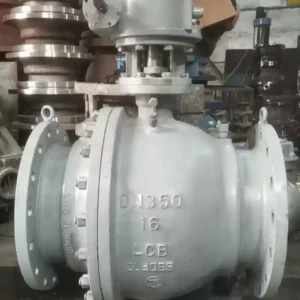
3/4″ Full Port Brass Ball Valve – Maximum Flow, Quick Shutoff
3/4″ full port brass ball valve for residential water systems. Full bore design eliminates pressure drop, quarter-turn operation for fast emergency shutoff. Lead-free, 600 WOG.
Description
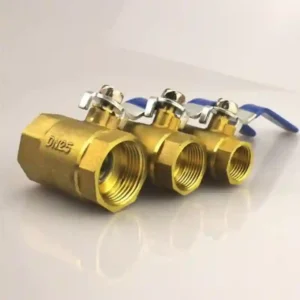
The 3/4‑inch full port brass ball valve serves as a core shut‑off component within North American residential water supply systems. It is widely deployed for main shut‑down behind household water meters, isolation at water heater inlet and outlet ports, bypass control for water softeners, as well as branch switching for outdoor hose bibs. Its primary function is to enable rapid on‑off control for domestic water pipelines via 90‑degree rotation of the internal ball core.
Adopting a Full Port flow‑path design, the valve features an identical inner diameter between the ball passage and the 3/4″ pipeline when fully opened. No cross‑section reduction occurs for passing media, bringing the flow resistance coefficient close to zero. This guarantees sufficient flow volume and stable pressure when multiple household water outlets operate simultaneously.
Manufactured from precision‑forged brass, the valve is fitted with PTFE seats and a blow‑out‑proof stem. Within its compact envelope, it achieves a 600 WOG pressure rating and bubble‑tight sealing, delivering a service life of over 20 years.
Material & Specification Parameters
| Item | Specification |
|---|---|
| Valve Body Material | Forged Brass (CW617N / ASTM B124, lead‑free variant optional) |
| Ball Material | Chrome‑plated Brass / SS304 Stainless Steel |
| Seat Material | PTFE (Polytetrafluoroethylene) |
| Sealing Material | PTFE + EPDM (potable‑water compliant) |
| Nominal Size | DN20 (3/4″) |
| End Connection | NPT female thread / Sweat welding / PEX crimp (optional) |
| Pressure Rating | 600 WOG (Water, Oil, Gas) |
| Temperature Range | -20°C ~ +120°C |
| Operation Mode | Quarter‑turn handle (90°) for fast opening & closing |
| Operating Angle | 0° (fully closed) ↔ 90° (fully open) |
| Flow Path Type | Full Port |
| K‑factor (Flow Resistance Coefficient) | Near 0 (under full‑open condition) |
| Handle Position Indication | Handle parallel to pipeline = fully open; perpendicular = fully closed |
| Stem Design | Blow‑out Proof structure |
| Potable‑Water Certification | NSF/ANSI 61 (lead‑free version) |
| Applicable Standards | MSS SP‑110 / ASME B16.34 / API 598 |
Application Scenarios
- Main shut‑off valve behind residential water meters: system main isolation for household water supply; full‑port design preserves adequate flow for multi‑point concurrent water usage.
- Isolation valves for water heater inlet and outlet: cuts cold‑hot water connections for gas‑fired or electric water heaters to facilitate equipment replacement and servicing.
- Bypass valve assembly for water softeners and water purifiers: controls bypass status of water‑treatment units without sacrificing system water pressure.
- Shut‑off for outdoor faucets and garden irrigation: branch isolation for exterior hose outlets and automated irrigation installations.
- Small‑size water supply branches in commercial premises: for small‑scale offices, retail stores and restaurant kitchen piping isolation.
- Make‑up and vent‑line isolation for heating circuits: serves isolation duties on fill valves and air vent points of closed heating systems.
Core Advantages: Full Port & Fast Quarter‑Turn Operation
1. Full Port: Zero‑loss Flow for Multi‑point Concurrent Water Consumption
Full Port represents the core value of this product. Standard‑port ball valves normally shrink the flow passage by roughly 20%‑30% relative to pipe inner diameter. When multiple domestic water fixtures run concurrently (e.g. shower, washing machine and kitchen sink operating at the same time), such constriction creates obvious throttling effects, triggering sharp pressure drops and insufficient water throughput.
A 3/4″ full port brass ball valve keeps matching bore dimensions between its ball passage and 3/4‑inch pipe (approx. 0.75 inch / 19 mm). No cross‑section contraction occurs under full‑open status. Under typical residential flow rates ranging from 6 GPM to 12 GPM, field‑measured pressure drop stays below 0.5 psi, in sharp contrast to the 3‑5 psi drop generated by standard‑port alternatives. This performance gap directly shapes end‑user comfort during peak‑demand hours, including stable shower pressure, fast washing‑machine filling rate and consistent throughput at distant taps.
2. Fast Actuation: Quarter‑turn Operation for Emergency Cut‑off Within 1 Second
Domestic plumbing systems demand swift source‑water disconnection amid burst‑pipe or leakage incidents. Gate valves require 8‑12 full rotations (10‑15 seconds of operation), while globe valves take 5‑10 rotations (8‑12 seconds). By comparison, this brass ball valve only needs a 90° quarter‑turn movement, completing switch‑over in under one second.
The handle delivers clear visual status feedback: parallel alignment against pipework signals full opening, and perpendicular positioning signals full closure. Homeowners can judge valve status without professional expertise and respond rapidly in emergencies to mitigate water‑related property losses.
Application Case: Lennar Homes — Plumbing System for New‑build Residential Communities in Austin
Project Name: Austin New Residential Community Plumbing Standardization Program
Location: Austin, Texas, USA
As one of America’s leading home builders, Lennar Homes has developed multiple single‑family housing estates across Austin and surrounding Texas areas. Starting from 2023, Lennar rolled out plumbing‑system standardization upgrades covering more than 300 single‑family properties in its Austin portfolios, where 3/4‑inch full port brass ball valves were specified uniformly as main shut‑off units behind water meters.
Background: Lennar previously adopted standard‑port ball valves and gate valves for main household isolation in several projects. Post‑occupancy homeowner feedback reported noticeable pressure decline and unstable shower temperature during morning‑and‑evening peak‑usage periods when multiple fixtures ran simultaneously. Engineering investigations traced the root cause to extra pressure loss brought by reduced‑bore passages of original main valves, which aggravated pressure attenuation after municipal water entered household pipelines.
Solution: Lennar’s Austin engineering division migrated main inlet shut‑off hardware across all new developments to 3/4″ full port brass ball valves. Since the valve bore matches the inner dimension of 3/4‑inch incoming copper tubing, extra pressure loss originating from the main inlet valve gets eliminated fundamentally.
Project Outcomes
- Optimized multi‑fixture water supply with full‑port geometry: Under test conditions simulating three concurrent water outlets (shower: 2.5 GPM, washing machine: 2.0 GPM, kitchen sink:1.5 GPM; total 6.0 GPM), pressure drop at the main inlet valve measured merely 0.4 psi, versus 4.2 psi recorded from legacy standard‑port ball valves under identical flow volume. Water pressure at distal outlets 40‑60 feet away from meter points rose by 12%‑18% on average, bringing a sharp reduction in homeowner complaints.
- One‑second emergency shut‑off improves property‑damage prevention: Every new property delivered includes printed valve‑operation guidance for residents. The tool‑free quarter‑turn handle allows homeowners to cut off household water supply within one second. Lennar’s warranty department recorded roughly 60% lower water‑damage claim amounts triggered by delayed manual shut‑off compared with prior building batches.
- Standardized component selection cuts procurement and maintenance overheads: By incorporating 3/4″ full port brass ball valves into unified plumbing specifications for all Texas new‑build projects, Lennar streamlined part varieties on‑site by 40% and achieved approximately 15% annual procurement cost savings.
Quote from Lennar Homes Austin Division Engineering Director: “The 3/4‑inch full port brass ball valve is a vital piece within our plumbing standardization framework. Its full‑port characteristic safeguards homeowners’ water‑usage experience, while quarter‑turn actuation enhances emergency response capability. These two seemingly modest improvements exert tangible influence over Lennar’s residential‑project reputation and overall warranty expenditure.”