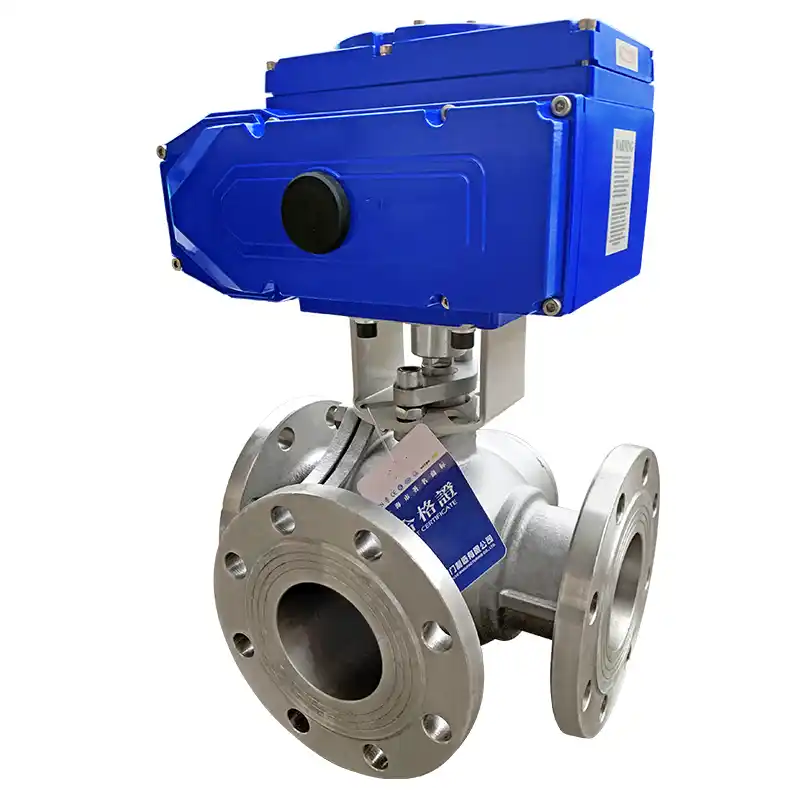

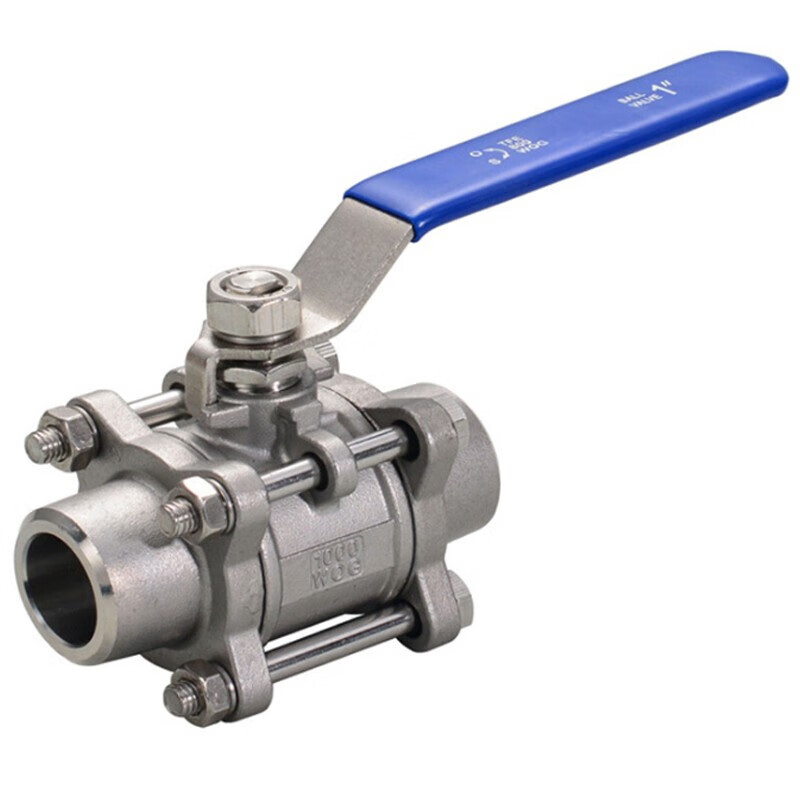
Three-Piece High Pressure Ball Valve – Class 900-2500 Trunnion
Three-piece high pressure ball valve with trunnion mounted design, Class 900-2500, metal/PEEK seats. For high temperature steam, oil & gas, and refining services.
Description
A three‑piece high pressure ball valve is a dedicated shut‑off component engineered for high‑pressure and high‑temperature‑high‑pressure process piping systems. Its design pressure spans Class 900 to 2500 (15 MPa‑42 MPa), with selected variants qualified for even higher pressure classes. The valve body consists of three heavy‑bolt‑fastened independent segments: left‑hand body, central body and right‑hand flanged body.
A trunnion mounted ball is secured at the valve‑cavity centre by upper and lower support bearings and remains stationary against media‑driven pressure. Axial thrust generated by process pressure is absorbed by bearings rather than transferred onto valve seats, yielding stable, controllable operating torque under large differential‑pressure conditions. 90‑degree stem rotation actuates the ball to open or isolate pipeline flow.
Seat materials for this high pressure ball valve are selected according to service‑temperature envelopes: hard‑faced metallic seats with Stellite overlay suit broad‑range operating conditions from ‑196 ℃ up to 400 ℃, while PEEK seats serve medium‑to‑high‑temperature duties ranging from ‑20 ℃ to 250 ℃.
Thanks to this three piece high pressure trunnion ball valve body configuration, maintenance crews can extract the central cartridge in‑situ for seat and gasket renewal without undoing flange connections or cutting pipeline welds, eliminating cumbersome full‑valve lifting‑and‑removal workflows. End connections adopt ASME B16.5 flanges or ASME B16.25 butt‑weld ends; butt‑weld construction mitigates leakage risks associated with flange gaskets under combined high‑temperature and high‑pressure service.
Material and Technical Specifications
| Parameter Item | Specification Range |
|---|---|
| Valve Body Material | WCB Carbon Steel / A105 Forged Steel / LF2 Low‑temperature Carbon Steel / F91 / F92 Chromium‑Molybdenum Steel / CF8M (316 Stainless Steel) / Duplex Stainless Steel 2205 |
| Ball Material | Body‑equivalent alloy / 316L / Stellite hard‑facing / Tungsten‑carbide coating |
| Stem Material | 316L / 17‑4PH / Inconel 718 |
| Seat Material | Metallic seat (Stellite 6/12 hard‑faced) / Metal‑PTFE composite seat / PEEK, corresponding to metal seated ball valve configurations |
| Nominal Size | DN50 ~ DN600 (2″ ~ 24″) |
| Pressure Class | Class 900 / 1500 / 2500, covering class 1500 high pressure ball valve and higher ratings |
| Applicable Temperature Range | ‑46 ℃ ~ 400 ℃ (metallic seat) / ‑20 ℃ ~ 250 ℃ (PEEK seat) |
| End Connection | Flanged (ASME B16.5 RF/RTJ) / Butt‑weld (ASME B16.25 BW) |
| Body Structure | Trunnion mounted, namely high pressure trunnion ball valve construction |
| Ball Support Bearings | One set fitted at top and bottom; material options: hard alloy / bronze alloy / stainless‑steel‑PTFE composite bearing |
| Face‑to‑Face Standard | ASME B16.10 / API 6D |
| Fire‑Safe Design | API 607 / ISO 10497 (optional) |
| Anti‑Static Design | Standard provision (between stem and ball) |
| Operation Method | Worm‑gear gearbox / Pneumatic actuator / Electric actuator |
| Applicable Standards | API 6D / ASME B16.34 / ISO 17292 |
| Material Certificate | EN 10204 3.1 / 3.2 (available upon request) |
| Non‑Destructive Testing | PT / RT / UT examinations performed per ASME Section V |
Structural Highlights: High‑Temperature and High‑Pressure Resistance
The robust thermal‑pressure performance of three‑piece high‑pressure ball valves derives from the synergistic optimisation of trunnion‑supported architecture, metallic‑seat formulations and high‑grade body alloys.
‑ Trunnion‑mounted design preserves operability under large differential pressure: Under Class 1500 (25 MPa) differential‑pressure service, floating‑type ball valves experience severe torque escalation, as process pressure thrusts the ball firmly against downstream seats. In extreme cases, driving torque may exceed the output capacity of gearboxes or actuators and block valve movement. The trunnion‑mounted layout locks the ball centrally via dual upper‑lower bearings. Bearings absorb pressure‑induced axial loads and transmit stresses directly into the valve body instead of onto seating surfaces. Contact force between ball and seats stays decoupled from process pressure, maintaining steady operating torque. This high pressure trunnion ball valve can reliably cycle under 25 MPa differential pressure, requiring merely 40 %‑50 % of the actuation torque demanded by equivalent floating‑ball designs.
‑ Metallic seats withstand high‑temperature‑high‑pressure conditions: Beyond 250 ℃, conventional PTFE seats suffer softening, creep‑deformation and sealing‑force relaxation. Metallic seats adopt Stellite 6/12 cobalt‑alloy overlay, precision‑lapped to form metal‑to‑metal sealing interfaces with the ball. Stellite retains adequate hardness and anti‑galling properties at temperatures up to 400 ℃; sealing specific pressure is secured by seat structural spring‑back rather than pure material elastic modulus. For intermediate‑temperature applications ranging from 180 ℃ to 250 ℃, metal‑PTFE composite seats serve as a practical alternative: metallic substrates carry full mechanical pressure loading while thin PTFE layers deliver tight sealing, balancing pressure‑bearing capacity and sealing integrity.
‑ High‑temperature‑rated material selection: Body alloys are matched to process thermal conditions. WCB carbon steel suits‑29 ℃ to 425 ℃ service; F91/F92 Cr‑Mo steels are deployed for ultra‑high‑temperature steam circuits at 540 ℃‑610 ℃; LF2 low‑temperature carbon steel caters for‑46 ℃ cold‑climate natural‑gas transmission. Wall‑thickness calculations for all body materials follow ASME B16.34 pressure‑temperature rating tables to guarantee structural strength at maximum operating temperatures.
‑ Butt‑weld ends eliminate flange‑joint leakage risks: Butt‑weld‑ended valves are fusion‑bonded directly to process piping, removing failure modes stemming from gasket creep‑relaxation at elevated temperatures. For high‑pressure steam piping operating above 300 ℃, butt‑weld connections represent the preferred end‑solution. Weld bevels are machined in compliance with ASME B16.25 specifications.
‑ Maintenance advantages of three‑piece construction for high‑pressure valves: Heavy‑walled high‑pressure valves weigh substantially, and full‑valve removal calls for large‑scale lifting machinery. The three‑piece configuration enables technicians to pull out the central cartridge on‑site for seat and seal replacement without releasing flange fasteners or cutting welded joints. This feature delivers prominent practical value for high‑pressure asset servicing at remote sites such as desert gas‑fields and offshore platforms.
Application Scope
The three‑piece high pressure ball valve finds wide deployment across the following sectors:
‑ Long‑distance oil‑and‑gas pipelines: Main‑line block valves and ESD emergency‑shutdown valves for natural‑gas, crude‑oil and refined‑product transmission lines, Class 900‑1500.
‑ Refining & petrochemical high‑pressure units: Hydrocracking, catalytic reforming and high‑density polyethylene process facilities, Class 1500‑2500, operating temperatures above 400 ℃.
‑ High‑temperature‑high‑pressure steam & power generation: Main‑steam and reheat‑steam piping for ultra‑supercritical power‑generation units, Class 2500, 610 ℃.
‑ Natural‑gas compression stations & gate stations: Compressor inlet‑outlet circuits and high‑pressure gate‑station inlet block valves, Class 900‑1500.
‑ High‑pressure chemical processes: Pipeline isolation for ammonia‑synthesis, methanol‑production and urea‑manufacturing plants.
‑ Deep‑well oil production & water‑injection services: High‑pressure water‑injection and polymer‑injection piping, Class 1500‑2500.
Field Reference Case
Three‑piece high pressure ball valve units are installed as pipeline block valves within high‑pressure inlet headers and dehydration‑de‑hydrocarbon process circuits at the Kel‑2 Gas‑Field Natural‑Gas Processing Plant of PetroChina (Korla, Bayingolin Mongolian Autonomous Prefecture, Xinjiang Uygur Autonomous Region). As one of the core gas sources feeding the West‑to‑East Gas Transmission Project, this processing plant possesses an annual handling capacity of 10 billion cubic metres. Inlet pipeline pressure reaches approximately 15 MPa (Class 900), while outlet temperatures from molecular‑sieve regeneration heaters inside dehydration‑de‑hydrocarbon units hit roughly 350 ℃.
Inlet‑header valves for this plant range from DN200 to DN400 with Class 900 pressure rating. Bodies are cast from A350 LF2 low‑temperature carbon steel to accommodate winter ambient temperatures as low as‑30 ℃ across Xinjiang. These trunnion‑mounted valves originally employ RPTFE seats and adopt butt‑weld end connections. Since RPTFE approaches its upper thermal limit at 350 ℃ within molecular‑sieve‑heater outlet piping, metal‑PTFE composite seats are specified for this section. Metallic substrates bear the 15 MPa pressure load, and thin PTFE layers maintain sealing performance without force relaxation under high‑temperature conditions. The trunnion‑mounted design sustains stable actuation torque under 15 MPa differential‑pressure, and butt‑weld connections eliminate gasket‑related high‑temperature leakage hazards.
Following commissioning of the West‑to‑East Gas Transmission Project in 2004, this fleet of valves has accumulated more than 20 years of continuous runtime. Only two planned maintenance outages have been executed during major‑plant overhauls in the 10th and 18th service years. Relying on three‑piece architecture, service crews extracted central cartridges directly on‑site within pipe‑rack layouts to inspect composite‑seat wear and PTFE sealing‑layer integrity. After verifying intact sealing surfaces, components were reassembled without cutting‑and‑removing large‑bore valves from butt‑weld joints. This valve population serves as a representative real‑world example of long‑term dependable high‑temperature‑high‑pressure valve performance for the West‑to‑East Gas Transmission Project.