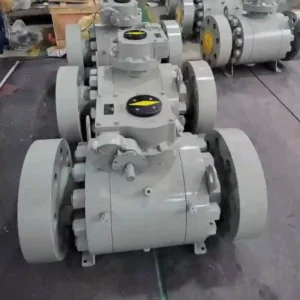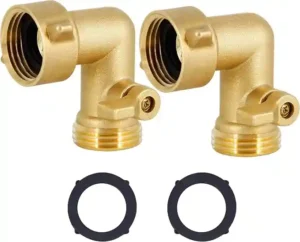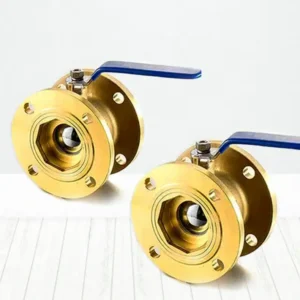

I. In most standard residential water well systems, two ball valves are not “redundant”
If you ask Do I need 2 ball valves on a water well system?
the short answer is: in most standard residential water well systems, two ball valves are not a redundant configuration; they are the minimum reasonable configuration for achieving “isolation” and “bypass.” One ball valve lets the system run, but two ball valves make the system easier to maintain.
In a typical ball valve in well set up, the two ball valves are usually located before and after the pressure tank: one on the incoming water side from the well pump, used to isolate the pump from the pressure tank; the other after the pressure tank, used to isolate the downstream piping that supplies water to the house.
Between the two, a tee is usually used to form the most basic bypass and maintenance isolation structure. In this way, when replacing a pressure switch, pressure gauge, pressure tank, or pump, it is possible to safely depressurize and work in separate zones, instead of shutting down the entire house water supply system at once.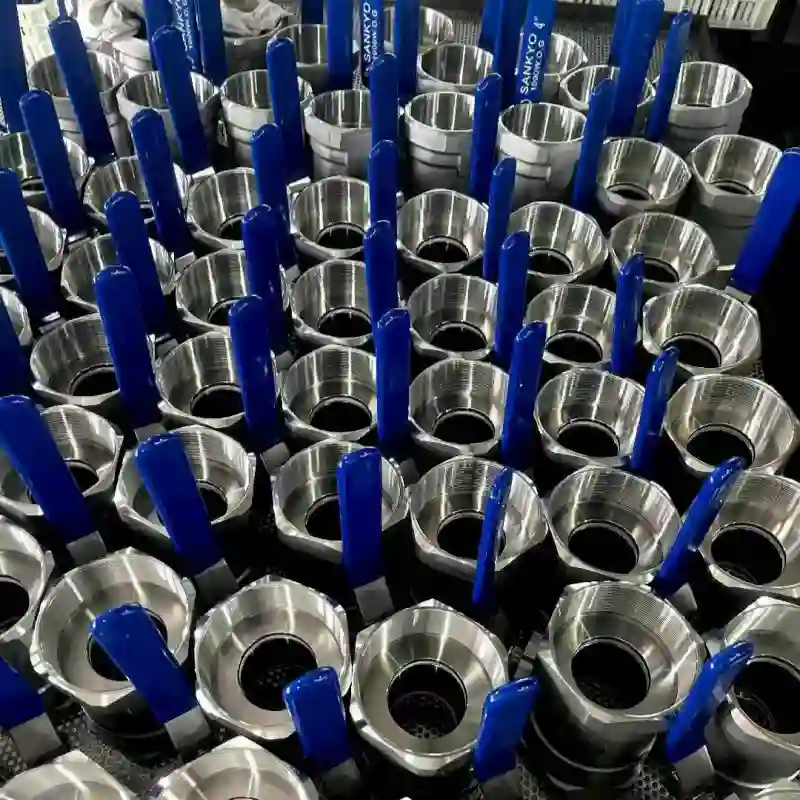
II. Why two are usually needed: isolation logic from the perspective of ball valve before well tank
Scenario 1: Isolation and maintenance of the pressure tank and pump
The core value of ball valve before well tank is to provide a reliable shutoff point before the pressure tank. When replacing a pressure switch, pressure gauge, pressure tank, or the pump itself, closing only the downstream valve often cannot isolate both the tank and the pump side; closing only the upstream valve cannot isolate the downstream piping. Only two ball valves together with a tee allow maintenance personnel to depressurize and disassemble within a controlled scope.
In residential well pump installation instructions, two ball valves and one tee is a common basic configuration. It is not a “high-end option,” but a standardized practice that considers maintenance safety, the scope of water shutdown, and future expansion together.
Scenario 2: Bypass and future expansion
Two valves plus a tee can form the most basic bypass loop. After closing the valves on both sides, filters, water softeners, chemical injection systems, and other equipment can be replaced or added without interrupting the house water supply. Even if there is currently no water treatment equipment, reserving bypass connections is a low-cost, high-return practice; later retrofits will not require draining the piping or rewelding.
Scenario 3: Pump testing and zone control
Well systems need periodic testing of the pump’s start/stop pressure and flow. Isolation valves allow the pump’s performance to be tested separately without affecting household water use. For systems with “one well serving multiple buildings” or “well water plus municipal water dual sources,” two valves are also the hardware basis for manual switching or zone control.
III. When “one ball valve” may also be sufficient
If the system is a pure water draw-off point, with no pressure tank and no downstream treatment equipment, one shutoff valve located after the well pump can meet basic maintenance isolation needs.
If the system already has a bypass valve group or manifold, additional independent valves may be redundant, and judgment should be made based on the existing piping.
But when uncertain, it is safer to prioritize the standardized solution of two full-port ball valves plus one tee. Its cost increment is usually limited, while the maintainability and expandability it brings are clearly higher.
IV. Key purchasing points: full port ball valve vs reduced port ball valve — don’t look only at size
When purchasing a ball valve for a water well system, you cannot ask only “what pipe size.” More important are port type, material, pressure rating, connection method, and seat. In particular, the difference in full port ball valve vs reduced port ball valve: a full-port ball valve has a bore close to the pipe inner diameter when fully open, resulting in lower pressure drop; a reduced-port ball valve is cheaper, but it restricts flow, and the well pump may need longer to reach the same pressure, causing hidden increases in energy consumption and maintenance costs.
| Parameter | Recommendation for water well systems | Consequences of not meeting the standard | Purchasing tip |
|---|---|---|---|
| Port type | Full-port full-port | A reduced-port valve restricts flow and wastes well pump head | Confirm that Full-Port is marked, not standard port |
| Valve body material | Lead-free brass or 304/316 stainless steel; stainless steel preferred for acidic water | PVC valves are prone to embrittlement and failure in well water environments | For drinking water systems, pay attention to NSF 61 compliance |
| Pressure rating | At least 150 psi, 300 psi or above recommended | Instantaneous pressure from well pump start/stop may impact low-pressure valve bodies | Match or exceed the system’s maximum working pressure |
| Connection method | NPT threads or double-union Union | Quick replacement during maintenance is impossible, requiring pipe cutting | Double-union ball valves facilitate complete replacement |
| Seat | PTFE | Ordinary rubber seats age quickly under temperature/chemical conditions | PTFE has better chemical compatibility and durability |
If the goal is drinking water or domestic water, the selection approach of ball valve for potable water is especially important: prioritize lead-free brass or stainless steel, confirm drinking water compliance certification, and avoid choosing valves based only on price. Well water systems are usually under continuous pressure, and the ball valve is a component that still needs reliable shutoff after long periods of standing idle; material and seat cannot be compromised.
V. Why well systems more often choose ball valves: ball valve vs gate valve for water shut off valve
In well water shutoff scenarios, the comparison of ball valve vs gate valve for water shut off valve is very practical. A ball valve opens and closes fully with a quarter turn, the handle position is intuitive, and it remains relatively easy to operate after long periods of standing idle; although a gate valve has low pressure drop when fully open, its stem and gate structure may seize when well water has higher hardness and contains sediment, and maintenance is also more complicated. For residential well systems, the quick isolation and maintainability of ball valves usually better meet the needs.
VI. The two most common purchasing mistakes, and prevention of ball valve water tank problems
Mistake 1: Buying PVC ball valves to save money
Well water systems are usually under continuous pressure. Over several years, PVC valve handles and balls may seize or break, at which point the water flow cannot be shut off, and repair costs far exceed the price difference of the valve. One common category of ball valve water tank problems is the failure of low-pressure or low-grade valve bodies under the impact of pressure tank start/stop. The countermeasure is: brass or stainless steel full-port ball valves should be the minimum reasonable specification for water well systems.
Mistake 2: Buying a reduced-port valve without knowing that flow has already been compromised
A reduced-port ball valve still produces pressure drop when fully open; the well pump needs longer to reach the same pressure, and energy consumption and maintenance costs rise in hidden ways. The countermeasure is to confirm that the product is marked Full-Port, rather than “standard port” or “reduced port.” If a filter or water softener is to be added to the system later, the pressure drop problem caused by a reduced-port valve will become more obvious.
VII. Conclusion: from “knowing” to “buying the right one”
Two ball valves in a water well system solve two unavoidable maintenance needs: isolation and bypass. One valve can “run,” but only two valves can be “maintainable.”
If your system has a pressure tank, has downstream water points, and may add water treatment equipment in the future, then two full-port ball valves plus a tee is a more reliable configuration.