
Duplex Stainless Steel Ball Valve Manufacturer: Material Grade and Marine Service
Duplex stainless steel has a dual-phase austenite-ferrite structure, offering high strength and good resistance to chloride stress corrosion, making it a common choice for marine and chemical applications. But duplex is not a universal answer: the grade (2205, 2507), pressure class, and seal material must match the operating conditions. This article breaks down duplex stainless steel ball valve manufacturer evaluation into grade verification, condition confirmation, and document validation from the perspective of marine and chemical industry engineers and buyers.
Operating conditions come first, then material. Until medium composition, chloride content, temperature, and pressure are clearly stated, any duplex recommendation lacks basis.
Api 6d Duplex Stainless Steel Ball Valve: Standards Before Models
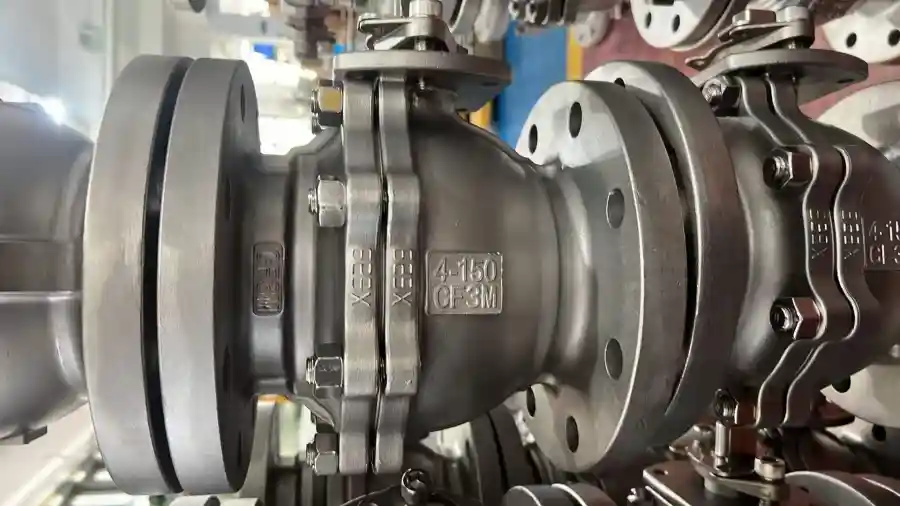
Api 6d duplex stainless steel ball valve targets pipeline and oil/gas conditions, where the standard has complete requirements for design, materials, testing, and inspection. When purchasing, confirm whether the product is designed and manufactured to API 6D, and request the corresponding test report.
The standard defines acceptance boundaries: for valves designed to standard, test items, pressure ratings, and document requirements are clear. For duplex quotes without standard support, ask which standard is being followed first.
Ce Certification Duplex Stainless Steel Ball Valve: Certification and Scope
Ce certification duplex stainless steel ball valve CE certification relates to product category and applicable directives; one certificate does not cover all operating conditions. Check whether the product scope, standards, and models on the certificate cover your procurement item.
Treat the certificate as a threshold, not a conclusion: it proves manufacturing meets certain requirements, but whether the product suits your conditions still depends on material and design data.
Corrosion Resistant Stainless Steel Ball Valves: How to Confirm Corrosion Resistance
Corrosion resistant stainless steel ball valves resistance is determined by both material grade and surface condition: the grade sets the corrosion resistance level, while surface roughness and passivation affect actual performance. Ask suppliers for material reports and surface treatment descriptions.
Chloride content and temperature are two key variables in corrosion assessment. Write medium data and operating temperature into the inquiry so the supplier can give a matched grade recommendation.
Ball Valves for Offshore Rigs: Additional Requirements for Marine Conditions
Ball valves for offshore rigs face seawater, salt spray, and vibration. Beyond material grade, consider protective coatings, actuator ingress protection, and maintainability of installation position.
For marine valve procurement, write corrosion protection, salt spray resistance, and service accessibility into the specification. Marine environments corrode far faster than onshore; material choice cannot rely on purchase price alone.
Ball Valves for Chemical Plant: Branch Management in Chemical Service
Ball valves for chemical plant must be categorized by medium: acid, alkali, solvent, and solid-laden media have completely different material and seal requirements. Build valve records by branch medium to avoid mixing models across chemical branches.
In chemical pipelines, both internal and external leakage consequences can be magnified. Seal material selection (PTFE, PEEK, metal seal) must have medium-compatibility basis, and test records must be retained.
📌 Case Setting
Advantage Marine Services’ official public information shows it is a marine engineering service provider in Gelang Patah, Johor, offering underwater inspection, hull cleaning, non-destructive testing, and steel fabrication for vessels and offshore facilities. The corrosive nature of seawater means valve selection must consider material grade, not just the words “stainless steel.”
When evaluating isolation valves for deck and pipeline systems, the project recorded medium (seawater, ballast water, fresh water) and service frequency separately. For seawater branches, duplex grades, pressure ratings, and seal materials were checked, and corresponding material reports were requested. CHCV helped provide duplex stainless steel ball valve material data and test records, making selection criteria traceable and clarifying that duplex is not the default answer for all conditions.
CHCV provides material reports and test records so duplex grade selection is traceable to the condition.
✅ Duplex Steel Condition Checklist
Medium composition: chloride content, temperature, presence of hydrogen sulfide or other corrosive components
Pressure rating: match system design pressure and verify test records
Connection standard: flange, weld, or thread per project standard
Service frequency: high-frequency service points prioritize structural maintainability
Documents: material report contains grade and heat batch number, matching nameplate
Common Questions
FAQ 1: Duplex costs more than 316L. What conditions justify it?
High chloride content, hydrogen sulfide presence, or marine conditions with high corrosion risk. For ordinary fresh water and low-corrosion media, 316L is more economical. Write the conditions clearly before deciding on the grade; do not blindly upgrade.
FAQ 2: Can duplex valves use ordinary stainless steel valve test standards?
Not directly. Duplex grades have corresponding material standards and test requirements; when checking material reports and test items, follow the standard that matches the grade.