
What does 1/2 PSI mean on a ball valve? This is not “how big the ball valve is,” but “how low the pressure involved in this system or valve is.”
First, the conclusion: 1/2 PSI is a pressure value, equal to 0.5 PSI, approximately 0.034 bar, approximately 3.45 kPa. If a ball valve really has 1/2 PSI marked on it, it usually indicates that the valve is used in an extremely low-pressure system, or that this number comes from the system working pressure, not the ball valve’s own pressure rating.
1/2 PSI Is Pressure, Not Size
PSI is Pounds per Square Inch, i.e., “pounds-force per square inch.” In the North American piping, valve, gas, and compressed air industries, PSI is one of the most common pressure units.
So:
1/2 PSI = 0.5 PSI
1/2 PSI to bar: approximately 0.034 bar
1/2 PSI to kPa: approximately 3.45 kPa
1/2 PSI to inches of water column: approximately 13.8 inches of water column
This pressure is very low. Household tap water systems are usually far higher than this, commonly around 40–80 PSI. Compressed air systems, steam systems, and high-pressure water systems are even more so. Therefore, if you see 1/2 PSI on an ordinary water pipe ball valve, first suspect: did you misread 1/2″ as 1/2 PSI?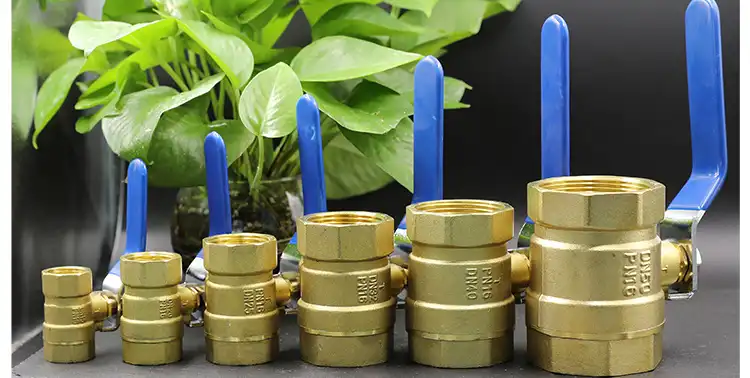
Difference Between 1/2″, 1/2 NPT, and 1/2 PSI
This is the most easily confused part.
| Marking | Meaning | Explanation |
|---|---|---|
| 1/2″ | 1/2 inch | Usually indicates ball valve bore or connection size |
| 1/2 NPT | 1/2 inch NPT thread | NPT is American tapered pipe thread; 1/2 is nominal size |
| 1/2 PSI | 0.5 pounds per square inch | A pressure value, not a size |
| 1/2 NPT ball valve | 1/2 inch NPT threaded ball valve | Common keyword in commercial purchasing |
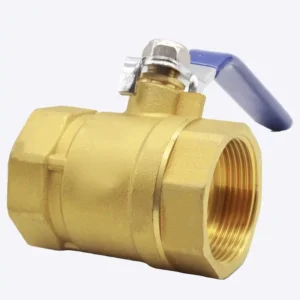
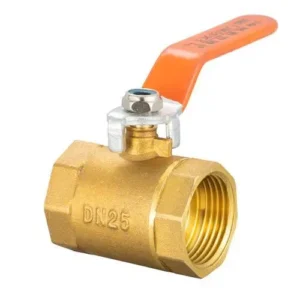
| brass ball valve 1/2 | 1/2 inch brass ball valve | 1/2 refers to bore or thread size |
| gas ball valve 1/2 | 1/2 inch gas ball valve | 1/2 refers to bore or thread size |
Special note: 1/2 NPT does not mean the thread outer diameter is exactly 0.5 inch. The major diameter of 1/2 NPT external thread is approximately 0.840 inch. Therefore, whether buying a 1/2 NPT ball valve or replacing a brass ball valve 1/2, you must check the connection standard and actual dimensions, not just look at the number “1/2.”
Why Is 1/2 PSI Rarely Actually Marked on a Ball Valve?
The primary function of a ball valve is on/off, not pressure regulation. It controls the opening and closing of the flow passage by rotating the ball. Ball valves usually have very high pressure ratings, such as 600 PSI, 1000 PSI, 2000 PSI, or even higher. An ordinary 1/2 inch ball valve often has a pressure rating far higher than 0.5 PSI.
Therefore, markings more commonly seen on ball valves are:
600 WOG
1000 WOG
2000 WOG
1000 CWP
150 WSP
PN16, PN25, PN40
Among them, WOG ball valve means suitable for Water, Oil, Gas, i.e., water, oil, gas. CWP ball valve means Cold Working Pressure, i.e., cold working pressure. For example, a 600 wog ball valve usually means that the valve’s maximum working pressure when used for water, oil, or gas at room temperature is 600 PSI. However, this does not mean it can maintain 600 PSI at any temperature; as temperature increases, derating is usually required.
When we see 2000 wog ball valve pressure rating, it indicates that the ball valve has a higher pressure rating, commonly found in instrumentation, hydraulics, high-pressure water, or industrial piping. It is not on the same order of magnitude as 1/2 PSI at all.
How to Read Ball Valve Pressure Ratings?
Ball valve selection cannot be based only on size; it must also consider pressure rating, temperature rating, medium, and connection type. Common pressure markings can be understood as follows:
WOG: Water, Oil, Gas, water/oil/gas
CWP: Cold Working Pressure, cold working pressure
WSP: Working Steam Pressure, steam working pressure
SWP: Steam Working Pressure, steam working pressure
PN: nominal pressure commonly used in Europe, such as PN16, PN40
For example, a 2000 psi 1/2″ ball valve is usually used in higher-pressure applications, while a low pressure ball valve is used for low-pressure water, low-pressure air, or certain low-pressure gas systems. The two may differ in valve body thickness, sealing materials, stem design, and testing standards.
Don’t just look at the number “1/2 PSI.” What really needs to be confirmed is:
-
What is the system maximum working pressure?
-
What is the system temperature?
-
Is the medium water, oil, gas, steam, or chemicals?
-
Does the valve pressure rating cover the system pressure?
-
Does the connection type match, such as 1/2 NPT, BSP, compression, welding, or flange?
What Scenarios Is a low pressure ball valve Suitable For?
low pressure ball valve is usually used in systems with very low pressure, such as:
-
Low-pressure air lines
-
Low-pressure gas or propane systems
-
Laboratory micro-pressure equipment
-
Medical or analytical instruments
-
Certain gravity-fed water systems
-
Low-pressure irrigation or water treatment systems
But note: a low-pressure system does not mean you can casually use any valve. Gas applications require particular caution. Even for low-pressure natural gas or propane, you must use valves with appropriate certifications and comply with local codes.
Gas Applications: gas ball valve 1/2 and gas ball valve pressure rating
If you search for gas ball valve 1/2, you are usually looking for a 1/2 inch gas ball valve. Here, 1/2 still refers to bore or thread size, not 1/2 PSI. The key parameter of a gas ball valve is gas ball valve pressure rating, that is, its pressure rating under a gas medium.
Gas ball valves usually require:
-
Explicit gas certification
-
Anti-static design
-
Fire-safe design
-
Sealing materials suitable for gas
-
Correct threaded sealing method
-
Compliance with local gas codes
Brass ball valves can be used in certain gas applications, but not all brass ball valve 1/2 are automatically suitable for natural gas or propane. You must check the product instructions, certifications, and pressure-temperature ratings. Do not assume it can be used for gas just because it is a brass ball valve.
ball valve size vs pressure: The Larger the Size, the More Pressure Must Be Verified
Many people only look at size when selecting a ball valve, such as 1/2 inch, 3/4 inch, 1 inch, or 2 inch. But ball valve size vs pressure is an issue that must be considered simultaneously. The larger the size, the greater the fluid force the valve bears, and actuator torque, valve body strength, connection type, and pressure rating become more critical.
For example, 2″ ball valve pressure rating cannot simply apply the experience of a 1/2 inch ball valve. A 2 inch ball valve may be used in water treatment, irrigation, industrial piping, or gas systems, and its pressure rating may range from 150 PSI to 2000 PSI or even higher. When selecting, you must look at specific standards, valve body material, ball structure, sealing material, and temperature range.
How to Choose the Correct Pressure Rating for a 1/2 NPT ball valve?
If you are going to purchase a 1/2 NPT ball valve, it is recommended to confirm in the following steps:
-
Confirm size: is it 1/2 inch bore or 1/2 NPT thread?
-
Confirm medium: water, oil, gas, steam, or chemicals?
-
Confirm pressure: what is the system maximum pressure in PSI or bar?
-
Confirm temperature: room temperature, high temperature, or low temperature?
-
Confirm material: brass, stainless steel, PVC, carbon steel?
-
Confirm connection: NPT, BSP, compression, welding, flange?
-
Confirm certifications: gas, potable water, fire-safe, anti-static, etc.
If the system pressure is only 1/2 PSI, then it is indeed extremely low pressure. But the pressure ratings of the vast majority of ball valves are far higher than this. At this point, the focus is not “whether the ball valve can withstand 1/2 PSI,” but “whether the ball valve’s sealing, control precision, and system pressure drop are suitable.”
FAQ
What does 1/2 PSI mean on a ball valve?
It indicates a pressure of 0.5 PSI, not a 1/2 inch size. If marked on a ball valve, it usually refers to an extremely low-pressure system or system pressure, not valve size.
Is 1/2 PSI the same as 1/2 inch?
No. 1/2 inch is a size, and 1/2 PSI is a pressure.
What is 1/2 PSI in bar?
Approximately 0.034 bar.
Can a ball valve regulate pressure?
Usually not. Ball valves are mainly used for on/off and isolation, and are not suitable for precise pressure regulation. If pressure regulation is needed, a pressure reducing valve or regulator should be used.
What does WOG mean on a ball valve?
WOG means Water, Oil, Gas, i.e., water, oil, gas. Common markings include 600 WOG, 1000 WOG.
What pressure rating do I need for a 1/2 NPT ball valve?
It depends on the system. Common ratings include 600 WOG, 1000 WOG, 2000 WOG, etc. You must ensure the pressure rating is higher than the system maximum pressure, and consider temperature derating.
Conclusion
What does 1/2 PSI mean on a ball valve? In simple terms, 1/2 PSI is a pressure value of 0.5 PSI, approximately 0.034 bar. It is completely different from 1/2 inch size and 1/2 NPT thread. Markings more commonly seen on ball valves are pressure ratings such as 600 WOG, 1000 WOG, 2000 WOG, and CWP.
When selecting a ball valve, simultaneously confirm size, connection, material, medium, temperature, and pressure rating. For water systems, you can choose brass ball valve 1/2″ or 1/2″ NPT ball valve; for gas systems, you must choose a certified gas ball valve 1/2″; for extremely low-pressure systems, clarify the actual rating and sealing performance of the low pressure ball valve.
If you are looking for 1/2 inch ball valves, WOG/CWP ball valves, low pressure ball valves, or gas ball valves, it is recommended to first verify system parameters, then choose a product with the corresponding pressure rating, and avoid confusing size, pressure, and thread standards.