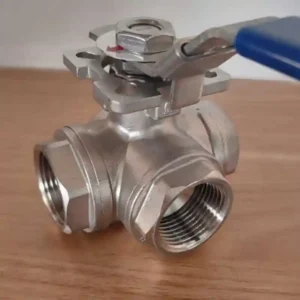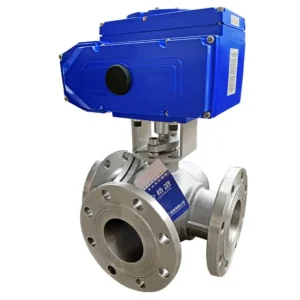

A ball valve can serve as a stop valve, but a ball valve is not equivalent to a stop valve. A stop valve is classified by function, while a ball valve is classified by valve structure. The two belong to different classification dimensions.
A stop valve refers to a general category of valves defined by their function. Its core purpose is to cut off or enable the flow of medium in the pipeline and complete pipeline on-off operations.
Gate valves, globe valves, plug valves and ball valves can all be designed and used as stop valves. A ball valve, by contrast, referred to as ball valve, relies on a ball-shaped core with a through-hole rotated by 90° to achieve opening and closing. It is a valve category divided according to internal structure. A ball valve can perform shut-off functions, and can also undertake other functions under specific working conditions.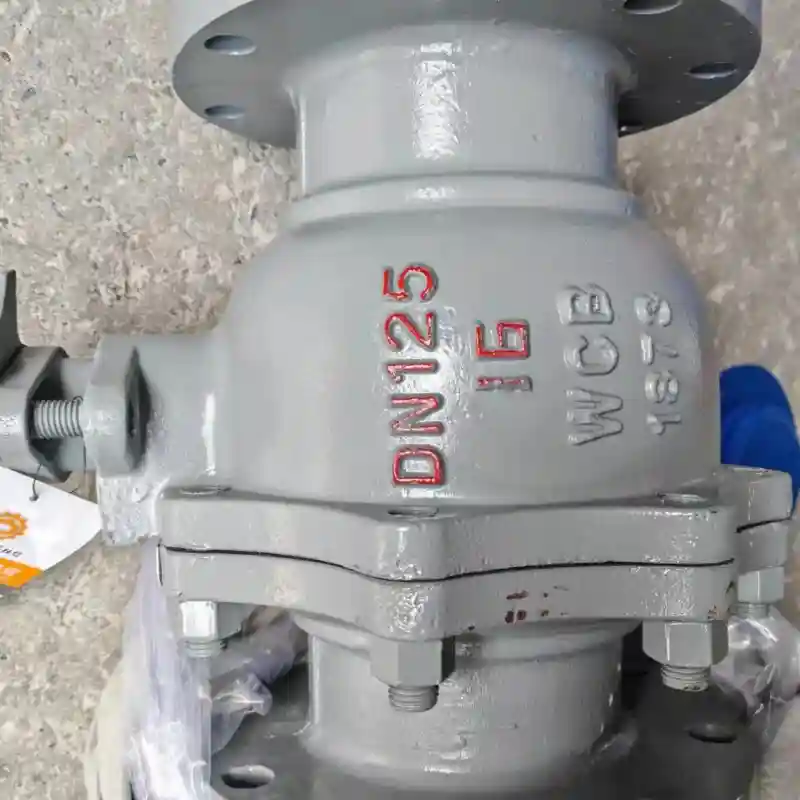
ball valve shut off: shut-off performance of ball valves and compliance with stop valve requirements
The core performance requirement of a stop valve is to reliably cut off the medium in the closed position and prevent the medium from continuing to flow downstream.
Most full port ball valves deliver effective shut-off capability. When rotated to the closed position, the ball fits against the valve seat sealing pair, completely blocking the medium flow path.
However, the shut-off effect of a ball valve is constrained by several practical factors:
- Sealing material. Soft-seated ball valves with PTFE seats can achieve bubble-tight sealing under normal temperature and clean medium conditions after closure, meeting the tight shut-off requirements of a stop valve. Metal-seated ball valves are mostly applied to high-temperature and particle-containing media and can hardly achieve bubble-tight zero leakage. Even when used as a stop valve under such working conditions, there is a risk of minor internal leakage.
- Medium condition. If the medium contains hard impurities such as sediment and welding slag, impurities trapped between the ball and valve seat sealing surfaces will cause internal leakage of the ball valve in the closed position, so it can no longer reliably act as a stop valve.
- Pressure and temperature limits. When exceeding the pressure and temperature range marked on the valve nameplate, deformation and aging of the sealing pair will occur, leading to sealing failure during shut-off.
It is necessary to clarify a misunderstanding: being able to rotate for opening and closing does not mean it qualifies as a competent stop valve. Some reduced port ball valves designed for throttling focus on flow regulation with low sealing configuration standards. Even if they can rotate to the closed position, they are not recommended for long-term use as stop valves.
ball valve vs gate valve: practical differences between ball valves and gate valves, both as stop valves
The gate valve is a traditional stop valve widely used in the industry. Many old water supply and process pipelines are equipped with gate valves. Both ball valves and gate valves can achieve pipeline shut-off, yet structural differences bring operational distinctions, and direct unconditional replacement is not allowed during valve selection.
- Operation method. A ball valve only requires a 90° rotation of the handle to achieve full open or full close; a gate valve needs multi-turn rotation of the handwheel to lift and lower the gate for on-off. Ball valves offer higher operating efficiency for scenarios requiring rapid pipeline shut-off.
- Flow path feature. Full port ball valves have an unobstructed internal through-hole with no obvious reduction, bringing low pressure loss of medium passing through the valve. Gate valves have a smooth flow path when fully open, while the gate will be scoured by medium in the half-open position. Gate valves are not allowed for throttling and are only suitable as stop valves for full open and full close service.
- Maintenance and tolerance to impurities. Sediments in the medium tend to accumulate in the gate slot of gate valves, resulting in sticking after long periods of inactivity. For ball valves, the ball sealing surface is prone to scratches if the medium carries particles. Pre-filtering is required for both valve types when handling impurity-containing media.
- Installation space. The lifting and lowering of the gate valve handwheel requires reserved vertical travel space. The handle of a ball valve only needs lateral rotation space, making it advantageous for narrow installation cabinets and buried valve chamber applications.
Note: If the project drawing explicitly specifies a gate valve as the stop valve, direct replacement with a ball valve is prohibited. Working conditions, specifications and project requirements must be checked before modification.
ball valve for potable water: prerequisites for ball valves to replace traditional stop valves in potable water systems
For stop valves in potable water pipelines, besides shut-off sealing, there are mandatory constraints on material hygiene, pressure resistance and compliance certifications.
Ball valves can be selected as stop valves for potable water service, but ordinary industrial ball valves cannot be adopted arbitrarily. The following items need to be verified:
- The valve body, ball and sealing materials in contact with medium shall possess compliance certifications for potable water contact and shall not release excessive lead. For brass ball valves, low-lead grades shall be confirmed; for stainless steel ball valves, material grades shall be verified.
- Full port structure is preferred for selection to reduce pipeline pressure drop and avoid abnormal fluctuations in pipeline water pressure.
- Reduced port ball valves are not recommended as stop valves for main potable water pipelines. The reduced bore will cause pipeline throttling and easily bring noise and water hammer risks.
- Match the pipeline design pressure. For household water supply and building water supply, the valve rated pressure shall be higher than the maximum working pressure of the system.
Nowadays, compliant ball valves are widely used to replace old gate valves and globe valves as stop valves at household main water inlet points and branch pipeline shut-off locations. For renovation of old building pipelines, thread and flange connection specifications shall also be checked for matching.
ball valve isolation valve: correlation between isolation valve and stop valve, key points for ball valves used in isolation service
The terms isolation valve and stop valve are often seen together in the industry. A stop valve generally refers to a shut-off valve that cuts off medium; an isolation valve is a subcategory of stop valve for specific application scenarios. The purpose of an isolation valve is to completely isolate a section of pipeline or equipment from the rest of the system to facilitate equipment maintenance, disassembly and repair. An isolation valve is a subset of stop valve.
A ball valve can act as an isolation valve, yet extra requirements apply for maintenance isolation service under some working conditions:
- For hazardous medium process pipelines, relying on a single ball valve for isolation carries risks. Industry codes may require double block isolation with a vent/drain port in between. A single ball valve shall not be used to achieve safety-level isolation for personnel protection. Even with good sealing performance of ball valves, wear of sealing pairs and jamming by impurities may lead to internal leakage hazards.
- Soft-seated full port ball valves are preferred for use as isolation valves to achieve reliable shut-off during maintenance. Metal-seated ball valves are only suitable for high-temperature and erosive media, and zero-leakage isolation cannot be expected.
- Ball valves configured as isolation valves shall be fitted with clear handle position marking to distinguish full open and full close positions and prevent misoperation. For buried or cabinet-mounted ball valves, operation space shall be reserved for the handle.
Summary
Stop valve is a functional concept, while ball valve is a structural concept. A ball valve has the on-off capability required by a stop valve, and can be used as a stop valve on the premise of meeting requirements on sealing material, medium condition, pressure, temperature and compliance certification. However, ball valves cannot unconditionally equal stop valves under all working conditions.
During valve selection, priority shall be given to verifying actual project working conditions: medium type, temperature and pressure, whether zero-leakage shut-off is required, and whether it is used for maintenance isolation. Then judge whether ball valves are suitable for use as stop valves. Do not perform replacement merely based on valve type names.