
Answer: Not necessarily. A lever valve is a common colloquial term in the industry, generally referring to a valve operated by a lever handle; a ball valve is a valve classified by its internal structure.
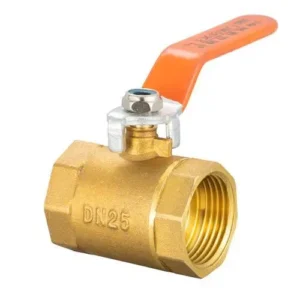
Many ball valves are indeed fitted with lever handles, so they are sometimes called lever valves, but a lever handle does not equal a ball valve. Butterfly valves, plug valves, 3-way or 4-way ball valves may also use levers.
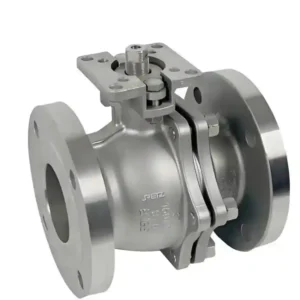
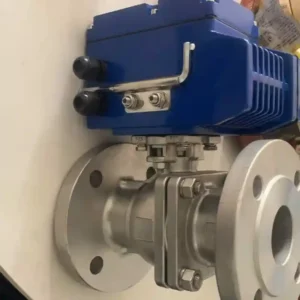
Conversely, a ball valve can be equipped with a handwheel, gearbox, electric actuator, or pneumatic actuator instead of a lever.
For accurate identification, do not rely only on the handle. Check the valve body structure, stem, ball, seat, nameplate, end connection and applicable standards.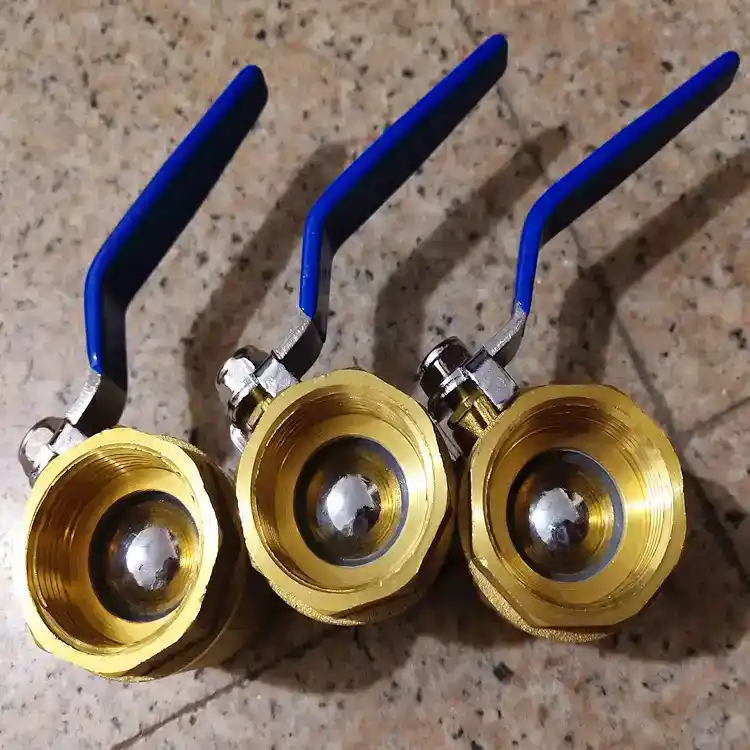
Lever Ball Valve: What does this term usually refer to?
In procurement and on-site communication, a lever ball valve mostly refers to a ball valve with a straight lever handle for 90° quarter-turn operation. Common sizes range from 1/4″ to 2″, with end connections including threaded, welded, flanged, clamp, etc. Materials include brass, stainless steel, carbon steel, bronze and more. Small-bore floating ball valves have low torque and can be operated directly by a lever handle. For larger sizes, high differential pressure or dirty media, the lever may be very long, or a gearbox/actuator may be adopted instead.
Please note that “lever ball valve” is not a strict standard classification. Standard documents describe ball valves in accordance with API 608, ASME B16.34, ISO 5211 and other specifications, rather than defining valve types using the term “lever valve”. Therefore, writing only lever ball valve for inquiry or replacement is insufficient.
Ball Valve Lever Handle: What it indicates and what it does not indicate
A ball valve lever handle describes the operation method: the lever drives the stem to rotate, and the stem then turns the ball. It cannot independently prove that the valve body is definitely a ball valve. Butterfly valves also commonly use levers, and plug valves may adopt levers as well. Ball valve handles are usually fitted with a stop plate, lock hole, nut and stem flat. Some handles support padlocking to lock the valve in open or closed position.
A common issue occurs when the handle is removed and reinstalled; the mounting position may be reversed. In this case, the handle can still rotate, but the open/closed indication may be wrong. When replacing the handle, match the stem flat dimension, nut thread, stop plate angle and handle length. Do not arbitrarily extend the lever to force opening or closing. Excessive torque may shear the stem or damage the seat.
Lever Ball Valve On or Off: How to judge open/closed status
For most 2-way ball valves, there is a simple rule to judge lever ball valve on or off: when the handle is parallel to the pipeline, the valve is normally open; when the handle is perpendicular to the pipeline, the valve is normally closed. This rule comes from the through-hole direction of the ball: when the through-hole aligns with the pipeline, medium can pass through; after rotating 90°, the through-hole is offset from the pipeline and the valve closes.
However, do not rely solely on the handle on site. You should also check the slot on top of the stem, flow arrow on valve body, nameplate marking, and if necessary, confirm via downstream draining, flow variation or pressure gauge.
For 3-way ball valves with L-port and T-port, the parallel/perpendicular rule for 2-way ball valves cannot be directly applied.
4-way ball valves, V-port ball valves, and valves with gearboxes or actuators need status judgment based on their specific structures.
Ball Valve Handle Parallel Open Perpendicular Closed: Rules and exceptions
Ball valve handle parallel open perpendicular closed is a commonly used on-site inspection method applicable to many manual 2-way ball valves. But it is not a universal rule. Exceptions include:
- 3-way and 4-way ball valves: handle position relates to flow path combinations, differing between L-port and T-port.
- V-port ball valves: used for flow regulation; handle angle does not simply represent open/closed state.
- Gearbox, electric and pneumatic actuators: position indicators or limit switches are more reliable than handles.
- Reinstalled or non-original handles: stop plate angles may not match.
- Angle ball valves and ball valves with drain ports: flow direction and installation orientation affect status judgment.
Additionally, ball valves are not suitable for precise throttling. Long-term partial opening will cause seat erosion, noise, vibration and leakage. If process flow regulation is required, select V-port ball valves, globe valves, control valves or other throttling-suitable valves.
Ball Valve vs Butterfly Valve: Same lever, different structure
Ball valve vs butterfly valve is one of the most easily confused pairs on site. Both can be fitted with lever handles and perform 90° quarter-turn operation, yet their internal structures differ. A ball valve has a ball with a through-hole inside, sealing by contact between the ball and valve seat. A butterfly valve has a disc; the stem rotates the disc, and the valve body is generally thinner, commonly available in wafer, lug or flanged connections.
You may distinguish them by the following points:
- Valve body thickness: butterfly valves are usually thinner; ball valves have a ball cavity in the middle of the body.
- End connections: butterfly valves commonly use wafer and lug types; ball valves commonly use threaded, welded, flanged and clamp connections.
- Seal structure: ball valves commonly adopt PTFE, RPTFE, PEEK or metal seats; butterfly valves commonly use rubber, PTFE or metal sealing.
- Size and space: butterfly valves are widely used for large sizes and space-limited installations; ball valves are preferred for small sizes requiring quick shut-off.
- Nameplate and standards: the nameplate specifies valve type, pressure class, material and standards.
Neither type is absolutely superior. Selection depends on medium, temperature, pressure, operation frequency, leakage requirement and installation space.
How to accurately describe your required valve to suppliers
If you only write “lever valve”, suppliers cannot confirm whether you need a ball valve, butterfly valve or plug valve. It is recommended to provide the following information:
- Size: 1/2″, 3/4″, 1″, 2″ or DN sizes.
- Pressure class: 1000 WOG, PN16, Class 150, Class 300, etc.
- End connection: NPT, BSP, flanged, welded, clamp, tri-clamp.
- Valve body material: brass, bronze, 304, 316, carbon steel, WCB, etc.
- Medium: water, natural gas, compressed air, oil, steam, chemicals.
- Temperature range: determines seat material such as PTFE, PEEK, metal seat.
- Operation: lever, handwheel, gearbox, electric, pneumatic.
- Additional requirements: lockable handle, ISO 5211 mounting pad, anti-static, fire-safe design, drain port.
If replacing an old valve, taking photos of the valve body side, stem top, handle, nameplate and end connections works better than merely writing “lever valve”.
CHCV often encounters this situation during model selection communication: customers request lever valve, which may actually refer to a ball valve or a butterfly valve. Only after confirming the structure can we provide the correct model, pressure rating and sealing materials.
Conclusion
Is a lever valve a ball valve? Not necessarily.
A lever refers to the operation method, while a ball valve refers to the valve structure. Many ball valves are fitted with levers, so they are verbally called lever valves. However, lever valve may also mean butterfly valves, plug valves, 3-way or 4-way ball valves.
Do not judge only by the handle. Check the valve body, ball, seat, stem, nameplate and standards. If confirmed as a 2-way ball valve with lever, it can be called lever ball valve. Nevertheless, for procurement, replacement and technical communication, it is best to use the accurate valve name together with complete parameters.