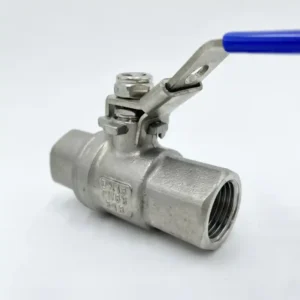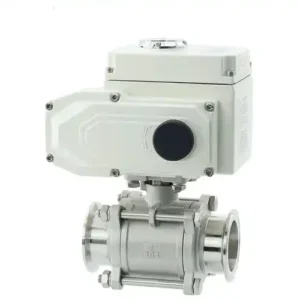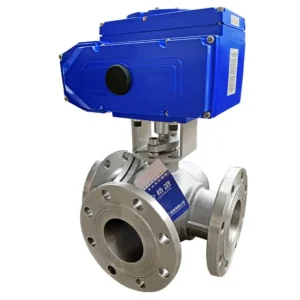

Selecting a normally open motorized ball valve requires more than assuming that the medium should normally pass. Define whether “normally open” means the normal running position, the position held during a power loss, or the actuator’s default mechanical position. Then include startup sequence, feedback, and maintenance isolation in the system design. The logic may come from a mechanical position, controller, or reset mechanism.
A normally open arrangement is often used on an auxiliary water, ventilation, or cooling branch that should remain available by default. If a leak, excessive flow, or unattended operation creates risk, an independent closing condition is still required.
For model and connection details, see CHCV valve resources.
normally open electric ball valve: Define the default position first
The normally open electric ball valve procurement record should state the position before power-up, the normal running position, the state when the control signal disappears, and the manual-reset state. This prevents “normally open” from meaning one thing in a sales description, another in the control program, and a third in field operation.
motorized ball valve normally open: Write the startup order
The motorized ball valve normally open startup order should coordinate with the pump, controller, and downstream equipment. If the controller reads an incorrect position first, the equipment may start in an unsuitable state. Write position confirmation, pump start, flow confirmation, and abnormal shutdown as ordered steps.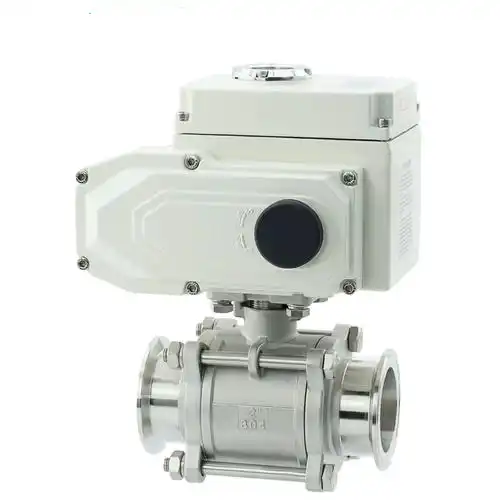
📌 Case Setting
Kantan Food is a sauce OEM manufacturer in Subang Jaya, Selangor, Malaysia, with JAKIM Halal, MeSTI, GMP, and HACCP certifications. It focuses on producing halal cooking sauces and seasonings for food-service brands and exporters. The plant evaluated normally open logic on utility-water branches serving an equipment cleaning area and a small packaging station. These branches supplied cleaning water before equipment startup and auxiliary water at the packaging station; the valve was outside the food and beverage product path. The goal was to keep the auxiliary water available during startup while maintaining clear isolation during maintenance and avoiding an operating mistake that could affect the line.
The team put pump-start order, valve-position confirmation, flow observation, and abnormal shutdown into one sequence card. It first verified the normally open state without pressure, confirming that the valve remained open, water could pass, and there was no leakage, then connected the valve to the equipment control logic for a loaded test. The team asked CHCV for a normally open ball valve with material documents and technical data, and checked the compatibility of the body material and PTFE seals with ambient clean water.
➡️ Normally open startup path
- Before startup: Read the actual valve position and feedback state.
- During startup: Confirm the sequence of pump, valve, and controller.
- During operation: Observe flow, leakage, and abnormal signals.
- At shutdown: Define hold, close, or manual isolation.
- After recovery: Retest limits and valve-position direction.
motorized ball valve 1 stainless steel 12vdc normally open: Check a small DC branch
A motorized ball valve 1 stainless steel 12vdc normally open selection combines size, material, voltage, and default position. Check 12 VDC supply capacity, cable voltage drop, actuator current, and the medium suitability of the stainless-steel body separately. “Normally open” is not a material or voltage specification.
normally open 1/2″ motorized ball valve: Do not select equipment by size alone
A normally open 1/2″ motorized ball valve may serve a small equipment branch, but installation still requires checks of flow direction, connection, position indication, actuator height, and manual access. An installation error on a small valve can affect commissioning just as directly as an error on a larger valve.
normally open 1 2 motorized ball valve: Power loss, reset, and restart
For a normally open 1 2 motorized ball valve branch, define whether the valve holds its position after power loss and how control is restored. After power returns, confirm that limits, feedback, and command direction agree; do not hand over a system that displays open while the field valve is closed.
Frequently Asked Questions
Is a normally open motorized ball valve suitable for every water branch?
No. Consider the consequence of leakage, equipment startup order, power-loss behavior, and field maintenance. Normally open is one control condition, not a complete application decision.
What should be tested after installing a normally open valve?
At minimum, test the position before and after power-up, command direction, open and close limits, feedback, power recovery, and coordination with the pump or downstream equipment.