
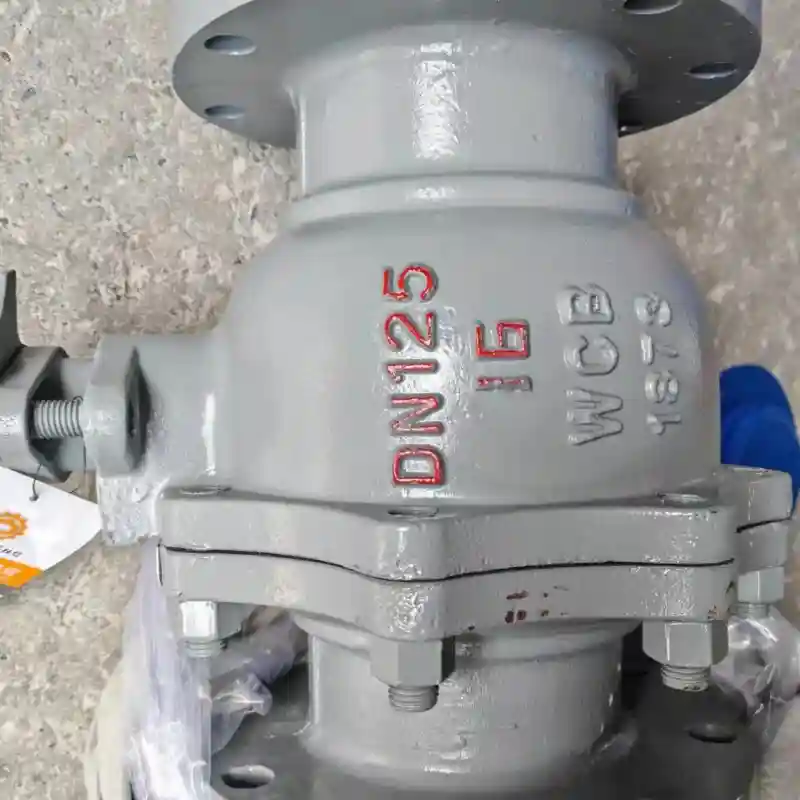
Full Port Carbon Steel Flanged Ball Valve – ANSI Class 150-600
Full port carbon steel flanged ball valve ensures zero pressure drop and enables pigging operations. WCB/A105 body, RF/RTJ flanges, fire-safe certified. For oil, gas, and petrochemical pipelines.
Description
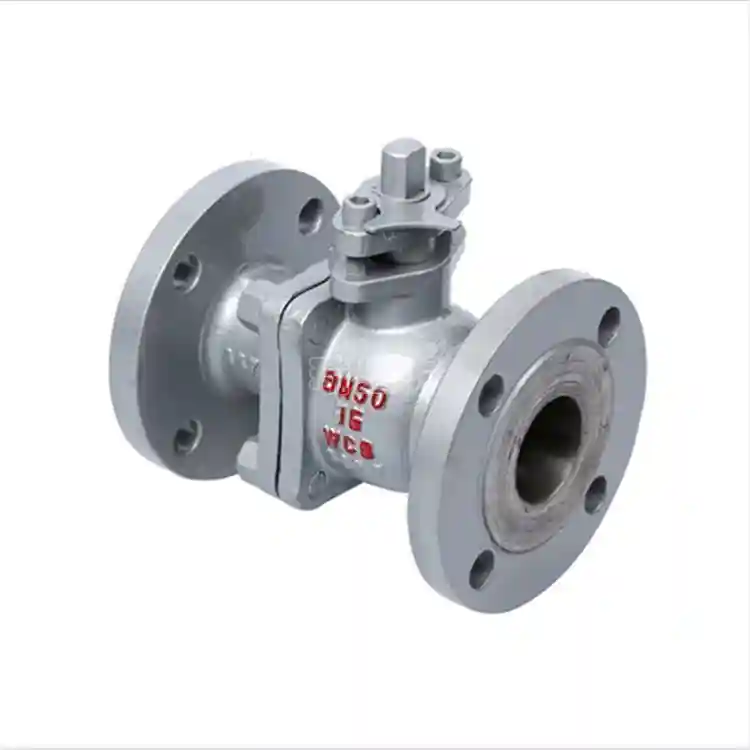
The Full Port Carbon Steel Flanged Ball Valve is a quarter‑turn 90‑degree shut‑off valve whose ball bore precisely matches the nominal pipe size of connected piping.
When fully opened, it delivers a straight, un‑restricted flow path without bore reduction, imposing minimal extra resistance on passing media. Thanks to this geometry, it serves as the preferred alternative to reduced‑bore ball valves for oil, natural‑gas, chemical, power‑generation and long‑distance pipeline projects where high flow capacity and maintainability are critical requirements.
This valve type has been successfully deployed in the quench‑water system of SABIC’s ethylene cracker facility in Al‑Jubail, Saudi Arabia. Its full‑port design effectively mitigates water‑hammer risks under high‑flow quench‑water conditions and suppresses erosion of heat‑exchanger tube bundles, supporting stable long‑term plant operation.
II. Core Value of Full‑Port Construction
Compared with standard‑bore ball valves, full‑port carbon steel flanged ball valves deliver three key functional advantages:
- Zero incremental pressure drop: Identical bore dimensions between valve and adjacent pipe preserve nearly unchanged flow velocity and pressure for process fluids. This makes the product well‑suited for high‑throughput pipelines with low‑energy‑consumption targets. For long‑distance natural‑gas transmission lines, every 0.1 MPa reduction in pressure drop translates into tangible energy savings for compressor units.
- Unobstructed Pig passage: The flush inner bore enables smooth transit of intelligent pigs and inline inspection tools. This represents a non‑negotiable technical requirement for long‑haul natural‑gas and crude‑oil transmission pipelines.
- Mitigated media erosion: Smooth, continuous flow geometry eliminates turbulence and vortex formation triggered by bore contraction. It protects seat sealing surfaces and downstream piping components, extending plant turnaround intervals.
III. Material Selection & Design Standards
Valve bodies adopt ASTM A216 WCB cast carbon steel for ambient‑temperature duties or ASTM A105 forged steel alternatives, while balls are manufactured from AISI 304 / 316 stainless steel. Multiple seat sealing materials are available to accommodate varying operating temperatures: PTFE (−29°C ~ 150°C), RPTFE (−29°C ~ 180°C), and PPL (−29°C ~ 260°C). Flange faces comply with ASME B16.5 and cover Raised Face (RF), Flat Face (FF), and Ring‑Type Joint (RTJ) configurations.
All units satisfy API 6D pipeline‑valve specifications and pass API 607 / 6FA fire‑safety qualification testing. API 608‑compliant anti‑static hardware and automatic cavity pressure‑relief functionality are supplied as standard features. Designed and fabricated strictly per API 6D, every finished unit undergoes both hydrostatic shell strength testing and seat tightness inspection prior to dispatch, guaranteeing dependable performance as a carbon steel ball for critical pipeline junctions.
IV. Technical Specification Sheet
| Parameter | Specification Range |
|---|---|
| Nominal Size | DN15 ~ DN600 (1/2″ ~ 24″) |
| Pressure Class | Class 150 / 300 / 600 / 900 |
| Body Material | A216 WCB / A105 / A350 LF2 (low‑temperature service) |
| Ball Material | 304 / 316 stainless steel |
| Seat Material | PTFE / RPTFE / PPL |
| Flange Standard | ASME B16.5 (RF / FF / RTJ) |
| Fire‑Safe Performance | API 607 / API 6FA |
| Design Codes | API 6D / ASME B16.34 |
| Anti‑Static Feature | API 608 anti‑static construction |
| Operating Temperature | −29°C ~ +260°C (subject to seat material) |
| Process Media | Water, steam, oil products, natural gas, mildly corrosive fluids |
V. Application Scenarios
This valve is applicable for the following services:
- Main‑line isolation and bypass circuits for long‑distance oil‑and‑gas transmission pipelines
- Inlet and outlet piping for process units such as FCC and hydrocracking plants within refineries
- Reactor nozzles and heat‑exchanger piping in chemical complexes
- Boiler feed‑water and main‑steam circuits in power‑generation facilities
- Above‑ground installations for city‑gas pressure‑regulating stations and gas storage depots
- Transmission pipelines subject to periodic pigging operations
VI. Sourcing & Procurement Recommendations
When specifying Full Port Carbon Steel Flanged Ball Valves, purchasers are advised to evaluate the following points: verify true bore dimensional consistency between valve and mating pipe; select appropriate seat materials matched to process‑medium temperature; clarify flange standards (ANSI/ASME, DIN or JIS) together with required face configuration. For high‑pressure or large‑size variants, trunnion‑mounted structures are preferred to cut operating torque and enhance sealing reliability.
Manufacturers holding valid API 6D and API 607 fire‑safety certifications should be prioritised to ensure full material traceability. When engaging reputable carbon steel ball valve manufacturers, buyers shall request complete material test reports, pressure‑test documentation and fire‑safety certificates to validate full compliance against project technical specifications.