
Brass Ball Valve Size Chart: What to Measure
A brass ball valve size chart is useful for an initial comparison between product series, but it cannot replace the drawing for a specific model. When purchasing a one-inch brass ball valve, confirm the end connections, face-to-face length, bore, handle height, pipe centerline, and installation direction together. Valves with the same nominal size can have different envelopes because of full-port or reduced-port construction, thread series, or body design.
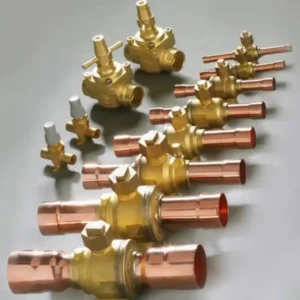
Dimensions must also be checked against pipe supports, insulation, panel openings, and removal space. PPR, PVC, copper pipe, hose, NPT, and BSP connections can change the final installed length through their adapters. Use the drawing, a controlled measurement, and the model information together; a photograph is only an identification aid.
How Do “1″ brass ball valve dimensions” Relate to One-Inch Size?
1″ brass ball valve dimensions describe a set of overall measurements, while one-inch is only a nominal-size clue. The actual bore, end shape, body wall, effective thread length, and handle height may differ. When comparing a 1″ brass ball valve manufacturer with a 1″ brass ball valve supplier, request the same drawing fields from both. For replacement work, give the supplier the old valve connection and measured length as well as the nominal size.
What Should “ball valve size measurements” Include?
Ball valve size measurements can start with the end-to-end length, center-to-center distance, maximum body width, stem height, handle length, connection outside diameter, and effective thread length. Separate the valve body from adapters, unions, hose fittings, and seals. Their lengths should not all be treated as the valve dimension.
Why Can’t You Only Use “how to determine ball valve size”?
To determine ball valve size, identify the pipe outside diameter, nominal size, connection standard, and actual flow path together. The same pipe outside diameter can correspond to different wall thicknesses or connection systems. The same valve size can also be full-port, reduced-port, or supplied with different ends. Final selection should follow the drawing and model data.
What Can a “ball valve sizes chart” Miss?
A ball valve sizes chart is good for screening, but each dimension must belong to the same series, connection, and construction. Do not apply one manufacturer’s one-inch length to another manufacturer. Also check handle clearance, support points, and thread orientation, and state which dimensions are required in the quotation.
📌 Case Setting: Zantech Pump-Room Replacement Valve Dimension Card
Zantech Sdn Bhd provides pump repair, maintenance, and field service. In this case setting, the company works with CHCV on a replacement-valve review for a rooftop pump room in Johor Bahru. The service team measures the old valve end-to-end length, pipe centerline, connection outside diameter, highest handle point, and maintenance clearance, then compares the readings with a brass ball valve size chart. The inquiry does not say only “1 inch”; it includes the old-valve photograph, end standard, medium, pressure range, and pipe support. When the new valve arrives, the drawing and product markings are checked before installation so that pipe pulling, incorrect washers, or changed supports are not used to hide a dimension mismatch.
Dimension Card Coordinates
A handover-ready card should record nominal size, pipe outside diameter, end type, face-to-face length, bore, handle rotation envelope, body high point, and installation centerline. In a narrow pump room, add the tool approach direction and axial space needed for removal. Use the chart for screening, then use the exact series drawing and order confirmation for the final check.
For product and technical reference, visit CHCV. Related reading: Brass Ball Valve Pressure Rating.