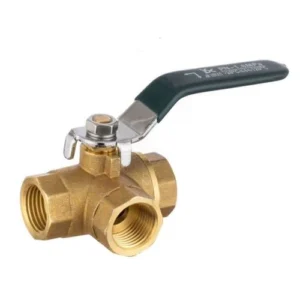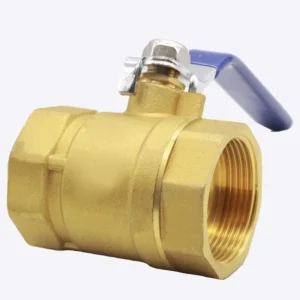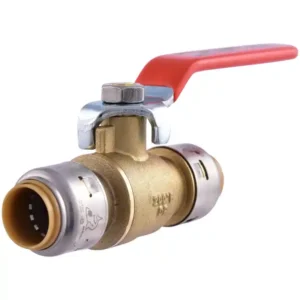

When we search for a “three way ball valve manufacturer,” we are looking for a partner who can provide long-term, reliable solutions for demanding operating conditions. Incorrect selection of a 3-way ball valve can lead to system leakage, skyrocketing maintenance costs, and even safety incidents.
This article will help you establish a systematic framework for evaluating manufacturers from four dimensions: core technical parameters, material and process, actuation methods, and installation details.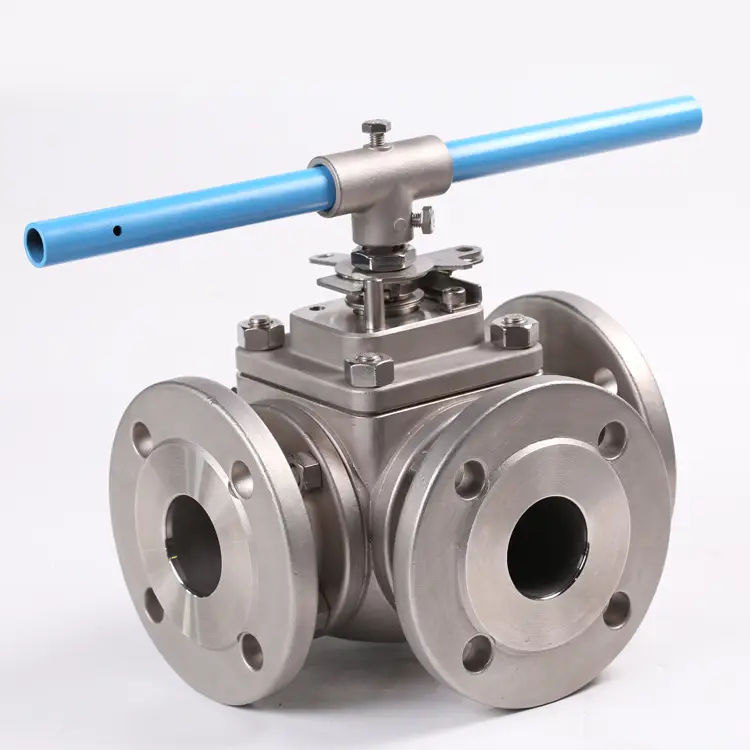
1. Understanding L Port and T Port Configurations
The functionality of a 3-way ball valve depends on its flow path design. L port (L-shaped flow path) is used for diverting or merging flows, typically in scenarios where one fluid stream needs to be switched between two different outlets. T port (T-shaped flow path) allows three-way interconnection, making it suitable for mixing or reversing applications. A professional manufacturer will clearly specify the flow path type of their product and provide detailed pressure drop curves (Cv values). During the inquiry, be sure to request the 3 way ball valve flow direction diagram from the manufacturer, because incorrect installation will directly compromise sealing performance. Reliable suppliers will conduct flow-direction marking and bidirectional sealing tests in accordance with API 6D standards.
2. Material Selection: Stainless Steel vs. Other Alloys
The service medium determines the valve body material. For corrosive fluids or high-temperature applications, 3 way ball valve stainless steel is the first choice, especially grades 304 and 316L, which resist chloride pitting. However, for pure water or low-pressure gas, ductile iron or brass may also suffice. Top-tier manufacturers typically provide material certificates (e.g., EN 10204 3.1) and clearly list the complete bill of materials for the ball, seats (PTFE/RPTFE/PEEK), and stem. Do not trust “universal materials”—instead, require the manufacturer to issue a recommendation table based on your medium temperature, pressure, and chemical composition.
3. Actuation Options: Pneumatic and Electric
✅On-site control methods directly affect the level of automation. For frequent on-off cycles or remote control scenarios, 3 way ball valve pneumatic actuators, with their fast response and explosion-proof characteristics, are the standard in the petrochemical industry. For applications requiring precise regulation or where electric power is readily available, 3 way ball valve with electric actuator provides more stable torque output and fail-safe options.
✅An excellent manufacturer can provide a precise actuator sizing calculation sheet based on your valve torque, power supply type (24V/110V/220V), and switching frequency—rather than just a simple matching.
4. Flow Direction and Installation Considerations
✅Three-way ball valves are not completely symmetrical; their internal sealing structure has implicit requirements for flow direction. Even with bidirectional sealing design, long-term reverse use may accelerate seat wear. The manufacturer should provide clear installation guidelines, marking the recommended inlet and outlet directions, and explain the impact of 3 way ball valve flow direction on leakage class (e.g., ISO 5208 Grade A).
✅Additionally, for steam or high-temperature conditions, the manufacturer must also provide thermal expansion allowances and thread/flange torque specifications. These details are exactly what distinguish “ordinary sellers” from “engineering-grade suppliers.”
Conclusion
📌Choosing a reliable three way ball valve manufacturer is essentially choosing their technical responsiveness, quality traceability system, and after-sales support.
📌We recommend that after initial screening, you request third-party test reports (e.g., fire-safe tests, low-leakage tests) as well as industry application case studies from the manufacturer.