
Brass Ball Valve Handle Replacement: Fit Checks
Brass ball valve handle replacement addresses a damaged or missing operating part; it does not automatically solve a stiff valve, internal leakage, or a damaged stem. On a two-inch valve, handle force and operating clearance are usually more sensitive than on a small-bore valve. Match the stem section, retaining nut, stop position, handle length, and exact valve series before ordering.
First confirm that the valve is isolated and depressurized and that the valve itself can move without abnormal resistance. After replacement, check the open and closed positions, stops, and surrounding clearance. Do not install a longer handle just to overcome unexplained torque. If the stem, ball, or seat is damaged, a repair kit or complete valve may be the correct path.
How Can “2 inch brass ball valve replacement handle” Fit?
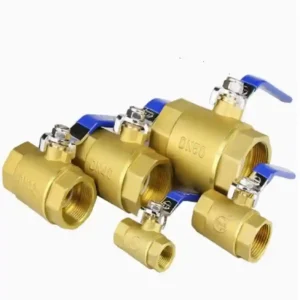
A 2 inch brass ball valve replacement handle must be confirmed by the exact model, not by nominal size alone. Record the old handle length, stem profile, mounting hole or square, fastener, stop, and body marking, then compare them with the supplier drawing. Different series can use different handle connections even when the size and body material are the same.
Does “replacement handle for 2″ brass ball valve” Need Clearance?
A replacement handle for 2″ brass ball valve changes the rotation radius through its length and height. Near a wall, cabinet, insulation, support, or adjacent valve, it may hit an obstruction before reaching the full position. Put the valve centerline, handle envelope, and operator standing position on one sketch before ordering.
What Are “ball valve replacement handle covers” For?
Ball valve replacement handle covers can identify, protect, or reduce accidental operation, but a cover cannot repair stem packing or ball failure. Confirm the cover’s fit, fastening method, temperature boundary, and cleaning conditions. If the cover hides the open and closed marking, it can create a handover risk rather than reduce one.
When Is a “locking ball valve replacement handle” Needed?
A locking ball valve replacement handle is useful when unauthorized operation must be limited, a commissioning position must be held, or maintenance lockout needs a clear point. The lock position must correspond to a defined open or closed state and must not prevent normal inspection. A locking handle cannot replace troubleshooting when the valve leaks or cannot reach its stop.
How Do “large ball valve replacement handles” Relate to Torque?
Large ball valve replacement handles offer more grip space but should not be understood as “the longer the better.” A 1/4″ turn brass ball valve handle still needs a defined stop and operating envelope; excess leverage can transfer force into the stem, body, or pipe and can bypass the manufacturer stop. When operation is unusually heavy, check differential pressure, contamination, seat condition, stem, and pipe alignment first.
📌 Case Setting: Ecovest Compressed-Air Spare-Handle Review
Ecovest Industrial Service Sdn Bhd provides field troubleshooting and preventive maintenance for industrial air compressors and vacuum pumps. In this case setting, the company works with CHCV on a spare-handle review for a Shah Alam compressed-air maintenance workshop. A two-inch utility isolation valve has a cracked grip, but after isolation and pressure release the stem still turns smoothly. The team records the old handle length, stem profile, fastener, stop angle, locking hole, and clearance, then checks each item against the supplier drawing. After replacement, the valve receives a no-pressure movement check, stop confirmation, and controlled leakage check. If the stem itself binds, brass ball valve handle replacement is not treated as an internal repair; the valve body and seals enter a separate inspection path.
Replacement-Part Confirmation Record
Record the valve model, nominal size, stem dimensions, handle part number, opening direction, locking method, operating envelope, and replacement date. A cover only provides identification or protection. Any valve that needs an extension bar to move should be transferred to a valve-body inspection rather than solved with a larger handle.
For product and technical reference, visit CHCV. Related reading: Brass Ball Valve Hard to Turn.