
Brass vs PVC Ball Valve: Which Fits?
The question of brass vs pvc ball valve comes up whenever a utility line needs a compact shut-off point. Brass is a metal valve assembly, while PVC is a plastic valve assembly. The better choice is not determined by appearance or price alone. Medium compatibility, temperature, pressure, ultraviolet exposure, mechanical support, connection method, and future maintenance all matter. For a broader review of body, internal parts, seats, seals, and purchasing fields, see our quality brass ball valve guide.
A brass valve can be practical for many ordinary water and compatible compressed-air branches. PVC can be practical where the pipe system, medium, temperature, and installation environment suit plastic components. Neither material should be treated as a universal replacement for the other, especially where the line is hot, chemically exposed, outdoors, mechanically loaded, or connected to a product-contact system.
A useful brass vs pvc ball valve comparison starts with the complete assembly. Check the body, ball, stem, seats, seals, end connections, handle, and any actuator interface. A brass body may be supplied with different internal materials and thread forms. A PVC valve may use a socket, union, or threaded end and may depend on a specific PVC formulation and joining system. The nominal diameter alone does not make two valves interchangeable.
Also separate the valve from the pipe. A brass valve installed in a plastic line still needs a compatible transition fitting and adequate support. A PVC valve installed in a metal line still needs a connection arrangement that avoids forced threads, excessive torque, or unsupported weight. The material decision is therefore both a valve decision and a piping-system decision.
The long-tail question “is a brass ball valve better than pvc” has no single answer. Brass may be useful where a compact metal body, threaded connection, repeated manual operation, or greater resistance to incidental impact is needed. PVC may be useful where low weight, solvent-welded plastic piping, or compatibility with a specified fluid makes the plastic system appropriate. The service conditions decide which advantage matters.
For general washdown water, first record the water quality, operating temperature, pressure range, pipe material, and location. For compressed air, check the rating of the valve, adapter, pipe, and support as one system. For chemicals, do not infer compatibility from the word “PVC” or “brass”; identify concentration, temperature, seals, and the exact material grade before approval.
Temperature can change the allowable working range of a plastic valve and can also affect seats, seals, thread sealant, and solvent-cement joints. Pressure and temperature should be reviewed together against the manufacturer’s data for the selected model. A valve that is acceptable for ambient water may not be acceptable for hot water, steam, compressed gas, or a cycling service.
Mechanical conditions matter as well. PVC is light, but a long unsupported pipe run can transmit bending load into a valve or adapter. Brass is mechanically robust in many utility arrangements, but a metal body does not remove the need for correct support, alignment, and corrosion review. Outdoor exposure, freezing, impact, vibration, and access for isolation should be recorded in the purchase request.
A brass valve may use NPT, BSP, solder ends, or another specified connection. A PVC valve may use socket ends, unions, or plastic threads. The connection standard, nominal size, pipe outside diameter, schedule or pressure class, adapter material, sealant, and joining method must be stated together. “One-inch valve” is not a complete connection description.
A pvc fitting on brass ball valve should be selected as a matched transition, not as a visually similar accessory. Confirm the thread form, wrench clearance, insertion depth, solvent-cement instructions, and removal plan. Do not force a plastic fitting onto a metal thread, use the handle as a wrench, or let a long plastic run hang from the valve body.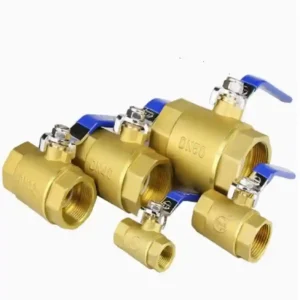
The phrase “replace pvc ball valve with brass” usually signals a change in service or maintenance conditions. A replacement may be considered when the branch needs a different connection arrangement, greater resistance to incidental impact, more frequent manual cycling, or a metal valve body at a serviceable isolation point. It is not automatically an upgrade if the new body, seats, seals, threads, and pipe transition do not match the medium.
Before replacement, isolate and depressurise the line, identify the existing PVC type and connection, measure the available space, and check whether the new brass valve will introduce dissimilar-metal, corrosion, or support issues. If the line is for food or beverage contact, hygienic service, special cleaning chemicals, oxygen, or high temperature, stop the general comparison and complete a separate technical review.
A brass ball valve material specification should identify the body, ball, stem, seats, seals, nominal size, port design, end connection, thread standard, operating medium, pressure and temperature range, and any coating or plating. If the service has lead-free, dezincification, hygiene, oxygen, or chemical requirements, those requirements should be written explicitly and confirmed against the selected model’s technical documents.
The same purchasing discipline applies when comparing PVC. Record the pipe and valve material, pressure class, temperature, joining method, solvent or sealant, support arrangement, and inspection documents. A material name without the connection and service fields is not enough for a reliable purchase decision.
Magnus Oriental Supplies (M) Sdn. Bhd. is a real Malaysian packaging business. Its public website describes foodservice packaging, bulk supply, logistics and distribution, and ready-stock operations from Subang Jaya. The project below is fictional and is not a claim that Magnus Oriental purchased, installed, or endorsed any valve.
For the“Subang Ready-Stock Packaging Utilities Material Review” project, the planning team compared brass and PVC options at two non-product-contact points: a general washdown-water branch near the warehouse utility wall and a compressed-air isolation point serving a small sample-packaging bench. The review selected the metal-valve option only after checking the medium, temperature, pressure, connection standard, support, access, and the valve’s internal materials. Packaging products and food or beverage contents were not routed through the valve. If a future line carries a product-contact medium, special cleaner, or higher-temperature service, the material and connection review must be repeated.
Before ordering, send the supplier the medium, nominal size, pipe material, connection standard, pressure and temperature range, installation environment, operating frequency, and any direct-contact or hygiene requirement. Ask for the exact body and internal materials, seat and seal combination, dimensions, and inspection documents for the selected model. If a PVC-to-metal transition is involved, list the adapter and joining method as separate line items.
The right answer to brass vs pvc ball valve is the one that matches the complete service and can be checked at receipt. Record the valve identity and installation location so future maintenance does not turn a material comparison into a guess. For model-specific review, you can also start at the CHCV Valves site.