











Lockable Brass Ball Valve – Locking Handle for Safety & LOTO Compliance

Shop lockable brass ball valve with lock wing handle for LOTO safety. Accepts padlocks to prevent unauthorized operation. Ideal for fire systems, gas lines & industrial piping.

Description

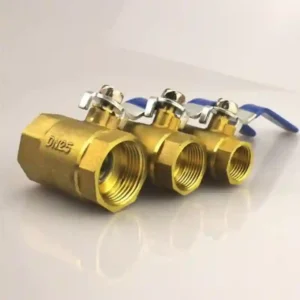
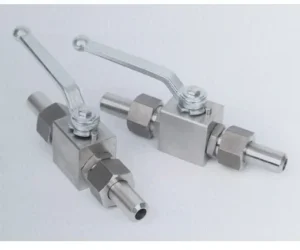
Within piping systems for public‑safety‑related installations, industrial production and facility maintenance, preventing unauthorized valve manipulation constitutes a vital element of safety governance. The brass ball valve with lock wing retains the fast quarter‑turn open‑close performance of standard ball valves, while integrating a locking mechanism onto its handle. This heavy‑duty handle comes with built‑in lock holes or lock‑wing geometry, enabling technicians to secure the valve at full‑open or full‑closed positions using standard padlocks. Such characteristics make it well‑suited for industrial sites enforcing Lockout/Tagout (LOTO) safety protocols, critical piping inside public premises, and fire‑protection systems.

Lock‑Enabled Construction: Controlled Operation and Safety Administration

The core value of a brass locking ball valve lies in its access‑control capability. Unlike conventional ball valves whose handles can be rotated by any personnel, lock‑wing‑equipped handles feature dedicated padlock‑passing cutouts. Padlock shackles can run through these holes to fix the handle in its present position. Only authorized staff holding matching keys are permitted to remove padlocks and adjust valve status.

For fire‑riser valves installed in high‑rise buildings, schools, hospitals and other public‑use structures, fire‑code mandates require these valves to remain persistently open. Accidental closure could render fire‑fighting hardware non‑functional during fire emergencies. Lock‑wing ball valves physically lock handles in the open position to satisfy mandatory anti‑unauthorized‑actuation fire‑safety requirements, while still permitting authorized fire‑service or maintenance crews to unlock and shut down valves rapidly under emergency conditions.

For on‑site piping repair work at industrial plants, the lockable brass ball valve supports multi‑padlock stacking. Multiple individual worker padlocks can be fitted onto one single valve handle. Every technician assigned to the task attaches their personal padlock, guaranteeing the valve cannot be re‑opened until all personnel finish their respective assignments. This feature fulfils core Lockout/Tagout (LOTO) safety‑procedure requirements, and complies with OSHA regulatory mandates for hazardous‑energy isolation.

Flexible Locking at Full‑Open or Full‑Closed Positions

This valve allows handle locking at two discrete positions: full‑open and full‑closed. Operators may select the locked status according to real‑world site conditions: ‑ Locked full‑open: Applied for mission‑critical pipelines that demand continuous flow, such as fire risers and main gas supply lines, to avoid system failure triggered by unintended closure. ‑ Locked full‑closed: Deployed for safety‑relief or normally‑closed discharge pipelines, eliminating leakage risks caused by accidental opening.

Preserve Quarter‑Turn Operational Convenience

When no padlock is engaged, lock‑wing handles function identically to standard ball‑valve hardware. A 90‑degree handle rotation completes full opening or full closure. No special operator training is required, and valve status can be switched within 1‑2 seconds under urgent scenarios. Constructed from thickened galvanized steel, the handle delivers higher mechanical robustness than ordinary alternatives, tolerating padlock weight and cyclic operational torque over long service cycles.

Material & Technical Specifications

The valve body is forged brass conforming to ASTM B124 standards. Reinforced PTFE sealing components sustain low‑torque actuation and zero‑leak performance throughout extended service life.

Item Specification
Sizes 1/2″, 3/4″, 1″
End Connections NPT Female Thread / FIP
Pressure Rating 600 WOG
Flow Path Full Port
Lock‑wing Handle Heavy‑gauge galvanized steel with standard padlock holes
Padlock Compatibility Supports simultaneous mounting of multiple standard padlocks
Lockable Positions Full‑open / Full‑closed
Operating Temperature ‑20 °F to 250 °F
Body Material Forged Brass, ASTM B124
Seat Seal Reinforced PTFE
Handle Operation 1/4‑turn rotation

Typical Application Scenarios

‑ Full‑open locking for zone‑isolation valves on fire risers within public buildings including schools, hospitals and shopping malls

‑ Lockout/Tagout (LOTO) safety procedures for industrial‑piping maintenance activities

‑ Access‑controlled operation points for gas‑supply and fuel‑oil pipelines

‑ Anti‑tamper and anti‑unauthorized‑operation protection for valves inside municipal‑valve chambers

‑ Permission‑based management of critical piping inside rental‑use properties

‑ Access control for water‑supply and gas‑service lines serving mission‑critical facilities such as data centres and laboratories

Field Project Reference

This case covers riser‑isolation valves for fire‑sprinkler systems inside a 40‑storey high‑rise apartment complex in Chicago, USA. Zone‑shut‑off valves are fitted on fire‑sprinkler risers for each floor. Under NFPA fire‑protection codes, these valves must stay fully open so sprinkler hardware can activate instantly in case of fire. Nevertheless, past property‑management records documented accidental valve closure triggered by cleaning crews or construction contractors. Multiple non‑compliance findings regarding improper‑valve‑handling emerged during annual fire‑safety inspections.

After technical evaluation, the apartment property‑engineering team replaced all conventional ball valves on floor‑by‑floor fire risers with CHCV‑supplied brass ball valve with lock wing. Every unit was secured in the full‑open position. Padlock keys are kept separately by the property engineering manager and local fire‑department authorities. Following installation, zero non‑conformities linked to ambiguous valve status or unintended shut‑down have appeared in subsequent annual fire‑system audits.

Meanwhile, whenever sprinkler‑head repair or replacement work is required on a given floor, authorized maintenance staff remove padlocks, rapidly close the corresponding zone valve to execute tasks, and restore locked‑open status upon job completion. The property engineering manager commented: “By adopting straightforward mechanical locking, lock‑wing ball valves satisfy both fire‑code full‑open mandates and practical property‑maintenance demands. They represent a practical hardware choice for valve management within high‑rise fire‑protection installations.”