








Diverting Valve Three Way – L-Port Flow Diverter for Pipeline Switching
Diverting valve three way with L-port design for one-inlet to two-outlet flow switching. Full port, bi-directional tight shut-off. Available in brass, SS316, and WCB. Ideal for water treatment and process diversion.
Description
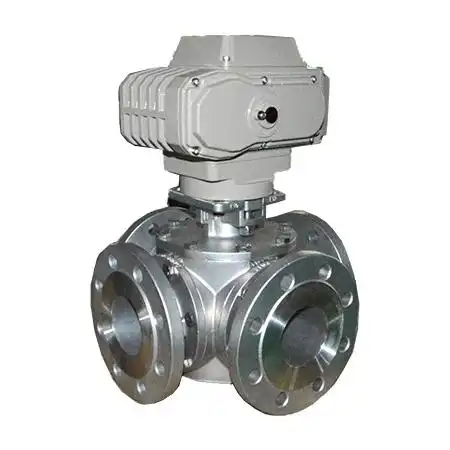
A three‑way diverting valve is a specialized valve designed to divert medium from a single inlet to two separate outlet pipelines on demand. Its core function follows the principle of One Inlet, Two Outlets.
Distinct from the mixing valve (a two‑inlet, one‑outlet device), the three‑way diverting valve adopts an L‑Port flow path configuration. This structural feature guarantees that incoming fluid can only be directed to one of the two outlets selectively, without mixing of incoming streams.
The primary function of a three‑way diverting valve is to divert medium from a single source, including water, oil, gas, chemical reagents, food‑grade materials and other fluids, to downstream equipment, storage tanks or pipeline branches in accordance with pre‑set switching logic. One single three‑way diverting valve can replace the conventional assembly consisting of two 2‑way valves plus three T‑fittings. Such substitution cuts potential leakage points from more than six down to 2‑3, and saves approximately 50% of installation footprint.
Diversion‑Oriented Design
The diversion performance of the 3 way divert valve originates from its L‑Port flow path:
- L‑Port: The internal ball bore features an L‑shaped passage. The inlet stays connected to one outlet, and a 90‑degree rotation switches flow toward the alternative outlet. This design delivers accurate and reliable diversion. On the closed side, the ball forms a 360° circumferential sealing contact with the valve seat to achieve bi‑directional zero‑leakage performance.
- Optional Full Port: The full‑port option ensures the inner bore of the ball matches the nominal pipe inner diameter. No abrupt cross‑sectional change occurs during medium diversion, hence flow rate and pressure remain unaffected.
- Anti‑cross‑contamination Sealing: The combination of PTFE seats and precisely polished balls delivers zero internal leakage on the closed side after position switching, effectively eliminating medium cross‑flow between different branch lines.
Valve Specifications and Technical Parameters
| Parameter | Specification Details |
|---|---|
| Nominal Size | 1/2″ ~ 12″ (DN15 ~ DN300) |
| End Connection | NPT thread / BSP thread / Flange (ANSI/EN) / Tri‑Clamp sanitary clamp |
| Pressure Class | Class 150 / 300 / 600 (maximum 1,480 PSI) |
| Temperature Range | -20°C ~ 180°C (PTFE seat); -46°C ~ 250°C (optional PEEK seat) |
| Flow Path Type | L‑Port (diversion dedicated) / T‑Port (for mixing or diversion) |
| Body Material | WCB carbon steel / CF8M (316L) stainless steel / nickel‑plated brass / ductile iron |
| Ball Material | 13Cr stainless steel / 316L stainless steel / chrome‑plated brass |
| Seat Material | Reinforced PTFE / PEEK |
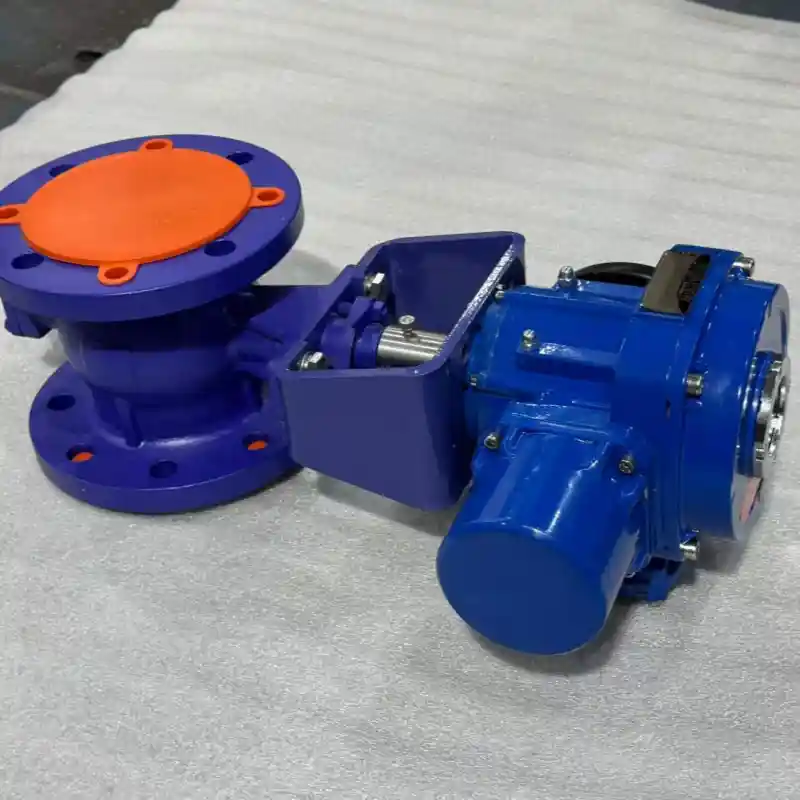
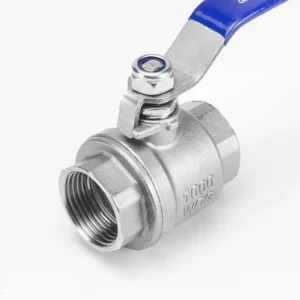
| Actuation | Manual lever (lockable) / Gear operator / Pneumatic actuator / Electric actuator |
| Anti‑static Device | Standard configuration for flammable‑medium service |
| Fire‑safe Design | API 607 compliant (optional) |
Selection Guidelines for Diversion Service
- L‑Port: Purpose‑built for diversion applications. It routes flow from one inlet to either of the two outlets. It fits scenarios where medium needs precise delivery to separate downstream hardware, such as switching among different reactors, storage tanks or filling lines.
- T‑Port: Capable of both diversion (one inlet feeding two outlets) and mixing (two inlets merging toward one outlet). When used for diversion, it delivers proportional flow to both outlets simultaneously rather than performing on‑off alternate switching. Select L‑Port if strict alternate flow switching is required.
Typical Application Scenarios
Three‑way diverting valves are widely deployed across industrial and processing sectors requiring precise medium distribution:
- Food & Beverage: Diversion of CIP cleaning fluid to different processing units; redirection of pasteurized milk to separate filling lines; routing of wine must to designated fermentation tanks.
- Oil & Gas Gathering: Switch wellhead produced fluids among separators, metering skids and storage tanks.
- Water Treatment & Municipal Water Supply: Switch well‑sourced raw water to different municipal pipe networks; distribute finished water from water plants to distinct service zones.
- Pharmaceuticals & Bioengineering: Accurate diversion of sterile media to target bioreactors or fermenters.
- Industrial Cooling and HVAC: Distribute cooling water on demand to multiple cooling towers or heat exchangers.
Field Application Reference
Case 9 describes a fermentation fluid diversion project for a family‑run winery (Domaine Viticole Familial) located in Alsace, France. The facility operates 12 stainless‑steel fermentation tanks with an annual output of around 80,000 bottles. During harvest seasons, grape must from presses requires controlled diversion to individual fermentation tanks for alcoholic fermentation.
Previously, operators relied on manual hose reconnection with quick couplings. Operators had to disconnect and reconnect hoses roughly 30 times per batch. This practice brought heavy workload, sanitation risks and potential cross‑contamination across batches in fermentation tanks.
The upgrade solution implemented L‑Port three‑way diverting valves: 316L stainless‑steel body, 1.5‑inch size, Tri‑Clamp sanitary connections, full‑port bore, sanitary electropolished finish (Ra ≤ 0.8 μm), and manual lever operation. Each pair of fermentation tanks shares one valve assembly.
Operators at the press only need to toggle the valve lever to complete must diversion, removing repeated hose handling. Thanks to the L‑Port geometry, grape must flows fully into one target tank. Bi‑directional zero‑leakage from PTFE seats on the closed side prevents cross‑contamination between tank batches. Sanitary electropolishing (Ra ≤ 0.8 μm) and crevice‑free construction mitigate product retention and microbial growth risks.
Following retrofitting, on‑site labour intensity dropped by approximately 70%. Batch consistency inside fermentation tanks improved noticeably, together with enhanced end‑customer satisfaction. The winery has replicated this diverting valve solution for its sister estate.
Quality Assurance
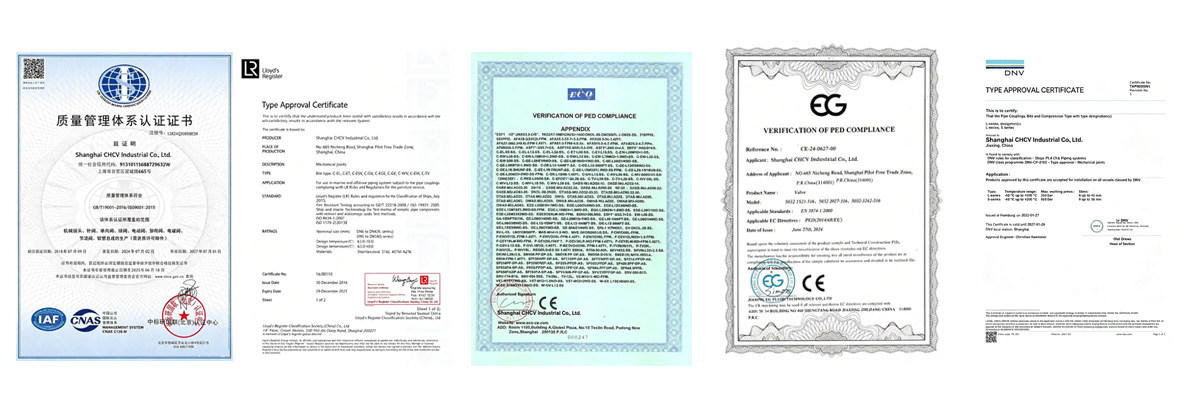
CHCV three‑way diverting valves are manufactured and tested in compliance with ASME B16.34 under ISO 9001 quality management system. Sanitary variants satisfy FDA 21 CFR 177.1550 requirements for food‑grade PTFE seats. Every valve undergoes 100% hydrostatic shell test and bi‑directional seat tightness inspection per API 598 prior to shipment. Complete material certificates and test reports are supplied alongside delivered products.