







Hygienic Ball Valve with Dead-Leg-Free Design for Wine and Beverage Lines

Hygienic ball valve eliminates product entrapment and bacteria growth in food processing. Used in Concha y Toro winery. Tri-Clamp ends, Ra 0.4μm finish. Request a quote.

Description

In food, beverage, dairy, and biopharmaceutical production, any internal cavity or stagnant zone within a valve can become a breeding ground for microbes and a source of cross‑contamination between product batches. Conventional ball valves often have seat‑retention grooves, threaded connections, and annular clearances between the ball and body that are difficult for cleaning media to reach, leading to failed CIP/SIP validation. The hygienic ball valve overcomes this with a dead‑leg‑free, integrally machined body cavity. Its internal surfaces are mechanically polished or electropolished to Ra ≤ 0.4 μm (for food‑grade service) or Ra ≤ 0.25 μm (for pharmaceutical service), fundamentally removing the structural features that trap product residue and promote microbial attachment.

Dead‑Leg‑Free Construction and Hygienic Design Principles

The hygienic ball valve differs from standard industrial ball valves in several key design aspects:

  • Full‑bore flow path: The ball’s internal bore matches the pipe inner diameter at both ends—no step reductions or sudden contractions.

  • Seat retention without exposed threads: Seats are secured by a retaining ring and circlip arrangement, eliminating threaded surfaces that would otherwise be wetted by the process fluid.

  • Seamless end connections: Tri‑Clamp or weld ends are machined integrally with the body, leaving no crevices or dead spaces.

  • Electropolished internal finish: The 316L stainless steel surface is electropolished to form a dense, chromium‑enriched oxide layer that enhances corrosion resistance and allows cleaning solutions to spread evenly and completely.

Key Technical Specifications

Parameter Specification
Nominal Diameter (DN) DN10 – DN150 (⅜″ – 6″)
Pressure Rating PN10 – PN40 / Class 150
Body Material 316L Stainless Steel (1.4404 / 1.4435)
Ball Material 316L Stainless, electropolished surface
Seat Material Reinforced PTFE / Modified PTFE (FDA 21 CFR 177.1550 compliant)
Seal Material EPDM / FKM / PTFE (USP Class VI or FDA‑grade)
End Connections Tri‑Clamp / Weld Ends (ASME BPE) / DIN 11851 Threaded / SMS Threaded
Internal Surface Finish Ra ≤ 0.4 μm (mechanically polished) / Ra ≤ 0.25 μm (electropolished)
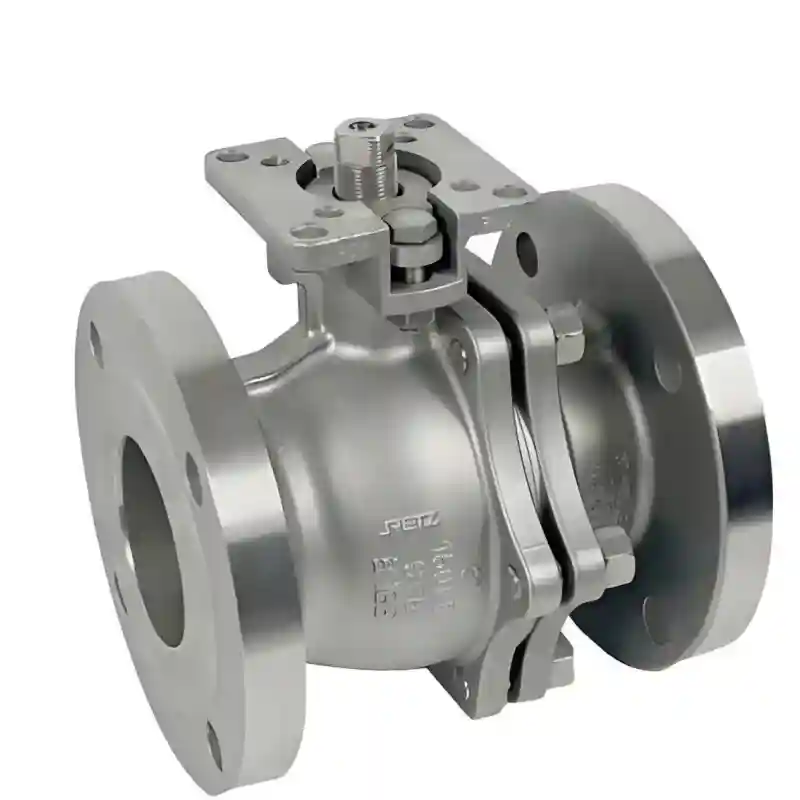
Actuation Manual Lever / Pneumatic / Electric
Design Standards ASME BPE / EHEDG / 3‑A Sanitary Standards
Cleaning & Sterilisation Supports CIP (Clean‑in‑Place) / SIP (Steam‑in‑Place) up to 150 °C
Material Traceability EN 10204 Type 3.1 certification (including chemical composition and intergranular corrosion test reports)


Typical Applications

  • Wine, beer, juice, dairy, and beverage processing lines

  • Food condiment, edible oil, syrup, and honey transfer systems

  • WFI (Water for Injection) and purified water circuits in pharmaceutical and biotech facilities

  • Creams and lotions in cosmetics and personal care manufacturing

  • Change‑over and isolation valves in CIP/SIP cleaning and sterilisation systems

  • High‑purity chemical transfer where extremely low metal ion leachables are required

Field Case – Viña Concha y Toro, Maipo Valley, Chile

At this renowned winery, the post‑fermentation wine transfer lines had previously been equipped with conventional ball valves. The winemaking team found that sediment and yeast lees accumulated in the valve cavities, making inter‑batch cleaning difficult and raising the risk of microbial cross‑contamination. Before the 2018 harvest season, the winery upgraded all DN40 wine transfer lines from fermentation tanks to ageing casks, replacing the old valves with hygienic ball valves featuring Tri‑Clamp connections and a mechanically polished internal finish (Ra = 0.4 μm).

After the upgrade, CIP validation results improved markedly. Swab samples taken from the valve internals and tested with ATP bioluminescence consistently gave readings below 10 RLU (relative light units)—well under the winery’s internal limit of 50 RLU. Production manager F. González commented: “The dead‑leg‑free design of the hygienic ball valve has essentially eliminated lees accumulation, and we now have much better control over flavour consistency across vintages.”

Selection Guidelines

When selecting a hygienic ball valve, pay special attention to the following three factors:

  1. Surface finish specification – For protein‑ or tannin‑containing media (e.g., dairy, beer, wine), a mechanically polished finish of Ra ≤ 0.4 μm is generally sufficient. For sterile pharmaceutical and WFI systems, electropolishing to Ra ≤ 0.25 μm is required, and a surface roughness test certificate should be provided.

  2. Seat material compatibility with CIP/SIP conditions – Standard PTFE seats are suitable for routine CIP cleaning at temperatures up to 80 °C. If SIP steam sterilisation (120–150 °C) is involved, choose modified PTFE or PEEK seats. For seals, EPDM resists alkaline cleaning agents, while FKM is preferred for acidic media.

  3. End connection compatibility with existing piping – Tri‑Clamp (ISO 2852) is common in European and American markets; DIN 11851 threaded connections are widely used in the European dairy industry; and ASME BPE weld ends are standard in pharmaceutical installations. Always confirm the mating standard at your site to avoid connection mismatches.