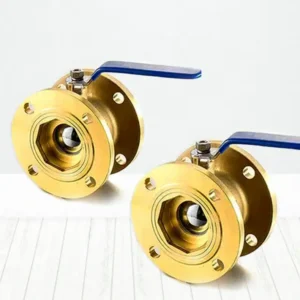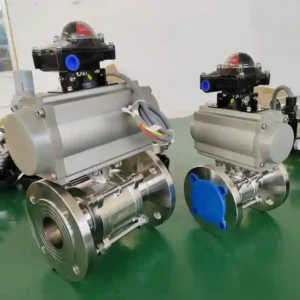

No. Ball valves are not inherently all full port. Whether they are full port depends on design, order requirements, and application conditions. In the industry, full port and full bore are often used interchangeably, but strictly speaking, both emphasize that the ball passage is not reduced.
Are all ball valves full bore? The answer is also no. Many ball valves use reduced port or standard port, with a passage smaller than the pipe inside diameter, lower cost, and lower torque.
Are all ball valves the same? Also no. Even if they are all full port, end connection type, pressure rating, body material, seal material, floating or trunnion ball structure, and actuator interface may all differ.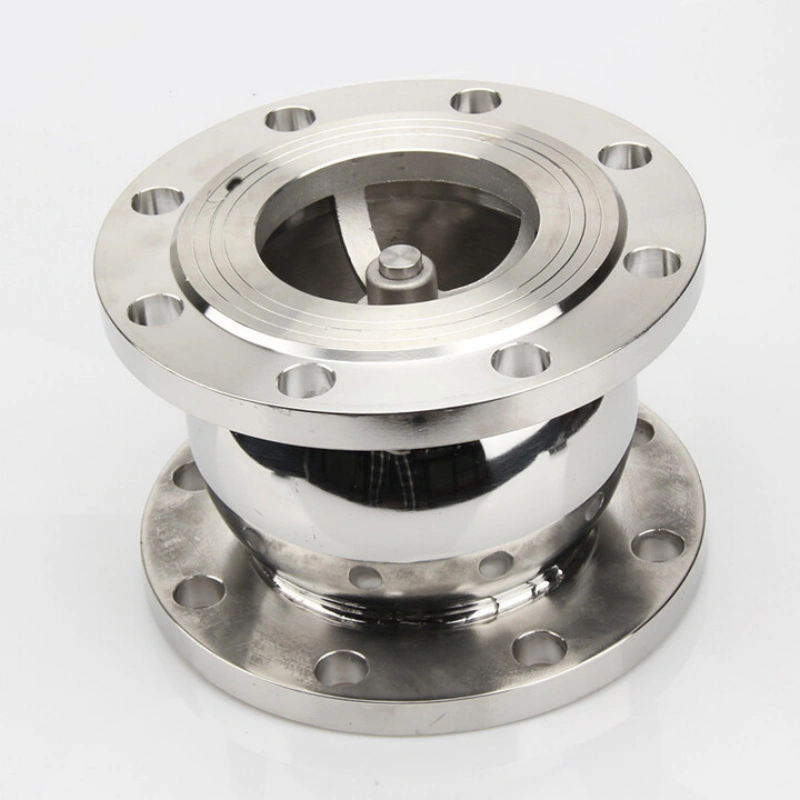
Full port ball valve vs reduced port ball valve
The ball bore of a full port ball valve is close to the inside diameter of the connected pipe; when fluid passes through, pressure drop is low; it is suitable for pigging, slurry, high-viscosity media, and pipelines that need to reduce pump power consumption.
The ball bore of a reduced port ball valve is smaller than the pipe inside diameter; it is often used for general shutoff where low flow resistance is not required. Both can open and close, but they cannot be interchanged in all operating conditions.
According to common practice in API 608, API 6D, and ANSI B16.10, when purchasing, look at port form, face-to-face, and pressure rating, not just nominal size.
Full port ball valve dimensions
Full port ball valve dimensions cannot be determined only by DN or inch. Flange standard, Class 150/300/600, threaded or welded end, and face-to-face length all change the external dimensions.
The full port passage is large, and the valve body is usually larger too. During selection, confirm the pipe inside diameter, port inside diameter, and ball bore inside diameter, and check the installation space.
Full port ball valve cv
CV represents the clean water flow rate through the valve at a pressure difference of 1 psi. The CV of a full port ball valve is usually higher than that of a reduced port ball valve of the same size, and pressure loss is lower. System calculations should use the manufacturer’s CV curve, not estimate by nominal size. Gas, steam, and high-viscosity liquids also require correction.
2 inch ball valve full port specifications
2 inch ball valve full port specifications usually include end connection, pressure rating, body material, ball and stem material, seal material, face-to-face, CV, torque, and ISO 5211 actuator interface.
2 inch full port is often used in water treatment, oil and gas, and pigging pipelines. A 2 inch reduced port ball valve cannot be used as a full port.
Standard port ball valve and reduced port ball valve
Standard port ball valve usually falls within the reduced port range; it is not equal to full port. If the system requires low flow resistance, pigging, or high flow capacity, specify full port ball valve; if only on/off is required, standard or reduced port may meet the requirement.
Before quotation, CHCV valves will confirm port form, CV, dimension standard, medium, temperature, and pressure. This avoids purchasing a reduced port ball valve as a full port.
The conclusion is: not all ball valves are full port, and not all ball valves are the same. Selection should return to flow rate, pressure loss, pigging, and installation conditions.