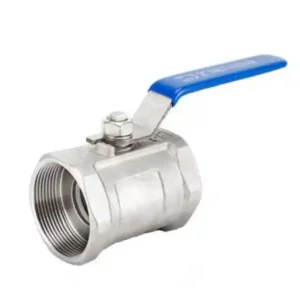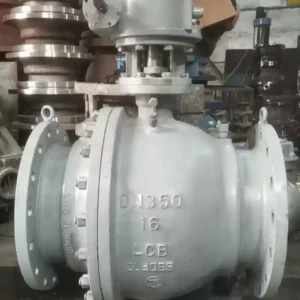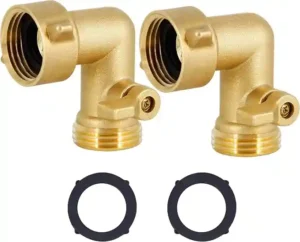

What are the common sizes of ball valves?
For users involved in procurement, engineering selection and replacement maintenance of ball valves, it is necessary to confirm the correspondence between NPS, DN, inches and millimeters, end connection types, pressure classes, as well as full port or reduced port configurations.
Under standard systems including API 6D, ASME B16.10, ISO 5752 and EN 558, ball valve dimensions shall be marked with nominal size, end standard, pressure class and face-to-face structure length simultaneously in international project specifications.
Below is an explanation covering common nominal size ranges, unit conversion, standards, connection types and maximum available sizes.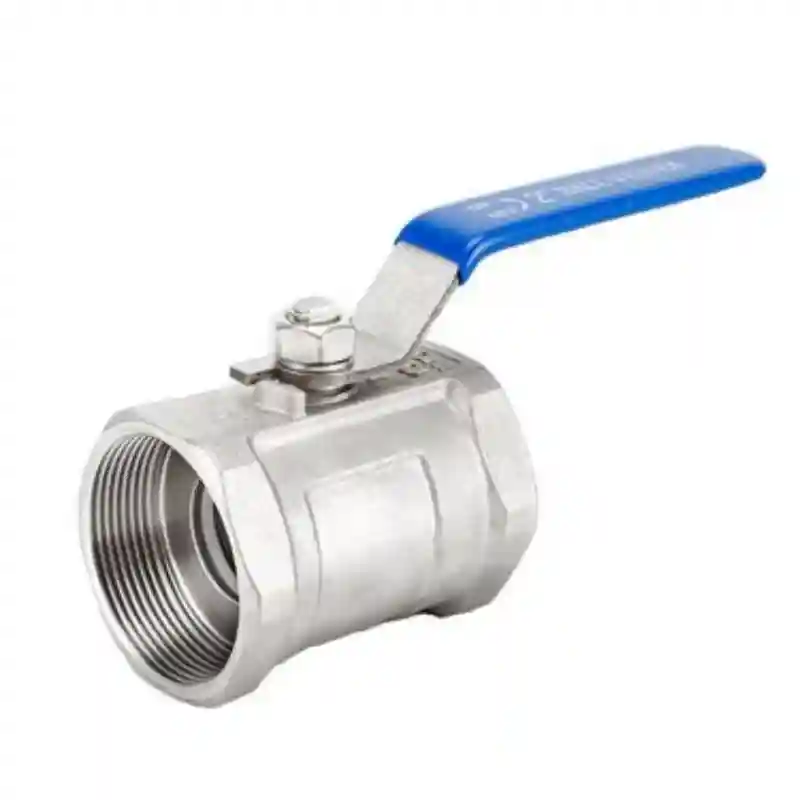
1. Understanding DN, NPS, Inches and Millimeters
Ball valve sizes are commonly expressed in four ways:
- NPS: Nominal Pipe Size, widely used in North America, e.g. 1/2″, 3/4″, 1″, 2″.
- DN: Nominal Diameter, adopted in international standards, e.g. DN15, DN20, DN25, DN50.
- Inch: e.g. 1/2 inch, 3/4 inch, 2 inch.
- Millimeter: e.g. 15 mm, 20 mm, 25 mm, 50 mm.
Special note: DN is nominal diameter, not equal to the actual inner bore. For ball valves of the same DN25, the inner bore differs between full port and reduced port designs. Actual dimensions also vary among threaded end, flanged end and welded end versions.
2. Ball Valve Sizes Chart: Common Ball Valve Size Conversion
The table below lists the most common ball valve size equivalents for the global market, applicable to threaded, flanged, welded, press-fit and tri-clamp end connections. Actual available sizes depend on material, pressure class and manufacturer.
| NPS / Inch | DN | Nominal mm | Typical Application |
|---|---|---|---|
| 1/8″ | DN6 | 6 | Instrumentation, air, small-bore piping |
| 1/4″ | DN8 | 8 | Instrumentation, refrigeration, gas |
| 3/8″ | DN10 | 10 | Fuel, air, instrumentation |
| 1/2″ | DN15 | 15 | Water, gas, steam, general piping |
| 3/4″ | DN20 | 20 | Water, gas, HVAC, irrigation |
| 1″ | DN25 | 25 | General industrial and commercial piping |
| 1 1/4″ | DN32 | 32 | Water treatment, HVAC, industrial service |
| 1 1/2″ | DN40 | 40 | Water, gas, chemical industry |
| 2″ | DN50 | 50 | Industrial, municipal, oil & gas |
| 2 1/2″ | DN65 | 65 | Medium-bore industrial piping |
| 3″ | DN80 | 80 | Industrial, water treatment, oil & gas |
| 4″ | DN100 | 100 | Industrial, pipeline, municipal service |
| 6″ | DN150 | 150 | Large-bore industrial and pipeline service |
| 8″ | DN200 | 200 | Oil, natural gas, water treatment |
| 10″ | DN250 | 250 | Pipeline and industrial plant |
| 12″ | DN300 | 300 | Long-distance pipeline, municipal project |
| 14″–24″ | DN350–DN600 | 350–600 | Large-bore pipeline, station yard |
| 28″–48″ | DN700–DN1200 | 700–1200 | Long-distance pipeline, fully welded ball valve |
| 56″–60″ & above | DN1400–DN1500+ | 1400–1500+ | Special large-diameter pipeline project |
As shown in this table, 1/2″–4″ is the most widely used size range for general-purpose ball valves; 6″–24″ falls into large-bore industrial ball valves; sizes above 28″ usually adopt trunnion mounted and fully welded pipeline ball valve designs.
3. How many millimeters is a 1 inch ball valve?
Nominal conversion for a 1 inch ball valve: 1 inch = 25.4 mm
Therefore, a 1 inch ball valve normally corresponds to DN25. It should be noted that 25.4 mm is the inch-to-millimeter conversion value, not the actual inner bore of the ball valve. The real inner bore is determined by:
- Full port or reduced port design;
- End connection type: threaded, flanged, welded or press-fit;
- Pressure class and wall thickness;
- Valve body material and structural design.
Accordingly, if only “1 inch ball valve” is specified in purchase orders, suppliers still need confirmation on NPS 1, DN25, end standard, pressure class, full/reduced port and body material.
4. How many inches are in a 20mm ball valve?
Conversion for a 20 mm ball valve: 20 ÷ 25.4 ≈ 0.7874 inch, approximately 0.79 inch.
Within the ball valve sizing system, 20 mm is categorized as DN20, which commonly matches a 3/4″ ball valve in the market.
Strictly speaking, 3/4″ converts precisely to 19.05 mm rather than 20 mm. DN20 and 3/4″ are nominal approximate equivalents. Interchange is not allowed under different thread standards. For example, NPT, BSP and BSPP threads differ in thread form and sealing method even at the same nominal size. When replacing ball valves, do not rely merely on “20 mm” or “3/4 inch”. Thread standard and end dimensions must also be verified.
5. 2 1/2 Inch Ball Valve Dimensions: Medium-Bore Reference
2 1/2 inch ball valve dimensions are frequently queried by industrial users. 2 1/2″ normally corresponds to DN65, widely used in water treatment, HVAC, chemical, fire protection and general industrial piping.
Common configurations of 2 1/2″ ball valves include:
- 2 1/2″ threaded ball valve;
- 2 1/2″ flanged ball valve;
- 2 1/2″ full port ball valve;
- 2 1/2″ reduced port ball valve;
- 2 1/2″ trunnion mounted or floating ball structure;
- 2 1/2″ pneumatic and motor actuated ball valve.
Key dimensions normally cover valve body length, face-to-face dimension, flange outer diameter, bolt circle diameter, thread size, ball bore diameter, handle or actuator mounting dimensions. Specifying only “2 1/2 inch” is insufficient; pressure class and end standard are mandatory.
6. Flanged Ball Valve Sizes and Threaded Ball Valve Sizes
Flanged ball valve sizes and threaded ball valve sizes cover different ranges:
- Threaded ball valve: commonly 1/4″–4″, with 1/2″, 3/4″, 1″, 1 1/4″, 1 1/2″, 2″ as mainstream sizes. Typical thread standards: NPT, BSP, BSPP.
- Flanged ball valve: commonly 1/2″–24″. Larger sizes can reach 48″ or 60″. Common flange standards: ASME B16.5, EN 1092, DIN, JIS.
- Welded ball valve: commonly 1/2″–24″. Fully welded trunnion mounted design is widely adopted for large-bore pipelines.
- Press-fit, Tri-Clamp: mainly for sanitary, food, pharmaceutical and small-bore piping, most sizes fall within 1/2″–4″.
For flanged ball valves, DN alone is not enough; pressure class must be specified, such as Class 150, 300, 600, 900, 1500, 2500, or PN10, PN16, PN25, PN40, PN63. For the same DN, flange outer diameter, bolt quantity and face-to-face dimension vary under different pressure classes.
7. Ball Valve Dimension Standards: Size Selection Is Not Limited to Nominal Bore
Ball valve dimension standards are critical for valve selection. International projects generally refer to the following standard systems:
- ISO 6708: Definition of DN nominal diameter;
- ASME B16.10: Valve face-to-face and end-to-end dimensions;
- ASME B16.5: Flange dimensions and pressure class;
- API 6D: Pipeline ball valve design, manufacturing and testing;
- API 608: Flanged, threaded and welded end ball valves;
- ISO 5752 / EN 558: Face-to-face dimensions for flanged end valves;
- API 607 / API 6FA: Fire-safe testing;
- NACE MR0175 / ISO 15156: Material requirements for sour service.
Industrial valve journals and international project specifications consistently emphasize: ball valve selection cannot state only “2 inch” or “DN50”. A complete specification example is as below:
NPS 2, DN50, Class 300, flanged RF, full port, floating ball, CF8M body, PTFE seat, API 6D.
This format enables suppliers to provide accurate quotations and prevents mismatches during field installation.
8. Full Port Ball Valve Dimensions & Difference from Reduced Port Ball Valve
Full port ball valve dimensions refer to ball valves whose internal bore is nearly identical to pipe inner diameter. It features low flow resistance, suitable for applications requiring low pressure drop, pigging or high flow rate. The ball bore diameter of full port ball valves is close to pipe inner diameter.
Reduced port ball valves have a ball bore smaller than pipe inner diameter, with lower cost and smaller operating torque, but higher pressure loss.
- Full port ball valves of 1/2″, 3/4″, 1″, 1 1/2″, 2″ are widely used in commercial and industrial sectors.
- For sizes above 2″, full port and reduced port designs show obvious differences in price, weight and operating torque.
- Large-bore pipeline ball valves are normally required to be full port to facilitate pigging and reduce pressure drop.
Therefore, when checking full port ball valve dimensions, apart from nominal size, ball bore diameter, Cv value, face-to-face dimension and end connection shall also be confirmed.
9. What is the maximum size of a ball valve?
There is no unified absolute “maximum size” for ball valves. It depends on structure type, pressure class, standard, material, actuator torque, transportation constraints and manufacturer capability.
General rules:
- Floating ball valve: normally available up to 8″ / DN200; some manufacturers offer up to 10″ / DN250, but rarely adopted for high-pressure large-bore service.
- Trunnion mounted ball valve: commonly used for 6″–48″ / DN150–DN1200, widely selected for large-bore high-pressure pipelines.
- Fully welded pipeline ball valve: commonly available up to 48″ / DN1200. Certain projects adopt 56″, 60″ / DN1400–DN1500 and larger.
- Custom engineered: long-distance pipelines, offshore platforms and gas storage projects may require ball valves larger than 60″. Such valves normally require gearbox, electric or pneumatic actuators and dedicated design verification.
Thus, the accurate answer to “What is the maximum size of a ball valve?” is: the maximum size of common industrial ball valves is approximately 48″–60″. However, the actual maximum achievable size is subject to structure, pressure class and manufacturer capacity, and cannot be defined independent of operating conditions.
10. Size Information Required for Ball Valve Procurement or Replacement
To source the correct ball valve, the following information is recommended:
- Nominal size: NPS, DN, inch or millimeter;
- End connection: threaded, flanged, welded, press-fit, Tri-Clamp, grooved;
- Pressure class: Class 150/300/600/900/1500/2500, PN16/PN25/PN40, 1000 WOG, 3000 psi, etc.;
- Construction: 1PC, 2PC, 3PC, floating ball or trunnion mounted;
- Port type: full port or reduced port;
- Valve body material: brass, bronze, carbon steel, stainless steel 304/316, CF8M, WCB, Duplex;
- Seat material: PTFE, RPTFE, PEEK, metal seat;
- Medium and temperature: water, gas, oil, steam, chemical medium;
- Operation: lever, gearbox, electric, pneumatic;
- Standards: API 6D, API 608, ASME B16.10, ISO 5752, EN 558, etc.
Conclusion
Ball valve common sizes cover from 1/8″ up to 60″ and beyond. The most frequently used general-purpose sizes are concentrated in 1/4″–4″. Large-bore industrial sizes are 6″–24″, while long-distance pipeline and special projects can adopt 48″–60″ and above. A 1 inch ball valve normally corresponds to DN25 / 25.4 mm nominal. A 20 mm ball valve is approximately 0.79 inch and is classified into DN20 / 3/4″ range. There is no hard upper limit for ball valve maximum size; the available range differs among floating ball, trunnion mounted and fully welded pipeline ball valves.
For CHCV, ball valves can be supplied in sizes under NPS, DN, inch and millimeter systems. End standard, pressure class, full/reduced port, material and actuator configuration can be confirmed per project requirements. During valve selection, specify size together with standard, connection type, pressure class and medium to obtain a properly matched ball valve solution.