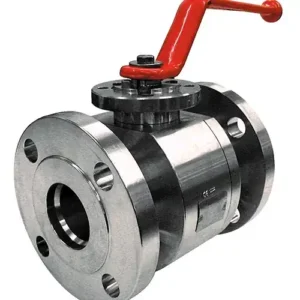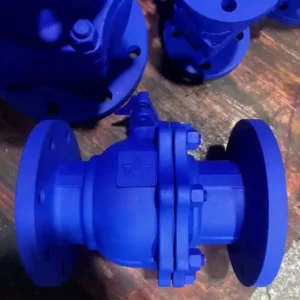

According to ASME B16.10, the face-to-face length of a 2-inch (DN50) Class 150 short-pattern flanged full-port ball valve is normally 178 mm (7 in); for a Class 300 flanged ball valve, this dimension is approximately 216 mm (8.5 in).
Accordingly, the length of a 2″ ball valve is not a fixed value. You must first lock in the pressure class and end connection.
When checking 2 inch ball valve dimensions, flanged ends can be looked up in standard tables. Threaded ends and socket weld ends are not covered by the ASME B16.10 flanged face-to-face tables, so you need to obtain drawings from the manufacturer. For replacement of old valves or pipe prefabrication, you also need to confirm the flange standard, flange facing and available installation clearance at the same time.
Why does the length change for the same 2-inch size?
Pressure class is the first variable. When checking 2″ 150 flanged ball valve dimensions, 178 mm corresponds to the Class 150 short-pattern flanged construction. When checking 2″ 300 flanged ball valve dimensions, 216 mm applies to Class 300. The difference of 38 mm is enough to cause mismatches with prefabricated pipe spools.
If your purchase order only states “2-inch ball valve” without specifying pressure class, short/long pattern, or flange facing, suppliers will quote based on different configurations, and the length may not fit the installation space.
ASME B16.10 only specifies face-to-face dimensions for flanged-end valves. It does not cover threaded ends, socket weld ends, grooved ends or butt weld ends.
End connection is the second variable. Flanged ends have published standard table values; threaded ends and socket weld ends must be confirmed against end standards and manufacturer drawings.
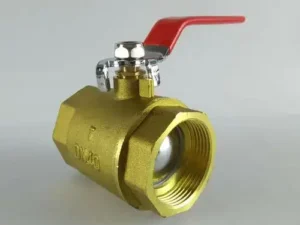
2 inch threaded ball valve dimensions cannot directly adopt the 178 mm value, because NPT and BSP thread end machining differs, resulting in variations in end-to-end length.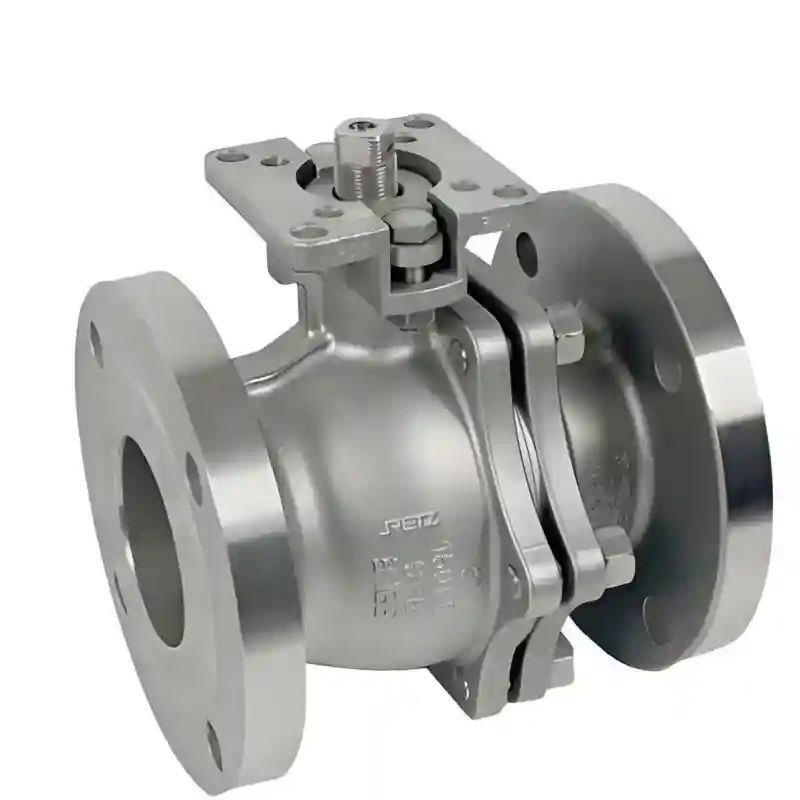
Measurement reference: where to measure the length
For flanged ball valves, measure the distance between the two flange sealing faces, i.e., the face-to-face dimension. For threaded ball valves, measure the distance between the two end faces, excluding the handle, stem, actuator or packaging.
Installation space is not equal to the valve length alone. You also need to reserve clearance for handle rotation radius, actuator height, insulation thickness and space for flange bolt disassembly. When reviewing a 2″ ball valve drawing, confirm whether the marked dimension is face-to-face length, end-to-end length, or overall length including the actuator.
When replacing old valves, take measurements on the original valve in place instead of only relying on catalog dimensions of the new valve. The old valve may be fitted with flange gaskets, nipples or insulation, so dimensions will change after disassembly.
Full port vs reduced port: identical length but different flow capacity
2″ full port ball valve dimensions may show the same face-to-face length as reduced port models, but flow capacity differs significantly. The ball bore of a 2-inch full port ball valve is close to 50 mm, while the bore of a reduced port valve is smaller with a lower Cv value.
If you select the valve purely based on length, the valve will fit physically, but pressure drop will rise, which will affect flow at the pump outlet or fluid supply to terminal equipment.
Your purchase specification must include: NPS, pressure class, material, end standard, face-to-face length, full port/reduced port, flange drilling standard and flange facing.
Quick Reference Table for 2-Inch Ball Valve Dimensions
This table is for preliminary screening only; final dimensions shall be subject to manufacturer drawings.
| Construction / End Connection | Pressure Class | Face-to-Face or End-to-End Length | Remarks |
|---|---|---|---|
| Short-pattern flanged full port | Class 150 | 178 mm / 7 in | ASME B16.10 flanged face-to-face table; RF facing |
| Flanged full port | Class 300 | 216 mm / 8.5 in | Approximately 38 mm longer than Class 150 |
| Threaded end | Class 150 / 300 | Check manufacturer drawings | Not governed by ASME B16.10 flanged tables |
| Socket weld end | Class 150 / 300 | Check manufacturer drawings | End standard and pipe size affect length |
| Full port / Reduced port | Same pressure class | May be identical | Same length does not equal identical flow rate |
Two Most Common Mistakes in Purchasing & Replacement
- Only matching face-to-face length without verifying flange interfaces. Consistent face-to-face length does not guarantee matching flange bolt circle, sealing face type or flange thickness. The purchase order must clearly specify flange standard, pressure class, facing and bolt hole standard.
- Treating NPS 2 as a 2-inch bore. NPS 2 is nominal size, not equal to a 2-inch ball bore. The bore of a full port valve is nearly 50 mm, while the bore of a reduced port valve is smaller. Estimating Cv value based solely on “2-inch” will result in overestimated flow capacity.
FAQ
Is a 2-inch ball valve always 178 mm long? No. The 178 mm dimension applies only to Class 150 short-pattern flanged models. Class 300 measures around 216 mm; threaded and socket weld ends require verification against manufacturer drawings.
How long is a 2-inch ball valve with threaded ends? There is no unified standard table. 2 inch threaded ball valve dimensions are affected by thread standard, end machining and manufacturer design, so confirm the exact size with the specific drawing.
Does full port change the length? Not necessarily. Full port and reduced port valves may share the same face-to-face length, but differ in ball bore diameter and Cv value. You need to check both length and flow capacity during selection.
What standard covers 2-inch flanged ball valve face-to-face dimensions? Flanged-end dimensions follow ASME B16.10. This standard excludes threaded ends, socket weld ends and grooved ends; never apply flanged table values to all end types.
How do I confirm length before ordering? Provide pressure class, end connection (flanged, threaded, socket weld), flange standard & facing, available installation clearance, and whether an actuator is required. Ask the manufacturer to return dimension drawings for space verification prior to order placement.
Next Steps
Send CHCV your pressure class, end connection (flanged, threaded, socket weld), flange standard and facing, available installation clearance, and actuator requirement. We will send you the dimension drawing of the 2-inch ball valve for you to verify installation space before placing your order.