
When users query “how does ball valve work”, they usually want to know why the medium in the pipeline can pass through or be shut off when the handle is turned 90°.
To truly understand a ball valve, you need to look at the ball, seats, stem, sealing and installation position together.
How a ball valve works can be summarized in one sentence: A ball with a through bore rotates inside the valve body. When the through bore aligns with the pipeline, the valve opens; when the through bore is offset, the valve closes.
The internal part of a ball valve: ball. Many people ask what do you call the ball inside the valve? In English technical documents, this component is simply called a ball. In Chinese, it is often referred to as 球体 or 阀球. A cylindrical through bore runs through the center of the ball, and the medium flows through this bore.
On both sides of the ball are valve seats. Common seat materials include PTFE, RPTFE, PEEK, nylon and metal for metal-to-metal sealing. The valve stem connects the ball to the handle or actuator. Packing and O-rings around the stem prevent medium leakage outwards along the stem.
If you disassemble a 2-piece or 3-piece ball valve, the ball valve parts and functions are roughly as follows: valve body, end caps, ball, valve seats, stem, packing, anti-static device, handle, bolts and gaskets.
Understanding ball valve construction and working helps you determine whether leakage originates from the valve seats, stem packing, body joint or end cap sealing. For flammable and explosive media, the anti-static structure electrically connects the ball, stem and valve body to reduce static electricity accumulation risks.
What does a ball valve look like?
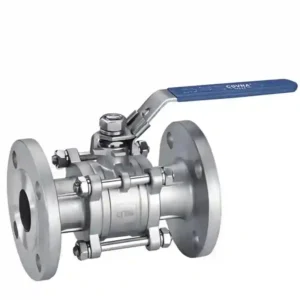
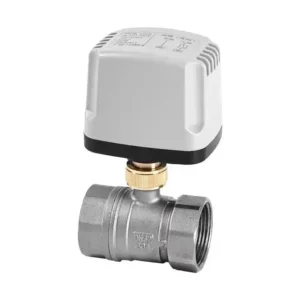
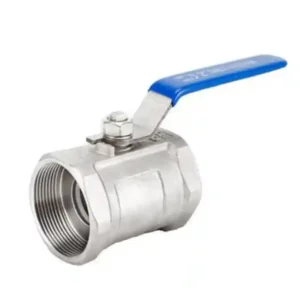
From the outside, it is generally a metal valve body with a handle or gearbox mounted on top. Small bore ball valves often have hexagonal or round bodies; handles are usually flat steel or cast iron levers. Large bore ball valves come with flanges, gearboxes, pneumatic actuators or electric actuators.
End connection types also affect appearance: threaded ball valves have NPT, BSP or other external/internal threads; flanged ball valves have flange discs and bolt holes on both ends; welded ball valves feature socket weld or butt weld ends; sanitary ball valves normally adopt clamp / tri-clamp connections.
Based on body construction, ball valves are classified into 1-piece, 2-piece and 3-piece designs. The 1-piece type is compact and low-cost but internal maintenance is inconvenient. The 2-piece version consists of a main body and a secondary body for partial maintenance. The 3-piece design clamps the central body with bolts. After disassembly, the ball, seats and gaskets can be replaced. It is widely used in beer, food, chemical and applications requiring frequent cleaning.
What is the function of a ball valve?
Its primary function is fast shut-off and isolation. It is not suitable for precise flow throttling over long periods like a globe valve. When fully open, the ball bore aligns with the pipeline to deliver low flow resistance. When fully closed, the solid surface of the ball presses against the seats to form a seal.
If a ball valve stays partially open for a long time, the medium continuously scours the edges of the ball and seats, which may cause noise, vibration, sealing surface wear and changes in handle torque.
On pipelines requiring frequent on-off operation, comparisons of ball valve vs gate valve for isolation are common. Gate valves have a long travel for opening and closing and operate slowly, though suitable for full open / full closed service. Ball valves only need a quarter-turn, making them ideal for fast isolation of water, gas, oil and other media.
If the medium contains particles, slurry or is prone to scaling, seat material, bore size and cleanability must be considered during selection.
Open / Closed Position & Flow Direction
When judging ball valve open and closed position, for most ball valves, the handle parallel to the pipeline means open, and perpendicular to the pipeline means closed. However, this is not the sole criterion. Handle mounting orientation, limit stops or markings on the valve body may change this judgment.
After installation, always check body markings, handle limit stops and pipeline flow direction. Do not force rotation based only on feel.
For most 2-way ball valves, ball valve flow direction is not strictly restricted; medium can enter from either end. But valves with pressure relief holes, drain ports, grease injection ports, check structures or 3-way designs may have specified flow directions.
For example, ball valves with cavity relief holes for low temperature or liquid thermal expansion applications require the relief hole to face the pressure side. Flow paths of 3-way ball valves depend on L-port or T-port channel designs. Confirm flow direction before installation to reduce internal leakage and operational anomalies.
Floating Ball vs Trunnion Mounted Ball: Differences for Large Bore & High Pressure
Small bore ball valves mostly adopt floating ball construction. Medium pressure pushes the ball against the downstream seat to create sealing. This design is simple with fewer parts, but operating torque rises significantly under large bore and high pressure conditions. Large bore high pressure pipelines often use fixed ball, also known as trunnion mounted ball valve. The ball is supported by top and bottom trunnions with bearings. The seats move under pressure to fit against the ball surface, resulting in lower torque and predictable actuator sizing.
Trunnion mounted ball valves can also be designed with single piston effect or double piston effect to meet DBB (Double Block and Bleed) requirements. For pipelines requiring on-line maintenance, grease injection sealing or emergency venting, trunnion mounted designs are easier to accommodate these features.
Selection should not only consider bore size, but also pressure class, temperature range, medium cleanliness, operating frequency and actuator output torque.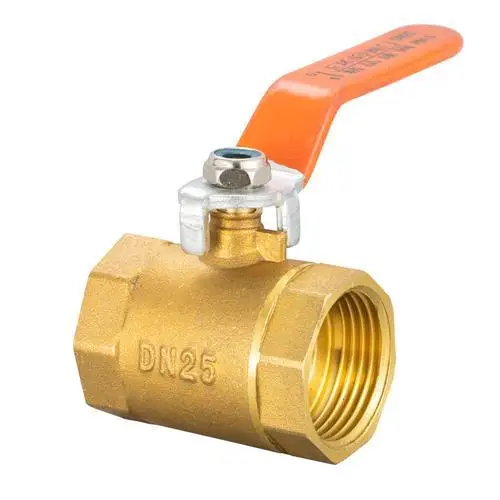
How 3-Way Ball Valves Work
The 3 way ball valve working principle differs from 2-way ball valves. The ball of a 3-way ball valve has an L-shaped or T-shaped passage. L-port is normally used to switch between two pipelines; T-port is used for flow splitting, combining or bypass service. It is not simply two 2-way ball valves combined together. The number of seats, ball channel angles and port positions will affect flow paths. When used for media mixing, distribution or switching, draw the piping logic first before selecting L-port or T-port.
Common Troubleshooting & Maintenance
Ball valve stuck: common causes include medium scaling, particles trapped between ball and seats, seal material swelling, over-tight stem packing or long-term inactivity without operation.
Internal leakage of ball valve: possible causes include scratched seats, damaged ball surface, operating temperature exceeding the seal material range, or pipeline impurities entering sealing surfaces. External leakage is mostly related to stem packing, end cap bolts and body joint connections.
3-piece ball valves can usually be disassembled to replace ball, seats and gaskets. Some 2-piece ball valves are repairable. Most 1-piece ball valves require full replacement once sealing fails. For welded installation, avoid overheating that damages PTFE or PEEK seats; remove internal components or use wet cloth for cooling if necessary.
For water systems, a strainer upstream of the valve can reduce particle scratching on seats. For gas systems, fire-safe and anti-static designs shall be confirmed according to working conditions.
Information to Provide During Valve Selection
When sending inquiries to suppliers, it is recommended to provide medium, temperature, pressure, bore size, connection standard, body material, ball material, seat material, operation type, fire-safe requirement, anti-static requirement, DBB requirement, actuator, limit switch and test standard.
During factory inspection of CHCV ball valves, shell strength test, high pressure seal test, low pressure air test and torque recording are performed as per order requirements. For trunnion mounted ball valves, special attention is paid to seat grease injection, cavity venting and drain structure. This is not to add redundant parameters, but to ensure the ball valve remains operable, maintainable and traceable on actual pipelines.
Back to the original question: how does ball valve work? It relies on 90° rotation of the ball to change channel direction. Understanding the ball, seats, stem, flow direction and open/closed positions enables proper installation, operation and maintenance of ball valves.
For purchasers, defining working conditions first, then selecting floating ball or trunnion mounted ball, 2-way or 3-way, soft seal or metal seal, is more reliable than comparing prices only.