
Brass ball valve hard to turn describes a symptom, not a complete diagnosis. The cause may be trapped line pressure, pipe strain on the body, an over-tight stem seal, an obstructed handle, contamination around the seat or ball, or a material combination that does not suit the medium. Adding a longer wrench or forcing the handle can damage the stem and seals. For related diagnosis and repair boundaries, see our brass ball valve repair guide.
Start with safe isolation. Confirm that the upstream and downstream sides are closed, release trapped pressure, and identify the medium before checking the handle, stem, ball, and piping separately. Only after the symptom is matched to the service condition can the team decide whether to adjust, clean, replace a part, or replace the complete valve.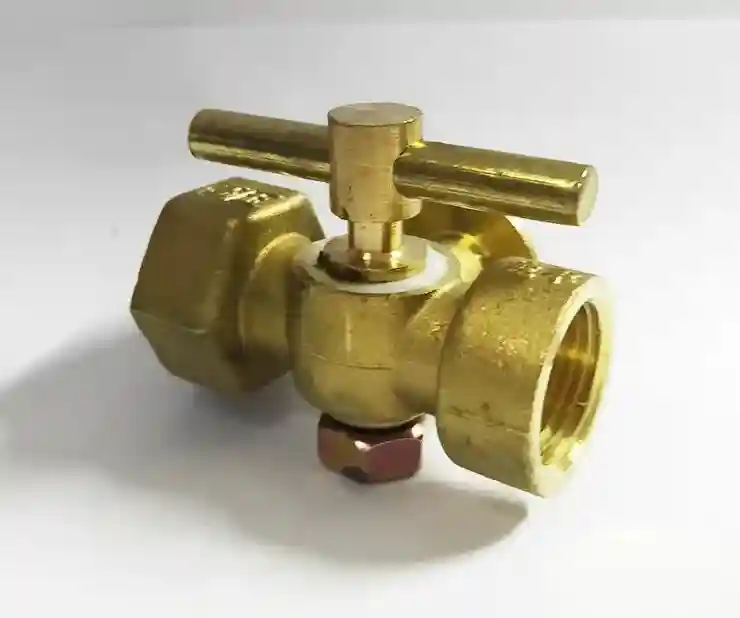
Why Can a Brass Ball Valve Hard to Turn?
When a brass ball valve lever handle is obstructed, the handle itself may not be the root cause. Check whether it contacts a wall, equipment guard, insulation, or adjacent pipe; whether the fastener is deformed; and whether the stem end matches the handle connection. If the valve became stiff after piping assembly, check whether the body has been forced out of alignment.
Can Brass Ball Valve Small Handles Simply Be Forced?
Brass ball valve small handles should normally be used with the matching stem and valve model. Do not fit a long pipe over a stuck small handle to increase leverage, and do not use the handle as a pipe support. Isolate and depressurize first, then inspect the stem for corrosion or bending and check whether the packing gland is too tight. If a replacement handle is needed, confirm the stem profile, stop position, and operating clearance.
What Should Be Checked on a Brass Ball Valve with Handle?
When checking a brass ball valve with handle, observe the handle, stem, ball, and seat as one operating assembly. The handle angle should correspond to the ball’s open and closed positions; the handle should not reach its stop while the ball remains partly open. On frequently cycled utility branches, also confirm that operating torque and stem sealing match the actual frequency of use.
Can Ball Valve Seat Damage Cause Hard Operation?
Ball valve seat damage can appear as increased resistance, discontinuous movement, or internal leakage after closure. Particles, corrosion products, aged seal material, and an incompatible medium can damage the seat or ball surface. Confirm the model and construction before disassembly; external hand feel alone cannot prove the internal failure. Once the seat, ball, or stem is scored, simple lubrication will not necessarily restore the original condition.
How Does Ball Valve Seat Material Selection Relate to Sticking?
Ball valve seat material selection should consider the medium, temperature, differential pressure, and cycling frequency. An incompatible seat material can deform, harden, swell, or suffer surface damage, leading to higher operating torque or reduced shutoff. The order should identify the body, ball, stem, seat, and seal combination and refer back to the selected model’s technical data.
What Should a Ball Valve Inspection Procedure Include?
A ball valve inspection procedure can follow the sequence identity, isolation, appearance, operation, sealing, and record. Confirm the model, size, connection, and medium; inspect threads, body, handle, and stem with the line depressurized; then operate the valve slowly and check full travel. Restore pressure gradually and inspect the stem area, end connections, and body for leakage. Record the symptom, action, and retest result so the next maintenance visit does not begin with a guess.
📌 Application Example: Muar Utility Workshop Branch Valve Operation Review
Muar Utility Workshop is a Malaysian maintenance service provider in Muar, Johor, supporting utility-system inspection and maintenance for small local processing and packaging workshops.
During a routine utility inspection for a food-packaging workshop, the Muar Utility Workshop team noticed that a brass ball valve on a warehouse washdown-water branch required increasing force to turn. One operator suggested fitting a longer handle so that the valve would be easier to move.
The lead technician did not adopt that solution immediately. Following the team’s normal diagnose-before-action practice, they closed the upstream valve, released line pressure, and inspected the installation. They found two issues: the handle was close to an equipment support at the full-open position, and the pipe had a slight alignment error from the original installation that imposed continuing side load on the valve body. The valve itself had not been proven to have failed; the installation condition was making it difficult to operate.
The team moved the obstructing support, made a small piping adjustment to remove the side load, and set the stem packing gland to an appropriate tightness. The work took less than half an hour. The handle returned to a normal feel without changing any parts or fitting a larger handle. In the maintenance record, the team noted two points: check alignment and stem sealing before masking the problem with a larger handle, and verify the model, seat, and seal combination at receipt rather than accepting a valve by appearance and nominal size alone.
The branch served general utility water and did not contact food, beverages, or product-cleaning media. If the service later changes to corrosive chemicals, hot water, or a hygienic medium, the existing brass ball valve cannot automatically be treated as suitable. Body material, seat, seal combination, connection method, and thread standard must be reviewed again.
When Should You Stop Forcing the Valve?
When the body is cracked, the stem is bent, the ball or seat is visibly damaged, the connection threads have failed, or the valve model and internal materials cannot be confirmed, stop forcing the valve. Isolate the line, record the condition, and use the exact model information to identify compatible parts or a replacement valve.