
This types of brass ball valves guide is not about deciding which valve looks better. It is about matching the valve structure to the task in the piping system. Before purchasing, confirm whether the line needs isolation, switching, diversion, or flow-path selection, then check the bore, end connections, seat and seal materials, operating clearance, and service limits. Brass describes the body or related components; it does not identify the complete model. For a broader purchasing check, see our quality brass ball valve guide.
Two-way, three-way, full-port, and differently connected ball valves can look similar while having different internal flow paths and installation requirements. The same nominal size does not make different constructions direct replacements.
How Should Brass Ball Valve Types Be Classified by Function?
The most useful starting point is the required flow function. A two-way brass ball valve is generally used to open or isolate one line. A three-way brass ball valve is used when the system must select, divert, or combine flow between different ports. A full-port design keeps the internal passage closer to the connected pipe bore, while a reduced-port design uses a smaller internal opening. Connection type is another independent classification: threaded, soldered, compression, and other ends cannot be treated as interchangeable simply because the valve body is brass.
What Is the Core Feature of a Brass Quarter-Turn Ball Valve?
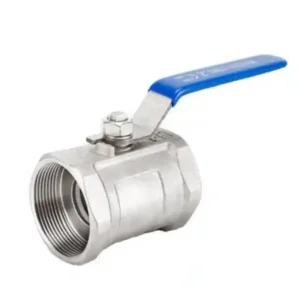
A brass quarter-turn ball valve operates by rotating the ball through approximately 90 degrees between the open and closed positions. The handle position should correspond to the internal flow path, and the valve should have enough clearance for the full operating movement. This is useful for utility isolation and frequent manual operation, but quarter-turn operation does not by itself define the pressure, temperature, seat, seal, or medium limits. Those details still depend on the selected model.
When Does a Full-Port Brass Ball Valve Matter in Procurement?
A full-port brass ball valve matters when the project wants a larger internal passage, lower disturbance at the valve, or easier passage for the intended service and cleaning arrangement. It should not be selected only because the nominal pipe size appears familiar. Confirm the actual bore, end-to-end dimensions, connection standard, operating envelope, and whether the upstream and downstream piping require a particular passage geometry. A full-port label also does not prove that the valve is suitable for every liquid or gas.
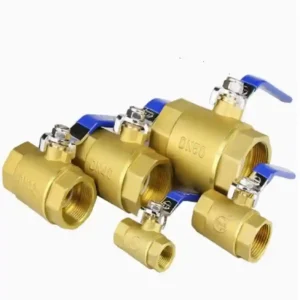
How Is a Three-Way Brass Ball Valve Different from a Two-Way Valve?
A two-way valve has one inlet and one outlet flow path. A three-way brass ball valve has three ports and uses the ball passage to select or connect different paths. The internal port pattern controls what each handle position does. An L-port arrangement normally selects between adjacent paths, while a T-port arrangement can provide a different combination of switching, diverting, or mixing functions depending on the design. The handle diagram and flow-path drawing should be confirmed before ordering.
Which Dimensions Matter for a Three-Way Brass Ball Valve?
For three-way brass ball valve dimensions, record more than the nominal size. Check each port size and connection, the face-to-face or end-to-end dimensions for every relevant direction, the body envelope, the handle sweep, and the space needed for maintenance. Also confirm the port numbering and orientation used by the supplier. A three-way valve can fit the pipe diameter yet fail the installation if the body length, branch direction, or handle clearance is wrong.
When Is an L-Port Three-Way Brass Ball Valve Suitable?
An L-port three-way brass ball valve is suitable when the required function is path selection between two connected branches and the design does not need all three ports open at once. The exact available positions depend on the model, so the buyer should request the manufacturer’s flow diagram rather than infer the pattern from the handle shape. If the system needs simultaneous mixing or a different three-port combination, an L-port valve may not be the correct construction.
What Are the Limits of a Three-Way Brass Ball Valve for Water Service?
A three-way brass ball valve for water service still requires a defined medium, temperature range, pressure range, connection standard, and seat and seal combination. General utility or irrigation water is not the same as potable, hygienic, chemical, hot-water, or product-contact service. If the line changes service, review the body and internal materials, thread or end connection, cleanliness requirement, and applicable documentation again. The word water alone is not a complete specification.
📌 Application Example: Sungai Petani Nursery Utilities Irrigation Zoning Upgrade
Sungai Petani Nursery Utilities is a Malaysian business providing irrigation equipment maintenance and piping support for small and medium-sized nurseries. In an irrigation-main zoning adjustment, the site had two related layout needs: an isolation point at the main inlet for future maintenance of the section, and a selection function between two trial branches to compare water supply performance in different irrigation areas.
The design separated the two functions. A two-way full-port brass ball valve was specified at the main inlet for isolation of the irrigation main; this point needed straightforward on/off service, so the selection focused on flow path and shutoff rather than branch switching. At the trial branches, the team compared three-way port arrangements and selected an L-port three-way brass ball valve to switch water between the two branches, opening only one trial branch at a time.
To prevent installation and operating errors, the design team drew the internal flow path corresponding to each handle position on a confirmation sheet. On site, they checked the three-way valve dimensions, pipe support, handle clearance, and connection standard against the existing piping. After construction, operators tested each handle position with water and confirmed that the actual selected path matched the drawing before recording the valve model and orientation.
The system served general irrigation water only; the valves did not contact food, beverages, or sanitary production media. If the irrigation medium later contains special chemicals, hot water, or the line is repurposed for product-contact service, the existing three-way construction and brass material cannot be carried over automatically. Seat material, seal combination, pressure and temperature limits, and cleanliness requirements must be reviewed again.
How Can You Avoid Choosing the Wrong Valve Type?
Write the required number of ports, the connections that must communicate, the function of each handle position, the connection standard, and the maintenance arrangement into the purchase documents. Ask the supplier for a flow-path drawing, dimensional drawing, material and seal combination, and applicable service limits. Once the valve type is clear, price and delivery comparisons become meaningful.