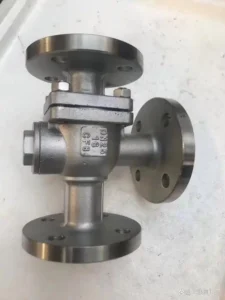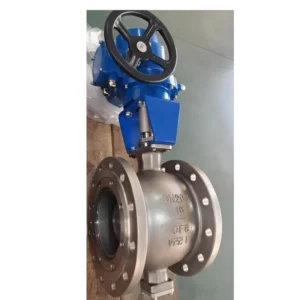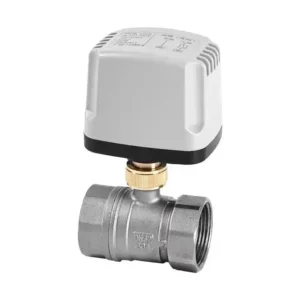

A programmable motorized ball valve usually means that an external controller executes a schedule, condition, or interlock. It does not mean that the valve body understands every program by itself. The practical question is whether inputs, outputs, feedback, exceptions, and manual takeover have been written into a control plan that can be tested.
Before programming, define whether the valve is on/off or modulating, whether the actuator has feedback, which wiring arrangement the controller uses, and what state should remain after a power loss, network loss, or sensor fault.
For model and connection details, see CHCV valve resources.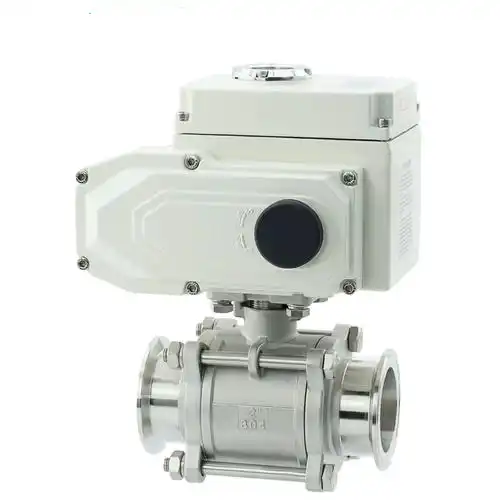
📌 Case Setting
Nan Ya Hardware Sdn Bhd (Nan Ya Hardware Co., Ltd.) was established in 2001 and formally registered as a limited company in 2004. It is a Malaysian pipe-fitting and engineering-hardware trade distributor in Selangor, serving water-supply and drainage systems for residential, commercial, and industrial projects. Nan Ya Hardware planned a control upgrade for a warehouse washdown-water branch and an auxiliary-water branch at a sample workstation, with the aim of running both branches by time window and reducing repeated manual switching. Management did not want to hand every branch to a program that could not return status; it needed to know whether the valve had actually responded rather than treating a sent signal as completion.
The project team did not begin by buying a timer controller. It first split each action into four columns: the trigger condition, the target valve position, the maximum movement time before an exception, and the response to a timeout—alarm, repeat command, or hold the current state. Based on this action table, the team asked CHCV for an electric ball valve with position feedback, wiring information, torque data, and test records. CHCV is a valve supplier engaged in research and manufacturing for valves used in petroleum, chemical, and natural-gas pipeline storage and transportation, with electric, pneumatic, and hydraulic actuation options.
Before deployment, the team used one feedback-equipped electric ball valve on a test bench. It checked each trigger, target position, feedback agreement, and timeout response against the action table. Only when all bench results matched the expected actions would the team consider expanding the arrangement to other branches. Even after deployment, maintenance personnel retained local isolation and manual takeover; the automatic program provided convenience, not a replacement for field judgment.
how to control a motorized ball valve: Turn the program into a testable action table
The how to control a motorized ball valve logic should include a trigger, target position, movement time, position confirmation, and exception handling. “Open at eight every morning” is incomplete unless the controller also knows what to do when feedback is missing, a pump has not started, or the water level is abnormal.
motorized ball valve 5-wire schematic: Start with the terminal drawing
A motorized ball valve 5-wire schematic must be read against the exact model. Five wires may cover power, direction control, and feedback, or may use different definitions for limits and common terminals. Before connecting the controller, write each wire function and permitted voltage into the wiring schedule instead of guessing from the wire count.
motorized ball valve with feedback: Close the loop with position feedback
A motorized ball valve with feedback should use the arrival signal as part of the program loop. If the target feedback is not received within the defined time, the system should enter an identifiable fault state instead of repeatedly energizing the actuator. Confirm feedback type, controller input, and position direction during procurement.
motorized ball valve 5-wire: Test control and feedback separately
The possible benefit of a motorized ball valve 5-wire arrangement is that control and feedback can be separated more clearly, but extra wires do not make a program reliable by themselves. Trigger open and close commands separately, read the open and closed limit signals, and test an interrupted movement so the controller does not mistake an old feedback signal for a new result.
arduino control motorized ball valve: What is enough for a prototype?
Arduino control motorized ball valve work can support a prototype, a low-risk device, or a test record. A formal field system still needs power protection, relay or driver modules, enclosure protection, a watchdog, and manual isolation. A prototype that completes a movement does not automatically provide industrial resistance to interference or maintainability.
Frequently Asked Questions
Does a programmable motorized ball valve always contain its own program?
Not necessarily. Many arrangements run the logic in an external controller, gateway, or PLC while the valve only executes commands. Confirm where the program is hosted.
Why can the program show “open” while the field flow does not change?
Possible causes include an incorrect feedback definition, incomplete valve travel, a stopped pump, an incorrect flow direction, or a problem elsewhere in the pipework. Program status cannot replace a field position and flow check.