
Brass Ball Valve Specification: Read Flow Data
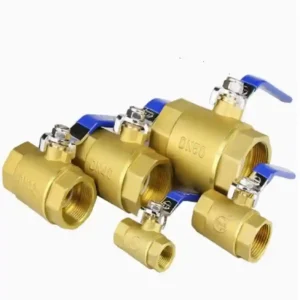
Flow data in a brass ball valve specification must be read with the exact model, nominal size, bore, medium, valve position, and allowable pressure drop. A Cv value by itself does not prove that the valve suits the site flow. Pump duty, pipe length, elbows, filters, reducers, and other local losses belong in the system calculation.
First separate full-open isolation from continuous regulation. Many manual ball valves are designed mainly for opening and closing; long periods of partial opening can affect noise, erosion, seat load, or control stability. If continuous control is required, confirm that the selected model permits it and have the design checked against the medium and control loop.
What Does “ball valve flow coefficient cv” Mean?
Ball valve flow coefficient cv describes a flow-capacity measure under stated conditions, but it must be read with units, medium, pressure difference, temperature, valve position, and the test definition. Supplier tables may use different formats. Do not copy a Cv value from one series or size into another valve specification.
How Does a “ball valve flow chart” Relate to the System?
A ball valve flow chart should first be checked for its axes, valve position, bore, and test conditions. Then compare it with the pump, pipe, elbows, and filters in the actual system. The valve curve cannot replace the resistance calculation for the whole line, especially when a reducer or a large local loss is present.
Why Is “ball valve flow rate vs position” Not Linear?
Ball valve flow rate vs position is not necessarily linear with handle angle. Bore shape, seat construction, upstream and downstream pressure difference, and medium state affect the result. Ball valve flow vs opening can be a model-specific reference, but a handle at half rotation should not automatically be read as half the flow.
What Should a “ball valve flow diagram” Show?
A ball valve flow diagram should identify medium direction, interfaces, bore, and open or closed state. For a three-way valve, show the connected ports at each handle position. If the diagram gives no throttling, measurement, or pressure-difference boundary, do not infer a fixed flow or pressure promise from the drawing.
How Is “ball valve flow rate calculation” Used?
Ball valve flow rate calculation needs a target flow, inlet and outlet pressure, allowable pressure drop, medium, temperature, pipe dimensions, and the valve position or duty. If the supplier receives only “one-inch brass ball valve,” a brass ball valve specification cannot reliably identify the right model. Long-term regulation also requires a separate check of valve type and seat load.
📌 Case Setting: Rowy Hardware Flow-Data Card
Rowy Hardware supplies stainless steel, galvanized, PPR, PVC, and UPVC pipe materials and fittings in Johor. In this case setting, the company works with CHCV on a flow-data card for a general utility-water branch where make-up speed needs review. The team records medium, target flow, inlet and outlet pressure, temperature, pipe size, filter, allowable pressure drop, and whether the valve is fully open or being used for adjustment. It then reads the brass ball valve specification and ball valve flow coefficient cv under the matching conditions. Flow change is not attributed to valve size alone; pump duty, pipe length, local losses, and measured pressure difference stay on the same sheet before a model change is considered.
Cv Data and Dimension-Table Handover
Confirm the axes, valve position, bore, and test conditions in a ball valve flow chart. A ball valve flow rate calculation needs the target flow, pressure, and allowable loss. If the inquiry contains only a nominal size, the brass ball valve specification is incomplete. Continuous regulation requires a separate valve and seat-load review instead of treating a general on-off valve as an automatic control valve.
For product and technical reference, visit CHCV. Related reading: Brass Ball Valve Pressure Rating.