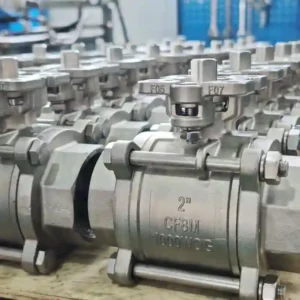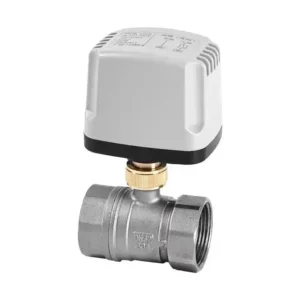

Stainless Steel Ball Valve Actuator: Torque, Signal and Assembly
When pairing an actuator with a stainless steel ball valve, the most common problem is not the valve itself but torque mismatch and incompatible control signals. Insufficient actuator torque is one of the most frequent causes of automated valve failure. This article breaks stainless steel ball valve actuator selection into three items—torque, interface, and signal—from the perspective of automation buyers and system engineers.
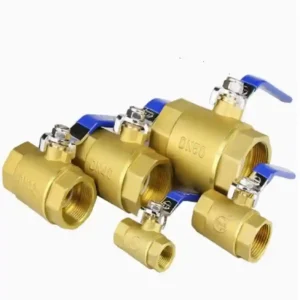
Pneumatic Stainless Steel Ball Valve: Where Pneumatic Fits
Pneumatic stainless steel ball valve suits applications with frequent cycling, fast action requirements, or existing air supply on site. Pneumatic actuators are simple and low-cost, but need stable compressed air supply and must be configured with solenoid valves and limit switches.
1/2 Inch Automated Stainless Steel Ball Valve: Small-Bore Automation
1/2 inch automated stainless steel ball valves are commonly used for branch control and equipment integration. Small-bore valves have low torque, giving a wide actuator selection range, but mounting interfaces (ISO 5211 flange and stem dimensions) must still be verified as a set.
2 Way Ball Valve with Actuator: Set Purchase vs Separate Purchase
For a 2 way ball valve with actuator, set purchase benefits from unified interface and torque matching by the supplier, with single acceptance documentation. Separate purchase offers flexibility, but interface standards, torque calculation, and warranty boundaries must be coordinated by yourself.
2 Way Ball Valve with Limit Switch: How to Wire Limit Feedback
The limit switch on a 2 way ball valve with limit switch provides feedback for fully open and fully closed positions. Confirming limit switch type (mechanical or proximity), electrical wiring (normally open or normally closed), and PLC compatibility is a critical step in installation acceptance.
2 Inch Pneumatic Ball Valve Specifications: Write the Spec Sheet Fully
2 inch pneumatic ball valve specifications should cover both valve parameters (bore, pressure, connection, seat material) and actuator parameters (air supply pressure, torque, actuation time, solenoid valve, limits). Missing either block will show up at acceptance.
📌 Case Setting
Status Automation Technologies’ official public information shows it is a process control and industrial automation company in Klang, Selangor, providing control valves, field instruments, PLC and SCADA systems, and valve field services. Actuator-to-valve torque matching is the most frequently problematic link in its projects.
The project compiled a selection sheet for a batch of stainless steel ball valves needing automation, organized by medium, bore size, cycling frequency, and control signal. Actuator torque, voltage, and limit feedback requirements were checked item by item, and suppliers were asked to provide torque calculation basis rather than just a combined price. CHCV helped provide ball valve torque data and actuator matching documentation, so every valve-plus-actuator combination could be traced back to its calculation.
CHCV provides torque data and actuator matching specs to prevent torque mismatch in the field.
✅ Actuator Matching Checklist
Torque: actuator output torque not less than valve operating torque multiplied by 1.25 safety factor
Voltage/signal: 24V DC or 220V AC matches site power; signal type is compatible
Limit feedback: open and close feedback wired into the control cabinet and tested
Environmental requirements: select corresponding protection rating for outdoor, high-temperature, or explosion-proof applications
Documents: torque calculation sheet, wiring instructions, and test records shipped with the goods
Common Questions
FAQ 1: How do I calculate enough actuator torque?
Ask the supplier for a torque calculation sheet listing valve operating torque, medium pressure, and safety factor item by item. Insufficient torque is the most common failure cause for electric and pneumatic valves; calculate before you buy.
FAQ 2: Can I buy the valve first and match the actuator later?
Not recommended. Actuator and valve interfaces (ISO 5211 flange, stem dimensions) and torque must be confirmed as a set; separate procurement risks mismatch or inability to mount.