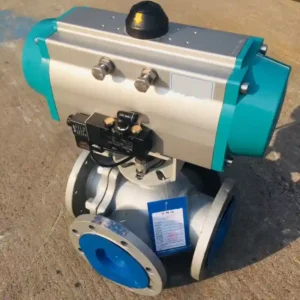

In the field of industrial fluid control, pneumatic ball valves are widely used in automated piping systems across petrochemical, water treatment, pharmaceutical, and food & beverage industries due to their quick switching, compact structure, and excellent sealing performance.
Faced with numerous manufacturers, identifying a China pneumatic ball valve manufacturer that combines technical strength, clear commercial terms, and compliance with international standards can make the procurement process much easier.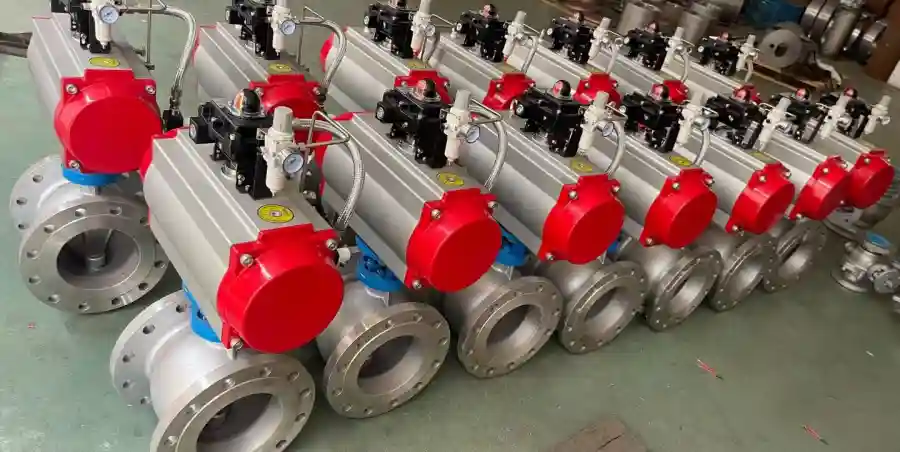
Product Parameters:
When selecting a pneumatic ball valve, the first consideration is whether it matches your process conditions. Many users focus only on size and pressure during inquiries, while overlooking the influence of media characteristics and temperature changes on valve body materials and sealing materials.
A responsible China pneumatic ball valve supplier will typically provide detailed data sheets. During selection, you should pay close attention to the following core indicators:
-
Valve Body Material – This determines the corrosion resistance and service life of the valve.
-
Stainless Steel (CF8/CF8M/304/316): Suitable for most corrosive fluids, food/pharmaceutical, and sanitary applications.
-
Carbon Steel (WCB): Suitable for non‑corrosive or mildly corrosive media such as water, oil, and gas.
-
Special Alloys: For harsh conditions involving strong acids/alkalis or high temperature/pressure, materials such as duplex stainless steel and Monel can be selected.
-
-
Actuator Type – This is the power source of the pneumatic ball valve and determines its mode of operation and failure status.
-
Double-acting: Uses air pressure to drive the piston in both directions; the valve stays in its current position upon power or air failure.
-
Spring-return: In the event of air supply failure, the spring force automatically returns the valve to the “open” or “closed” safe position – this is a fail‑safe type.
-
-
Connection Type – Should be selected according to piping connection standards.
-
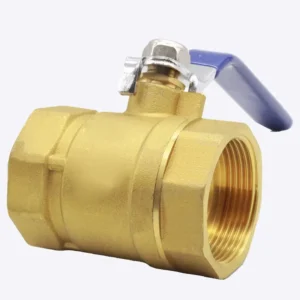
Threaded: Typically used for small bore sizes (below DN50), easy to install.
-
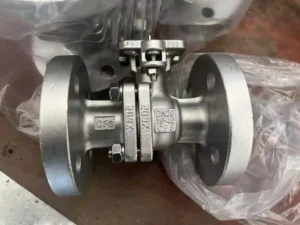
Flanged: Suitable for large diameters or high‑pressure applications, offering high connection strength and reliable sealing.
-
Tri‑clamp / Quick‑connect: Sanitary design for easy disassembly and cleaning, mainly used in pharmaceutical and food industries.
-
-
Pressure and Temperature Ratings:
-
Pressure Rating: American standard usually ranges from Class 150 to Class 1500; Chinese standard from PN16 to PN250. Always confirm that the valve’s rated pressure is higher than the system’s maximum operating pressure.
-
Temperature Range: Conventional soft‑seated (PTFE/RPTFE) valves typically operate from ‑20°C to 180°C. For high‑temperature steam or low‑temperature media, metal‑seated designs or extended bonnet structures are required.
-
Quality Control – Reliability from Raw Material to Finished Product
A high‑quality pneumatic ball valve is not just a simple assembly of components; it involves precision machining, strict testing, and a traceable quality system. A trustworthy pneumatic actuated ball valve supplier invests considerable effort in this stage.
-
Casting and Machining: The quality of the valve body blank directly affects the pressure‑bearing capability. Reputable manufacturers use precision casting or forging processes and high‑precision CNC machining centers to ensure sphere roundness and surface finish.
-
Testing Standards: Each valve should undergo shell strength tests and seat leakage tests before shipment (e.g., API 598 or EN 12266). For fire‑safe applications, suppliers can be requested to provide API 607 or ISO 10497 fire‑test certification.
-
Anti‑static Design: In flammable/explosive environments, an anti‑static ball valve is a necessary safety feature. A conductive structure between the stem and ball prevents static charge accumulation that could cause accidents.
Procurement Guide – Commercial Terms for Efficient Cooperation
When engaging with a China pneumatic ball valve manufacturer, clear commercial terms are essential to ensure smooth project delivery. As a professional valve manufacturer, CHCV recommends that you specify the following when requesting a quotation:
-
MOQ (Minimum Order Quantity): For standard sizes (e.g., DN15‑DN50 threaded ball valves), suppliers usually accept low MOQs. However, for large‑diameter flanged valves or non‑standard materials, MOQs may be higher. Some manufacturers accept sample orders, allowing you to verify product quality before actual installation.
-
Lead Time: Delivery for standard pneumatic ball valves (with standard actuators) is typically 15‑30 days. For non‑standard customisation (e.g., special actuators, exotic alloy bodies) or large orders, lead time may extend to 30‑60 days. Be sure to confirm critical milestones with the supplier during project planning.
-
Incoterms: Suppliers generally offer FOB (named Chinese port), CIF (named destination port), or EXW. FOB is relatively fair for both parties and is the most common approach in international trade.
-
Customisation Capabilities:
-
Non‑standard bore sizes, e.g., NPT/BSPT threads or special flange standards (ANSI/DIN/JIS).
-
Special materials such as Hastelloy, titanium, etc., according to media characteristics.
-
Special actuators: explosion‑proof (Ex‑proof), high‑temperature, or with manual override.
-
OEM branding: some suppliers support custom painting, nameplates, and logo identification per customer requirements.
-
In‑Depth Insight – Key Considerations in Pneumatic Ball Valve Selection
In automated control systems, the pneumatic ball valve is not only an actuating element but also a critical device for process safety. If you are looking for high‑standard air actuated ball valves or pneumatic operated ball valves, the following industry insights are worth noting:
-
The Trade‑off in Sealing Performance: Soft‑seated (PTFE) ball valves can achieve zero leakage (Class VI), but are temperature‑limited. In many high‑pressure steam or high‑temperature thermal oil applications, a metal seated ball valve is a more reliable choice. Although its leakage rate is typically Class IV, it can withstand temperatures above 400°C.
-
Necessity of Safety Accessories: In critical control loops, a limit switch box and solenoid valve are standard accessories for pneumatic ball valves. The limit switch box provides feedback on valve “open/close” status to the control room; the solenoid valve controls the direction of air supply to the actuator.
-
Hard Requirements for Sanitary Applications: For biopharmaceutical and food processing industries, valves must meet sanitary design standards. This requires no dead corners, easy cleaning, and must adopt a sanitary ball valve design that complies with 3A or EHEDG certification.
Final Words:
Choosing a China pneumatic ball valve manufacturer should not be based solely on a price list. You need to evaluate whether their technical parameters are transparent, whether production and testing are rigorous, and whether commercial terms are flexible.
A China pneumatic ball valve supplier with in‑house casting or machining capabilities can provide better support in quality control and delivery schedule management.
CHCV Valves focuses on providing complete solutions from standard pneumatic ball valves to special‑condition valves for severe service applications.
If you have specific selection requirements or are evaluating different suppliers, please feel free to contact our technical team for customised advice.