What is a three way valve? L-Port and T-Port Selection Guide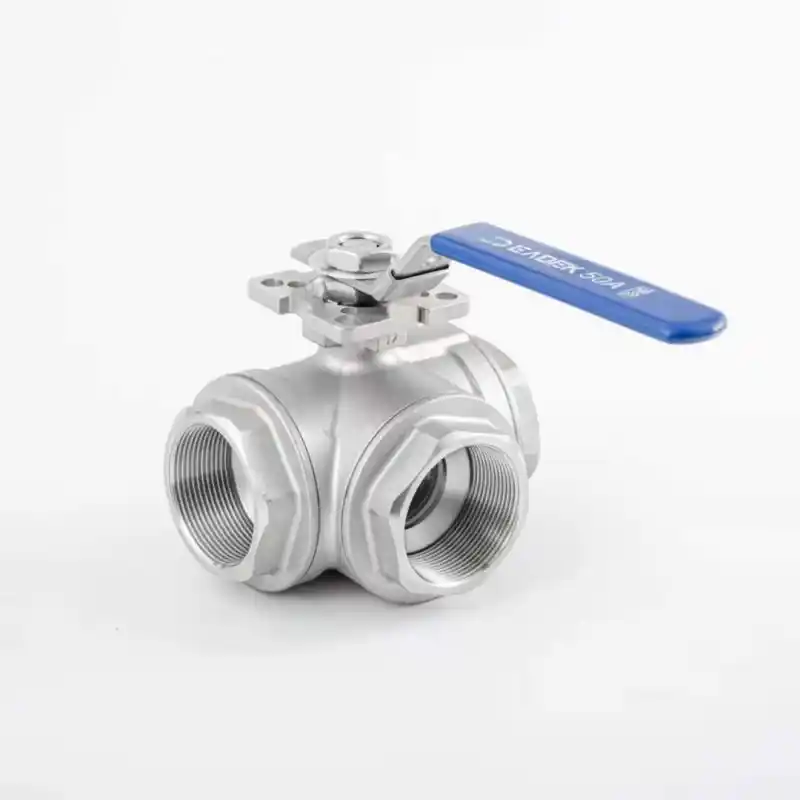
For fluid control systems, what is a three way valve is one of the most common selection questions.
Simply put, a three way valve is a valve with three pipe connections. Unlike a standard two-way valve (which only opens or closes a single line), the core advantage of a three-way valve is its ability to divert, mix, or switch the flow direction, making it indispensable in applications where media flow direction needs to be changed.
However, incorrect selection is a primary cause of customer complaints. Although they may look similar externally, the design logic of the L-Port and T-Port ball cores is completely different, which directly determines their application scenarios.
Distinguishing L-Port and T-Port: Avoiding Selection Errors
Selection errors often stem from overlooking the internal flow-path structure of the ball core. To help you select precisely, we first break down the core functions of these two types:
L-Port Three-Way Ball Valve – For Diverter and Flow Switching
The L-Port ball core has an “L”-shaped flow passage, primarily used for flow switching. It can only connect adjacent pipes.
A typical application: media enters from Port A, and by rotating the ball core, the fluid exits from either Port B or Port C. It achieves a “one-of-two” switching function, suitable for scenarios that require changing flow direction or simple diversion. If you only need to switch line flow, the L-Port is the more straightforward choice.
T-Port Three-Way Ball Valve – For Mixing and Blending
The T-Port ball core has a “T”-shaped flow passage, offering more functionality than the L-Port. In addition to the switching function, it can connect all three ports simultaneously.
This enables mixing (two inlets, one outlet) or diverting (one inlet, two outlets). For example, when blending two different fluids or distributing one fluid source to two separate branches, the T-Port is the ideal choice.
How to Choose: L-Port or T-Port?
The key to selection lies in the process function you need to achieve.
-
If you only need to switch line flow – i.e., switch from one source to another – choose the L-Port three-way ball valve.
-
If you need to connect all three ports simultaneously for fluid mixing or distribution – choose the T-Port three-way ball valve.
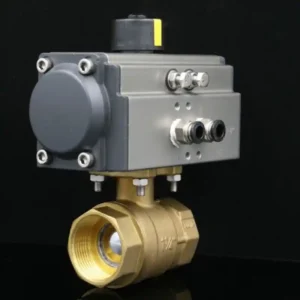
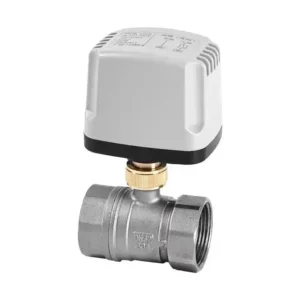
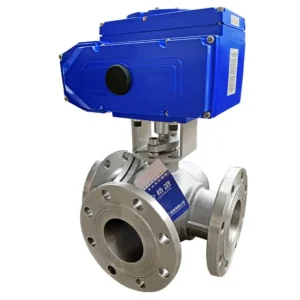
Additionally, during procurement, you may encounter a 3 way ball valve with actuator – i.e., a three-way valve with pneumatic or electric actuation. Be sure to verify that the actuator torque matches the valve’s operating torque under high differential pressure conditions.
The answer to what is a three way valve depends on your application. Choosing a T-Port incorrectly for a switching application, or an L-Port for a mixing application, will cause the system to malfunction. Clearly recognizing the functional differences between L-Port and T-Port is the critical step to ensuring correct valve selection and avoiding on-site returns.