
Can a Brass Ball Valve Be Repaired?
Some brass ball valves can be repaired, but not all.
Identify the leak location and valve structure. International valve maintenance documents generally limit on-site ball valve repair to stem seals, gland packing, handles and external connections; ball seat seals and body seals, as well as one-piece encapsulated structures, are mostly classified as replacement parts rather than on-site serviceable items.
Repairable scenarios
- Water seepage around the valve stem
- Dripping at the gland nut below the handle
- Loose, cracked or slipping handle
- Valve opens and closes normally, but stem seal has aged
- Removable gland nut on valve body, brand or model available for reference
The leak location determines which repair kit you need:
- Leakage at stem/handle: brass ball valve leaking from handle
- Leakage at gland nut: repair brass ball valve gasket
- Leakage at valve body or ball seat
- Damaged handle
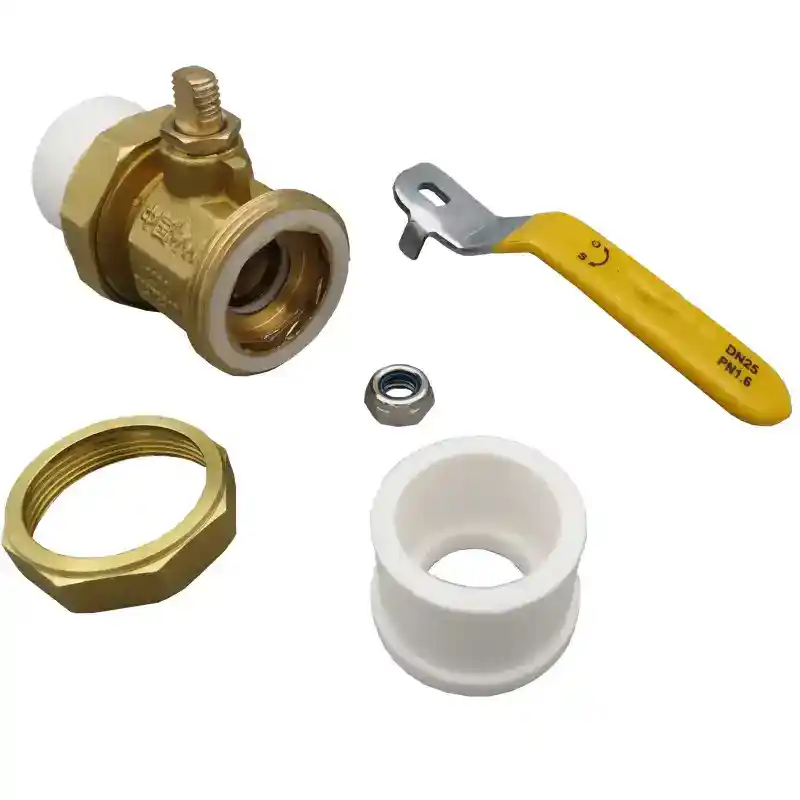
8 items to confirm before purchasing a repair kit. Missing any one may lead to wrong purchase.
- Brand and model Check markings, labels, casting numbers and part numbers on the valve body. Common brands include Apollo, Watts, Nibco, Webstone, BrassCraft, SharkBite, etc. Search methods:
- Brand + model + repair kit
- Brand + replacement parts
- Valve body marking + stem repair kit
If no model is stamped on the valve body, take photos of the stem, gland nut, handle and end connections. Compare with parts at local plumbing suppliers, which is more reliable than blindly buying generic parts online.
- Size: brass ball valve sizes Common nominal sizes: 1/2 in, 3/4 in, 1 in, 1-1/4 in, 1-1/2 in, 2 in
Note: Nominal size refers to pipe size, not O-ring size. When buying a stem repair kit, measure with calipers:
- Stem diameter
- O-ring ID
- O-ring OD
- O-ring CS (cross section)
- Gland nut thread
- Packing cross-section dimension
Measure the old part with calipers. Simply stating “1/2 inch ball valve” is insufficient, as stem and gland dimensions vary by brand.
- End connection type Connection types include: NPT thread, BSP/BSPP thread, sweat/weld, push-to-connect.
The connection type does not affect the stem O-ring, but it determines whether disassembly and repair are worthwhile. Welded, crimped or wall-embedded valves have high disassembly costs; full valve replacement may be simpler.
- Valve structure: can you disassemble brass ball valve Common brass ball valve structures:
- One-piece: limited repair options; stem seal may be replaceable, ball seat is usually non-replaceable
- Two-piece: demountable body, some seals can be replaced
- Three-piece: removable body section, more space for maintenance; less common for domestic brass water valves
The answer to can you disassemble brass ball valve: some can, depending on structure. Valves with removable gland nuts, circlips or stem nuts have potential for stem seal replacement. Do not force disassembly if the gland is roll-crushed integral with the body and has no removable components.
- Stem seal configuration Common designs:
- O-ring
- PTFE packing
- Gland nut + packing
- Circlip + O-ring
- Dual O-ring
Different structures correspond to different repair kits. Remove the old part and take photos before purchase. Do not rely only on the word “universal”. Generic kits are only suitable for users who can take precise measurements and verify material grades.
- O-ring / packing dimension and material Dimensions: ID, OD, cross-section, packing profile, gland nut thread.
Materials:
- NBR: for cold water and normal-temperature oil
- EPDM: for water and hot water, good weather resistance
- FKM/Viton: high temperature resistance, oil resistance, chemical resistance
- PTFE: low friction, used for stem packing and ball seats
Materials cannot be substituted arbitrarily. Seal service life varies with cold/hot water, temperature and pressure. For gas, steam and oil service, use materials specified by the manufacturer.
- Pressure and temperature rating: brass ball valve pressure rating Refer to markings on valve body, examples: 600 WOG: cold working pressure for water, oil, gas without shock load 150 WSP: steam working pressure 175 psi, 300 psi, 600 psi, etc.
brass ball valve pressure rating must match the system. Domestic water supply is typically below 150 psi, while test pressure may be higher. In terms of temperature: brass body temperature resistance does not equal seal temperature resistance. The seal material determines actual service temperature range. Confirm temperature range of O-ring and packing when purchasing repair kits.
Conclusion
Whether a Brass Ball Valve Repair Kit is applicable depends first on leak location, then valve structure. Leakage at stem, gland or handle can potentially be resolved with a repair kit. Valve body cracks, ball seat damage or failure of integral seals usually require full valve replacement.
The key to selecting the correct repair kit: brand, model, brass ball valve sizes, connection type, valve structure, stem seal form, O-ring/packing dimension & material, brass ball valve pressure rating.