
Can You Use a Ball Valve for Gasoline?
Yes, but not every ball valve can be directly used for gasoline. Gasoline is highly volatile and flammable, and it will wash away lubricating grease. If ethanol is contained, it will also change the compatibility of sealing materials.
Whether a ball valve can be applied to gasoline depends on the body, ball, stem, seat, seals, anti-static structure, fire-safe design and certifications.
The same issue also occurs in natural gas service. For different media, the selection logic cannot rely only on nominal size and pressure rating. The following elaborates on requirements by “media + material”.
Ball Valve Requirements for Gasoline
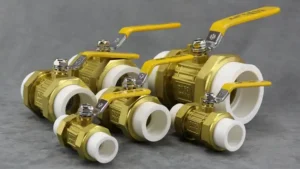
Gasoline is a hydrocarbon medium. Brass, carbon steel and stainless steel bodies may all be used for gasoline, but for different service scenarios. Brass ball valves are commonly used for small-bore low-pressure pipelines, generators, lawn mowers and marine fuel lines. Carbon steel or stainless steel ball valves are more widely adopted for industrial oil tanks, fuel dispensers and long-distance pipelines.
Sealing is the key point. PTFE and RPTFE generally have good compatibility with gasoline. NBR works for conventional gasoline, but caution is required for E10, E85 or high-aromatic gasoline. FKM / Viton delivers more stable oil resistance and temperature performance. PEEK seats can be considered for high-pressure applications.
Anti-static design cannot be ignored. Static electricity will be generated as gasoline flows, so there shall be a conductive path between the ball and stem. Without anti-static construction, charge accumulation risks exist in flammable environments.
Fire safety is also critical. For commercial fuel dispensing, oil depots and marine fuel systems, ball valves passing API 607 or API 6FA fire tests are recommended.
Do not only refer to the “WOG” marking during procurement. WOG only indicates suitability for water, oil and gas service, which does not equal gasoline-specific. Products marked as gasoline safe ball valve normally come with medium compatibility tables. If a supplier states the product is a ball valve suitable for gasoline, request sealing material grades, temperature range and pressure cycle data. If it is only marked ball valve rated for gasoline without anti-static and fire-safe descriptions, further enquiries are still required.
Can Brass Ball Valves Be Used for Gasoline?
Yes, for low-pressure, ambient-temperature, small-bore gasoline pipelines. A common combination is brass body with PTFE seats and FKM seals.
However, ethanol gasoline may cause corrosion to the zinc phase in brass. For long-term exposure to E10 or E85, DZR brass or ethanol-resistant seals are recommended. Thread sealant must be gasoline-resistant; ordinary paste that can be dissolved by gasoline shall not be used.
Brass ball valves are not suitable for main valves of high-pressure fuel dispensers, sulfur-containing oil products or large-bore long-distance pipelines.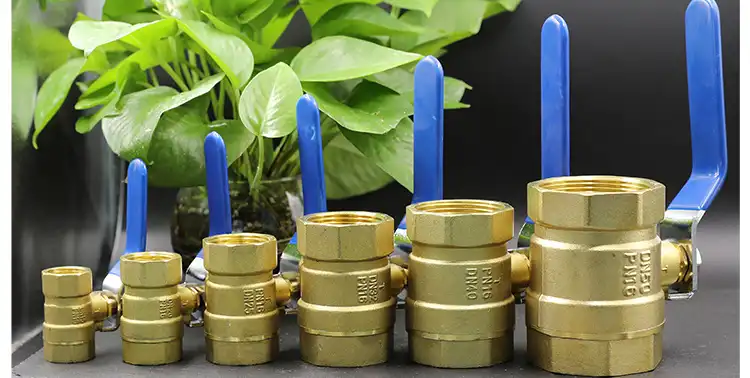
Natural Gas Service: Material and Medium Matching
The same logic applies to gas: can a ball valve be used for natural gas. The answer depends on certifications, pressure, temperature and seals. Natural gas varies as dry gas, wet gas, sour gas and with odorant, so you cannot make judgement merely based on the term “natural gas”.
WCB Ball Valves and Natural Gas
can wcb ball valves be used for natural gas? Yes. WCB ball valves (ASTM A216 WCB carbon steel) are commonly used for natural gas at ambient temperature in dry service. It has sufficient strength for medium and high-pressure pipelines, usually fitted with PTFE or RPTFE seats.
If natural gas contains H₂S, materials shall be selected in accordance with NACE MR0175/ISO 15156. LCC, LF2 or stainless steel may be adopted instead. Low-temperature impact toughness shall also be considered for low ambient temperature. Understanding ball valve wcb meaning helps prevent mixing WCB with low-temperature steel or stainless steel incorrectly.
6P Ball Valves and Natural Gas
can 6p ball valves be used for natural gas? It depends on what “6P” specifically refers to. For some suppliers, 6P may stand for 6-port multi-way switching ball valve, or it may refer to 6000 psi pressure class.
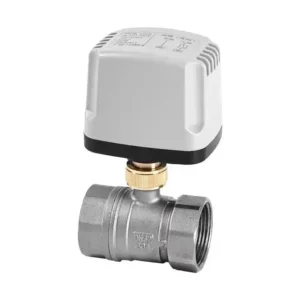
If it refers to a 6-port / multi-way switching valve, it can be used for natural gas, but port sealing, seat leakage class, actuator torque and switching logic need to be verified. When multi-way valves are used for natural gas, pressure testing per API 598 or ISO 5208 is recommended. If it refers to a 6000 psi high-pressure construction, verify compliance with standards such as API 6D and API 6A.
Brass Ball Valves and Natural Gas
can brass ball valves be used for natural gas? Yes, for low-pressure residential service, downstream of gas meters, gas appliance connections and commercial low-pressure gas applications. The prerequisite is that the valve holds gas certifications such as EN 331 or CSA/ANSI Z21.15.
Brass grades available include DZR, CW617N, CW602N, etc. NBR is a common seal material, but odorant and temperature will affect service life. For natural gas ball valves, pay attention to natural gas ball valve seat oring material; NBR and FKM differ in temperature resistance and odorant resistance.
Brass ball valves are not recommended for high-pressure, sour gas or large-bore pipelines.
Media + Material Selection Checklist
- Gasoline, low-pressure small bore: Brass body, PTFE/RPTFE seats, FKM/Viton seals, anti-static structure, fire-safe design preferred.
- Gasoline, industrial pipeline: WCB or stainless steel body, PTFE/RPTFE seats, anti-static structure, API 607/6FA fire-safe.
- Natural gas, low-pressure residential: Brass body with gas certification, DZR brass, NBR or FKM seals.
- Natural gas, medium & high pressure: WCB, forged steel or stainless steel body, PTFE/RPTFE seats, API 6D, anti-static, fire-safe.
- Natural gas, sour gas: NACE-compliant materials, stainless steel or low alloy steel, special seals.
- 6P multi-way or high-pressure: Stainless steel / carbon steel body, PTFE/PEEK seats, verified by pressure class and test standards.
Installation and Maintenance Notes
Ball valves are designed for shut-off service and are not recommended for long-term throttling at partial opening. If flow regulation is required, select V-port ball valves or dedicated control valves.
General 2-way ball valves are bi-directional, but ball valves with bleed, vent or drain ports have flow direction requirements. Check body arrows and instruction manuals before installation.
Thread sealant used for gasoline and natural gas pipelines must be compatible with the medium. Debris entering the valve cavity may scratch the ball and seats.
Piping for flammable media shall be grounded. Operate the ball valve periodically to avoid seizure after long-term static state. Gasoline will wash away lubricating grease, which may change operating torque. Verify seal compatibility during maintenance.
Conclusion
Can you use a ball valve for gasoline? Yes, but correct material grades, seals, anti-static and fire-safe designs must be selected. Brass suits low-pressure small-bore gasoline service; WCB and stainless steel are more suitable for industrial fuel systems.
Similarly, natural gas service cannot be judged only by valve body material. WCB works for dry natural gas at ambient temperature. For 6P multi-way or high-pressure construction, verify test records and standards. Brass can be used for low-pressure residential gas, but gas certification is mandatory. When carrying out valve selection, CHCV valves configure brass, WCB, stainless steel ball valves and sealing materials according to medium, pressure, temperature, corrosion and certification requirements. Final confirmation shall be subject to data sheets, test reports and field service conditions.