
Ball Valve Selection
If you only focus on size when selecting a ball valve, problems are likely to occur during installation or operation. A more reliable approach is to screen item by item according to working conditions, end connections, structure, flow rate, sealing and actuators. The following is arranged in the actual selection sequence.
1. Collect working condition parameters before reviewing models
The first step of selection is not to check product catalogs, but to confirm the medium, temperature, pressure, flow rate and pipeline conditions. Whether the medium is water, natural gas, steam, oil, ammonia, chlorine, oxygen, hydrogen, or slurry with particles directly affects valve body material, seat material and sealing structure.
Temperature sets the upper limit of sealing materials. PTFE is commonly used for normal-temperature water, oil and gas; RTFE, PEEK and PPL are suitable for higher temperatures; metal-to-metal sealing applies to high-temperature or abrasive service. For pressure, do not only check working pressure, but also design pressure, test pressure and pressure-temperature derating.
If replacing a flanged ball valve on an existing pipeline, you also need to verify API 6D ball valve face to face dimensions. Incorrect face-to-face dimensions may lead to failure to install the valve on site or require pipe modification.
2. End connections and structural length: confirm installability first
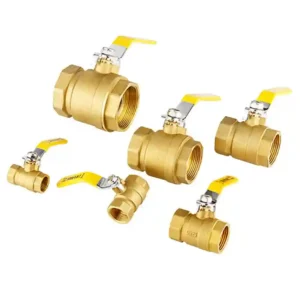
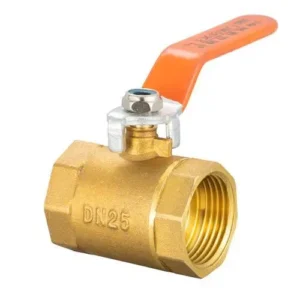
Ball valves come with many end connection types: internal thread, external thread, flange, butt weld, socket weld, clamp, quick connect, welded and so on. Different ball valve end connection types correspond to different installation space, disassembly methods and sealing requirements.
Threaded connections suit small bore and space-limited pipelines; flanged connections are for medium and large bore applications requiring regular inspection and disassembly; welded connections are used for buried lines, high-integrity pipelines or systems with zero leakage tolerance; clamp and quick-connect ends are preferred for food, pharmaceutical and frequently cleaned systems.
It is necessary to understand what is long pattern ball valve. A long pattern ball valve features longer structural length and larger end-to-end dimension. It is commonly flanged, compliant with API 6D, or used to replace long pattern gate valves in pipelines. The face-to-face dimension of long pattern ball valves is designed per standards or legacy pipeline dimensions for direct replacement without relocating adjacent pipes.
Short pattern ball valves have a more compact structure with lighter weight and smaller footprint. However, short pattern units cannot randomly replace long pattern ones. When pipelines are fixed, support spacing is finalized and end flanges are welded, mixing long pattern and short pattern valves will result in installation failure.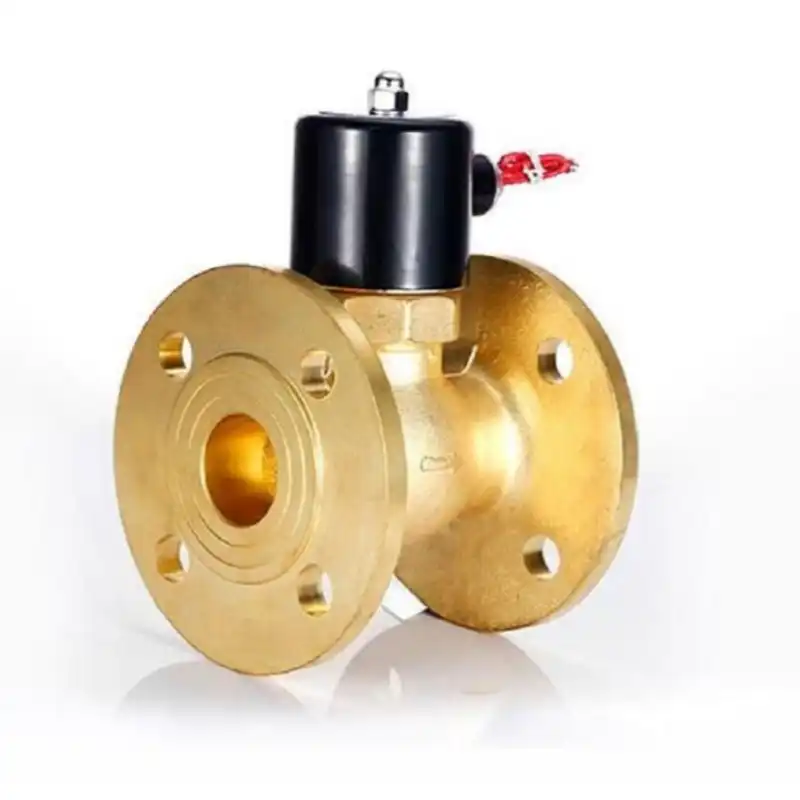
3. Bore selection: full port vs reduced port ball valve
Ball valves are categorized by ball bore passage into full port and reduced port types. full port vs reduced port ball valve is often overlooked during selection.
A full port ball valve has a ball bore inner diameter close to the pipe inner diameter, delivering low pressure drop. It is suitable for pigging, high flow, viscous media, plug-prone media and pipelines requiring low flow resistance. A reduced port ball valve has a ball bore smaller than the pipe inner diameter, with lower cost, lighter weight and generally lower operating torque, yet higher pressure drop.
If the medium carries particles, fibers or is prone to deposition, full port is preferred. For ordinary water lines with space constraints and budget sensitivity, reduced port ball valves are acceptable. Flow rate and allowable pressure drop must be calculated instead of only checking nominal size.
4. Flow capacity: what is the cv of a ball valve
what is the cv of a ball valve refers to the flow coefficient of the ball valve. Cv represents the US gallons per minute of 60°F water passing through the valve at a differential pressure of 1 psi across the valve. The higher the Cv value, the stronger the flow capacity of the valve.
A formula can be used for estimation: Q = Cv × √(ΔP / SG). Where Q = flow rate, ΔP = differential pressure across the valve, SG = specific gravity of the medium. Kv is widely used in metric systems, and the conversion between Kv and Cv is Kv ≈ 0.865 × Cv.
To calculate cv of ball valve, nominal size alone is insufficient. Full port and reduced port valves have a large Cv difference; three-way ball valves, V-port ball valves and standard ball valves feature distinct Cv curves. At partial opening, ball valve Cv drops rapidly, and throttling for long periods will erode valve seats. Ball valves are primarily designed for on/off service rather than precise flow regulation.
If process flow regulation is required, select V-port ball valves, eccentric ball valves or dedicated control valves, and refer to the manufacturer’s Cv curves instead of only comparing fully-opened Cv values.
5. Ball support design: floating vs trunnion ball valves
Based on ball support structure, ball valves are divided into floating ball and trunnion mounted ball valves. floating vs trunnion ball valves differ in whether medium pressure pushes the ball against the outlet seat.
Floating ball valves have simple construction, suited for small bore, medium and low pressure service. Medium pressure presses the ball against the outlet seal, and sealing performance improves with rising pressure. However, operating torque increases with differential pressure, and this torque challenge becomes more obvious with larger bore sizes.
In trunnion mounted ball valves, the ball is supported by top and bottom trunnions and bearings, so medium pressure does not directly push the ball. They apply to large bore, high pressure pipelines, low-torque requirements or frequently operated lines. Trunnion ball valves often adopt spring-loaded seats and can be designed with double piston effect or single piston effect for double block and bleed and pipeline isolation.
General selection guideline: floating ball for small bore and low pressure; trunnion mounted ball for large bore, high pressure, long-distance pipelines, frequent operation or actuator-driven applications.
6. Valve seat material: ball valve seat material selection
ball valve seat material selection directly determines temperature range, chemical compatibility and leakage class. Soft seats commonly use PTFE, RTFE, PEEK, PPL, nylon, etc. PTFE offers excellent chemical stability with limited maximum temperature; PEEK and PPL handle higher temperatures; metal-to-metal seats are used for high-temperature, abrasive and particle-laden media.
Soft-seated ball valves can easily achieve bubble-tight shutoff, with limited temperature and abrasion resistance. Metal-seated ball valves withstand high temperature and abrasion, yet their leakage class may be inferior to soft seats. Confirm compliance with service requirements before selection.
For media including steam, thermal oil, oxygen, chlorine, ammonia or strong corrosive chemicals, verify material compatibility, cleanliness, degreasing requirements and fire safety certification. Fire tests such as API 607 and API 6FA shall also be confirmed during selection.
7. Cavity design: what is a cavity filled ball valve
what is a cavity filled ball valve describes cavity filled ball valves. Standard ball valves retain a cavity between the ball and valve body; a portion of medium gets trapped inside this cavity during opening and closing cycles.
A cavity filled ball valve fills the cavity with PTFE, PEEK, metal or special fillers to reduce trapped volume. Its benefits include minimizing medium retention, preventing particle accumulation, reducing buildup of refrigerant or hazardous media inside the cavity, and supporting sanitary cleaning and high-purity media service.
Food, pharmaceutical, semiconductor, refrigeration and cryogenic applications often focus on cavity design. Nevertheless, cavity filling is not suitable for all working conditions. For applications with wide temperature fluctuation, check pressure relief design and material compatibility due to differing thermal expansion rates between fillers and valve body. Cavity filling and cavity relief holes are two separate concepts and cannot be interchanged.
8. Operation mode and actuator torque
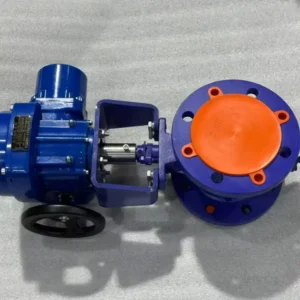
Manual ball valves fit infrequent operation and small bore applications. Electric and pneumatic actuators are used for remote control, interlock, frequent operation or large bore high-pressure valves.
Actuator selection requires ball valve torque calculation. Torque is affected by nominal size, differential pressure, seat material, temperature, lubrication status, medium and operation frequency. A safety factor must be reserved for electric actuators; for pneumatic actuators, confirm air supply pressure, action type and fail position.
When mounting actuators, check ISO 5211 mounting pad, stem size, keyway and output shaft form. Mismatched mounting pads prevent direct actuator installation and require extra brackets and couplings.
9. Testing, certification and documentation
Different projects require different certifications. Common standards include API 6D, API 608, API 598, API 607, API 6FA, ISO 5211, NACE MR0175, NSF/61, FDA, ATEX, etc.
Confirm the following before procurement: pressure test, sealing test, material certificates, material test reports, non-destructive testing, cleanliness, degreasing, fire certificates and third-party inspection requirements. Do not apply for supplementary documents after valve delivery to site.
10. Ball Valve Selection Checklist
- Medium name, concentration, particle content, flammability and toxicity
- Operating temperature, design temperature, ambient temperature
- Working pressure, design pressure, pressure class
- Pipe nominal size, flow rate, allowable pressure drop
- Full port or reduced port requirement
- Floating ball or trunnion mounted ball
- End connection: threaded, flanged, welded, clamp, etc.
- Structural length: long pattern, short pattern or standard face-to-face dimension
- Seat material: PTFE, RTFE, PEEK, PPL, metal, etc.
- Requirements for cavity filling, relief holes, fire safety and anti-static design
- Operation mode: manual, electric, pneumatic
- Certification, testing and documentation requirements
Conclusion
Ball valve selection needs integrated evaluation of working conditions, end connections, structure, flow rate, sealing and actuators. Long pattern ball valves solve installation dimension issues, Cv determines flow capacity, and cavity filling affects medium retention and cleanability. Confirm non-negotiable criteria first before comparing price and lead time to greatly reduce selection risks.
If you organize details including medium, temperature, pressure, flow rate, pipe size and connection standard, CHCV Valves can assist in verifying ball valve bore, Cv, end connection, face-to-face dimension, seat material and actuator torque to minimize rework on site.