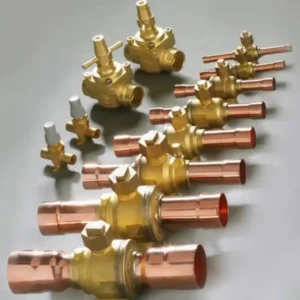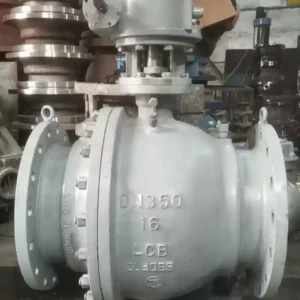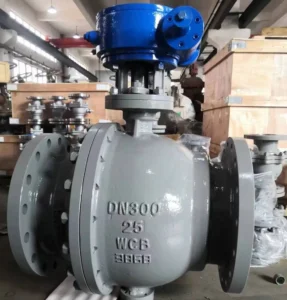

Ball valves are suitable for “opening” and “closing”, but not for gradually adjusting flow rate from 100% down to 30%. To judge whether a ball valve should be used, ask three questions first: Is quick shut-off required? Is low flow resistance needed? Is automation required? If all answers are “yes”, a ball valve is usually a good choice.
Distinguish first: isolation or throttling
A ball valve opens and closes by rotating a ball. Turn the handle 90°, and the valve changes from fully closed to fully open, or from fully open back to fully closed. This action is ideal for isolation, shut-off, diversion and venting.
If the process requires precise regulation of flow, pressure or temperature, a standard ball valve is not suitable. Under partially open conditions, the medium will erode the seat and ball, which may cause noise, vibration and wear of sealing surfaces. In such cases, consider globe valves, diaphragm valves, V-type ball valves or dedicated control valves.
Where are ball valves used: common installation locations
The question of where are ball valves used can be reviewed across residential, commercial and industrial applications.
For residential use, ball valves are commonly found on main water supply lines, after water meters, inlet and outlet of water heaters, kitchen sinks, toilets, washing machines, outdoor faucets and irrigation branches. In commercial buildings, they are used in heating and cooling water systems, fire protection pipelines, compressed air, natural gas and boiler bypasses. At industrial sites, they are applied in chemical, petrochemical, food & beverage, pharmaceutical, marine, oil & gas and power systems.
If the medium is natural gas, refer to ball valve for natural gas for selection. Verify gas certifications, anti-static structure, seat material, end connection threads and pressure class. Ordinary water service ball valves shall not be directly used for gas service unless explicitly marked suitable for gas.
For high-pressure cleaning equipment, high pressure ball valve for pressure washing requires checking rated pressure, burst safety, quick couplings and pressure relief path. Ball valves with insufficient pressure rating cannot be used for high-pressure water jetting even if the size matches.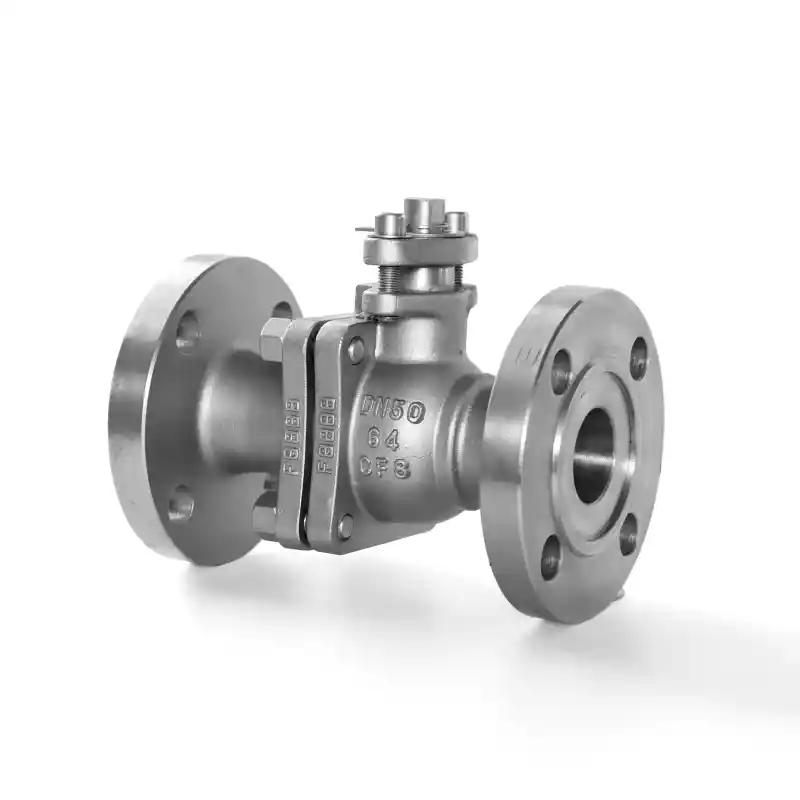
What is ball valve used for: what exactly does it do
What is ball valve used for? Simply put, it reliably shuts off or allows fluid flow. Specific applications include main line isolation, equipment maintenance isolation, bypass switching, drainage, venting, sampling and freeze protection venting and automatic control.
When flow path diversion is needed, 3 way ball valve for diverter applications is widely used in pool circulation, heating water systems, water treatment and dual filtration circuits. L-port bore is suitable for flow diversion, while T-port bore is for flow splitting or combining. Wrong bore selection will result in poor shut-off or flow path inconsistent with design.
When frequent disassembly for cleaning or seal replacement is required, true union ball valve is more convenient. Its union ends allow valve body removal without pipe cutting, suitable for water treatment, laboratory piping and equipment interfaces requiring maintenance.
Bore selection must also be clarified. The difference between full port ball valve vs reduced port ball valve lies in flow resistance and cost. A full port ball valve has an inner diameter close to the pipe size, low pressure drop, suitable for cleaning, drainage, viscous media and pigging applications. Reduced port ball valves are lower in cost and smaller in size, but have higher pressure drop, not recommended for pipelines requiring low pressure loss.
Why ball valve is used: reasons for selection
Why ball valve is used comes from its operational and sealing characteristics, not merely its popularity.
- Fast opening and closing. Quarter-turn operation, ideal for applications requiring rapid shut-off.
- Low flow resistance. A fully open full port ball valve behaves nearly like a straight pipe with low pressure drop, minimizing energy consumption of pumping systems.
- Multiple sealing options. Soft-seated ball valves deliver tight shut-off for water, gas, oil and general chemicals. Metal-seated ball valves are for high temperature, high pressure and particle-containing media, yet with different leakage levels and torque requirements.
- Easy automation. Ball valves generally feature an ISO 5211 mounting pad on top for fitting electric, pneumatic or hydraulic actuators. This is critical for remote control, interlock and unattended systems.
- Clear maintenance options. Two-piece, three-piece and all-welded ball valves have different maintenance approaches. Three-piece design allows removal of the middle body for seat and ball replacement; all-welded type is preferred for buried service and external leakage reduction.
When comparing isolation valves, ball valve vs gate valve for isolation is frequently discussed. Gate valves also have low pressure drop at full opening, yet long travel for operation. They tend to wear and jam under frequent operation. Ball valves have short travel and are better for fast, repeated line isolation.
Are ball valves better: comparison with common valve types
Are ball valves better? There is no universal answer; it depends on service duty.
Compared with gate valves: ball valves perform better for frequent operation and fast isolation. However, large-size ball valves come with higher cost, heavier weight and larger torque, requiring bigger actuators.
Compared with globe valves: ball valves have lower pressure drop at full opening. But globe valves are designed for flow regulation; ball valves are not for long-term throttling under partially open status.
Compared with butterfly valves: ball valves offer more reliable sealing and controllable operating torque in small-bore high-pressure services. Butterfly valves have advantages in cost, weight and space for large-bore low-pressure water systems.
Compared with plug valves: ball valves usually require lower operating torque and easier sealing surface maintenance. However, careful selection is still needed for media with solid particles, scaling tendency or requiring inline pigging.
Therefore, the strengths of ball valves focus on: fast quarter-turn operation, low flow resistance, tight shut-off, easy automation and wide material availability. Its limitations are also clear: poor capability for fine flow regulation, high cost for large sizes, and potential fouling in certain slurry services.
Key parameters for valve selection
Do not specify only nominal size. To select a ball valve, confirm at least: medium, temperature, pressure, flow rate, end connection, operation frequency, installation space, actuator requirement, fire safety or anti-static requirement.
Water systems: focus on lead-free brass, stainless steel, NSF certification, full port and drain port. Gas systems: check gas suitability, anti-static design, fire certification, thread standards and locking device. Steam systems: metal seat, high-temperature packing, condensate drain and thermal expansion. Food & pharmaceutical: 316L, tri-clamp connections, CIP/SIP and cavity cleanability. Oil & gas / chemical: API 6D, API 608, NACE, fire test and fugitive emission requirements.
When NOT to use ball valves
Do not use standard ball valves when precise flow regulation is required. For media with high solid particle content, easy crystallization or polymerization, standard ball valves may jam or suffer sealing surface scoring. Long-term throttling of high-temperature steam is also not suitable for ball valves to control flow. For these working conditions, consider diaphragm valves, knife gate valves, V-type ball valves, globe valves or dedicated control valves.
CHCV recommends confirming medium, pressure, temperature, end connection and actuator requirements first during ball valve selection, then decide between full port or reduced port, soft seat or metal seat, two-piece or three-piece construction. This approach helps reduce on-site leakage, jamming and misapplication better than quotation based only on nominal size.