
Introduction: Why Choosing the Right Electric Actuator Is Crucial
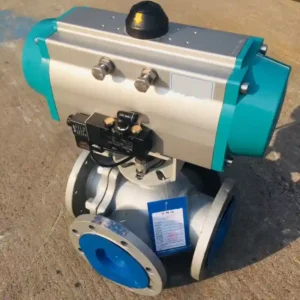
✅In industrial automation, motorized ball valves are widely used. However, what determines the performance and reliability of the entire valve system is not just the valve body itself, but the “heart” that drives it—the Motorized Ball Valve Actuator. An improper choice can lead to failure in normal opening/closing, insufficient torque, or even premature failure, resulting in production interruptions and safety risks.
✅To help you make the best decision, we will start from the basic working principle of motorized ball valves and dive into several key factors to consider during selection.
Understanding the Working Principle of Motorized Ball Valves (Motorized Ball Valve Working)
✅Before delving into selection details, it is essential to understand the basic principle. The motorized ball valve actuator uses a motor to convert electrical energy into mechanical energy, which is then reduced and torque‑amplified through a gear mechanism, ultimately driving the valve stem to rotate 90° to open, close, or modulate the ball valve.
✅This process may seem simple, but it involves multiple aspects such as torque variation, stroke control, and feedback signals. Understanding these Motorized Ball Valve Functions will help you communicate more effectively with technical staff and accurately describe your requirements.
Core Selection Factors: From Torque to Environment
Below are the most important considerations in selecting and installing motorized ball valves, based on our years of industry experience—this also serves as your Motorized Ball Valve Installation Guide:
-
Torque is the primary criterion
This is the most critical parameter. You need to calculate the maximum opening/closing torque required by the valve under full differential pressure, and apply a safety factor. We generally recommend that the rated output torque of the actuator be at least 1.2–1.3 times the valve’s required torque. The medium in the pipeline (e.g., high‑viscosity fluids or slurries containing particulates) will significantly increase the required torque. -
Power supply and control signals
You need to clarify the power supply types available on site—common options include AC 110V, AC 220V, DC 12V, and DC 24V. The control signal determines how you “command” the valve action; typically there are on‑off type (accepting open/close signals) and modulating type (accepting 4‑20mA or 0‑10V analog signals for precise position control). We have recently received many inquiries about the comparison between motorized actuator ball valves and solenoid valves (Actuated Ball Valve vs Solenoid), and we have extensive experience to share in this area as well. -
Operating environment and ingress protection rating
This is often overlooked but is crucial for actuator service life. If installed outdoors or in humid environments, you need actuators with a high ingress protection rating (e.g., IP67) or explosion‑proof certification (e.g., ATEX). High‑temperature, low‑temperature, or corrosive environments impose special requirements on actuator materials and sealing. During Testing Motorized Ball Valves, simulated environmental testing is an important step to ensure the product can adapt to field conditions.
Summary and Recommendations
📌In short, selecting a motorized ball valve actuator is not just about price or brand—it requires a systematic evaluation of your operating conditions. A correct choice is not merely a component; it is an investment in the long‑term stable operation of your entire system.
📌If you have any questions during the selection process, or if you would like a tailored solution for your specific working conditions, please feel free to contact the CHCV technical team—we are here to provide professional support.