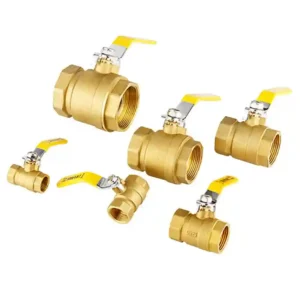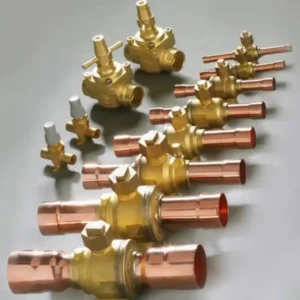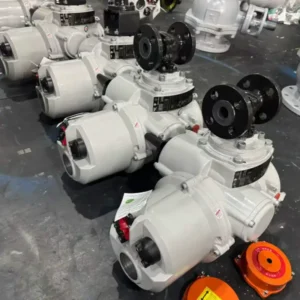

The types of ball valves in plumbing directly affect the overall project cost, efficiency, and long-term operational stability.
For procurement managers, understanding the structural differences and application scenarios of different ball valve types is the foundation for making correct purchasing decisions. From a structural design perspective, the most common ball valves are mainly divided into three types.
1. Floating Ball Valve
This is the most widely used structure. Its core feature is that the ball is held by two seats, but when the valve is in the closed position, the ball is pushed by the medium pressure against the downstream seat to form a seal. This design offers the advantages of simple structure, relatively low cost, and reliable sealing performance. Therefore, floating ball valve applications are mainly concentrated in conditions with not‑too‑high pressure and not‑too‑large diameters, such as water treatment, HVAC systems, and general on‑off control of industrial gases and liquids.
2. Trunnion‑Mounted Ball Valve
Unlike the floating type, the trunnion‑mounted ball valve has its ball fixed by support shafts at both the top and bottom. When the valve is closed, the medium pressure cannot push the ball; instead, it acts on the upstream seat, forcing it against the ball to form a seal.
This design results in lower operating torque and the ability to withstand higher pressures. Therefore, in demanding applications such as long‑distance pipelines, natural gas pipelines, and high‑pressure petrochemical services with large diameters and high pressures, the choice between trunnion mounted ball valve vs floating typically favors the trunnion‑mounted design to ensure long‑term reliability and safety.
3. V‑Port Ball Valve
This is a specially designed ball valve with a V‑shaped notch cut into the ball. As the valve rotates, the flow area formed between the V‑port and the seat changes, achieving an approximately equal‑percentage flow control characteristic. Consequently, V‑port ball valves are mainly used in applications requiring flow regulation, and they perform particularly well in controlling slurries containing fibers, solid particles, or viscous media. If your process requires precise flow or pressure control, then V port ball valve for throttling is an option worth considering.
How to select the right ball valve for your project?
As a buyer, when screening suppliers and preparing procurement lists, in addition to the structural types mentioned above, you should also pay attention to valve material, pressure rating, connection methods, and whether additional requirements such as fire‑safe design are met.
Choosing the correct types of ball valves in plumbing not only ensures system safety but also effectively controls total lifecycle costs.