
1‑Piece vs 2‑Piece Ball Valve: Structural Differences & Selection Guide
When selecting a ball valve, it is critical to understand the differences between various body constructions. Among the most common distinctions are 1‑piece ball valve and 2‑piece ball valve. Though they may look similar, they show notable differences in maintenance, cost and applicable scenarios. This article gives you a detailed breakdown.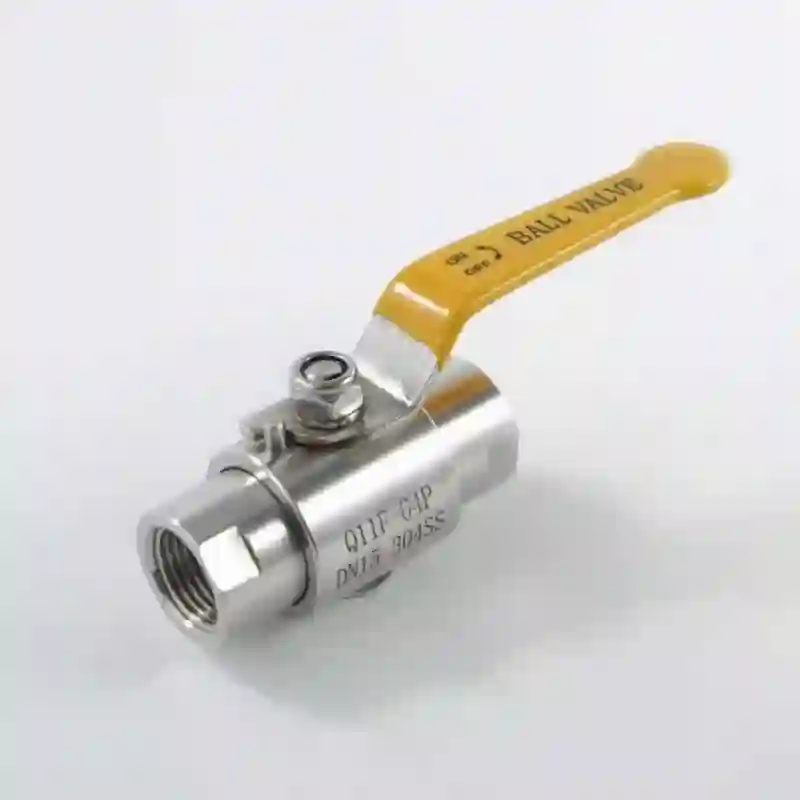
What is a 1 piece ball valve?
A 1‑piece ball valve, also known as a single‑piece ball valve, features a valve body machined from one single cast or forged component. Its internal parts — ball, seats and stem — are all enclosed inside one non‑disassemblable unified valve body.
Since the body cannot be opened, a 1pc ball valve is normally replaced as a whole unit rather than repaired on‑site. This construction delivers a more compact footprint and generally comes with better cost‑effectiveness.
Its body design makes it a non serviceable ball valve. Once seals wear out or the ball gets damaged, on‑site repair is not feasible. For this reason, the 1pc ball valve is widely used in cost‑sensitive applications with mild working conditions, such as low‑pressure water, oil and air systems.
Its advantages include light weight, fewer leakage paths, and reduced risk of external leakage due to the absence of body threaded joints.
What is a 2 piece ball valve?
A 2‑piece ball valve consists of two body sections: typically a main body plus a secondary end cap secured by threads or bolts. With this design, internal components (ball and seats) can be accessed for cleaning, inspection or seal replacement by removing the secondary section, without taking the entire valve out of the pipeline.
Therefore, the 2pc ball valve is the preferred option for many industrial applications. Its service‑friendly design makes it popular in systems requiring regular inspection and maintenance. For higher reliability and longer service life, users may opt for a stainless steel ball valve in 2‑piece configuration to handle more demanding service conditions.
Key Comparison: 1‑Piece vs 2‑Piece Ball Valve
| Characteristics | 1‑piece ball valve | 2‑piece ball valve |
|---|---|---|
| Maintainability | Non serviceable ball valve; cannot be repaired | Serviceable; body can be opened for maintenance |
| Cost | Lower manufacturing cost | Higher manufacturing cost due to complex construction |
| Pressure Rating | Common for low‑pressure service | Suitable for higher pressure ratings, e.g. 2pc ball valve 1000wog |
| Application Scenarios | Civil service, instrumentation, light‑duty working conditions | Industrial piping, chemical processing, systems requiring periodic maintenance |
| Leakage Paths | Few (no body joint seams) | One additional body joint, creating a potential leakage point |
| Body Construction | Distinct differences between 2 piece ball valve vs 1 piece | Distinct differences between 2 piece ball valve vs 1 piece |
How to Make Your Selection
Your choice of construction depends on your actual requirements. For projects with limited budgets and non‑critical low‑pressure piping systems, a 1pc ball valve will meet operational requirements.
If the valve serves critical processes, operates under high‑pressure or high‑temperature conditions, and you want to extend equipment service life and cut long‑term replacement costs, go for a 2pc ball valve.
For thorough cleaning and stringent sealing performance, a 3 piece ball valve is another alternative, which will be covered in separate content.
In short, when you evaluate 2 piece ball valve vs 1 piece, your core decision point is whether you prioritize upfront purchase cost, or post‑sales service convenience and valve repairability.