
Why are they called ball valves?
A ball valve gets its name from its internal closure member: a sphere with a cylindrical through bore. Rotating the handle or actuator by 90 degrees aligns the bore of the sphere with the pipeline to permit media flow, or turns it perpendicular to the pipeline to shut off flow.
In international valve industry journals and standard discussions, ball valves are generally classified as quarter-turn valves. Standards including API 608, API 6D, ASME B16.34 and ISO 5211 describe ball valves in terms of pressure boundary, end connection, actuation interface, inspection and materials. Understanding this background explains why the term “ball valve” has remained established for decades in industrial, water treatment and oil & gas sectors.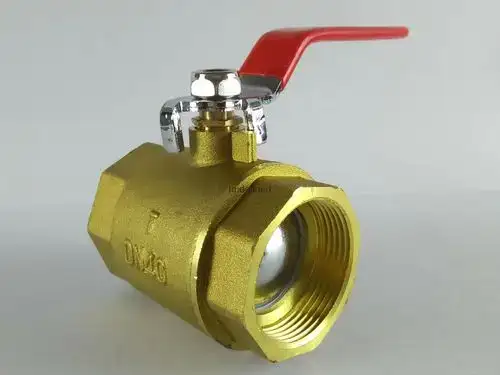
Origin of the name: the sphere is the core of the naming
Early ball valves share origins with plug valves. Plug valves use a tapered plug to control the flow path, while ball valves replace the tapered plug with a sphere to achieve opening and closing by rotating the sphere. A bore runs through the centre of the sphere. The valve opens when the bore lines up with the pipeline and closes when the bore is offset from the pipeline. This sphere is normally clamped by valve seats, with a stem connecting to the sphere from the top. Rotating the handle drives the sphere to turn.
Therefore, the “ball” in a ball valve is neither decoration nor the outer valve body, but the critical component responsible for sealing and switching. Industry terms such as floating ball, trunnion mounted ball, full port and reduced port all revolve around this sphere and its support design.
ball valve construction and working: how the sphere forms the naming core
Structurally, a ball valve mainly consists of valve body, ball, valve seat, stem, seals, handle or actuator. Its operating principle is straightforward: the stem drives the ball to rotate 90 degrees. In the open position, the through bore of the ball aligns with the centreline of the pipeline; in the closed position, the solid surface of the ball blocks the flow passage, and the valve seat provides contact sealing.
This is why ball valves are commonly used for quick shut-off and isolation. Compared with gate valves and globe valves, ball valves feature low flow resistance and distinct switching action, making them suitable for pipelines requiring fast opening and closing.
When international valve media discuss isolation valves, they often compare ball valves with butterfly valves and gate valves, focusing on pressure drop, sealing class, operating torque and service life.
ball valve inside parts: locating the “ball” upon disassembly
When disassembling a typical ball valve, these internal components can be seen:
- Ball: rotating component with a through bore, the origin of the name.
- Valve seat: commonly PTFE, RPTFE, TFM, PEEK or metal, which determines sealing performance and temperature range.
- Stem: connects the handle/actuator to the ball and transmits torque.
- Valve body: 1-piece, 2-piece or 3-piece design, withstands pressure and connects to piping.
- Gaskets and packing: prevent external leakage along the stem or body joints.
- Handle or actuation device: manual lever, gearbox, pneumatic, electric and other types.
These components together explain why ball valves can operate as manual switches or automated control valves. For export and engineering projects, the material and surface treatment of internal parts are often more critical than external appearance.
ball valve ball material: ball material defines performance limits
Common ball materials include brass, bronze, stainless steel 304/316, carbon steel, duplex steel and ceramic. Water, gas, oil, steam and chemical media impose different material requirements.
For example, drinking water and gas projects focus on low-lead, anti-static and fire-safe performance; chemical and offshore platforms require corrosion resistance, erosion resistance and low fugitive emissions.
Valve seat material is equally important. PTFE grades suit ambient to moderate temperatures, while PEEK and metal seats are for higher temperatures or more aggressive media.
ball valve mechanism definition: quarter-turn opening and closing logic
Mechanically defined, a ball valve controls flow on/off by rotating its ball. It does not rely on the lifting of a valve disc, nor does it modify flow area via long stroke like a globe valve. Its characteristic operation is 90-degree rotation, hence the name quarter-turn valve.
Open and closed positions can usually be judged by handle orientation: a handle parallel to the pipeline generally means open, and perpendicular means closed. However, different manufacturers and actuation configurations may have marking variations. Actual status shall be confirmed by body arrows, limit switches and nameplates. This simple mechanism makes ball valves ideal for panel mounting, actuator linkage and remote control.
How to identify a ball valve?
A ball valve can be identified by several features:
- Operation: normally fitted with handle or actuator, rotating approximately 90 degrees.
- Valve body structure: a ball cavity in the middle, with threaded, flanged, welded, clamped or quick-connect ends.
- Nameplate marking: may indicate WOG, CWP, PN, Class, size and material.
- Flow path features: full port ball valves have a large through bore, while reduced port ball valves have a smaller bore.
Differences from gate valves: ball valves usually have shorter body length and are better for fast switching; gate valves mostly operate via multi-turn lifting motion. Differences from globe valves: ball valves are not suitable for precise throttling, whereas globe valves are preferred for regulation.
If you see a stem at the top connected to a straight lever or butterfly handle, with a rotatable ball housed in the middle of the valve body, it can basically be identified as a ball valve.
What does a ball valve look like?
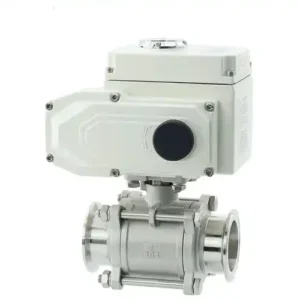
A ball valve does not necessarily look like a sphere. It generally consists of a valve body section, end connections, a top stem and a handle. Brass ball valves are usually golden or nickel-plated silver; stainless steel ball valves have bright metallic silver surfaces; carbon steel ball valves may be painted.
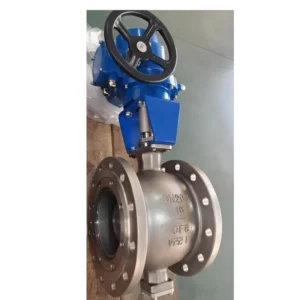
3-piece ball valves often show bolted joints in the middle; flanged ball valves have flange discs at both ends; welded ball valves have no threads on the ends.
In cross-section view, the most distinctive feature is the internal ball. Full port ball valves have a large bore through the ball, resulting in low pressure drop for media passage; reduced port ball valves have a smaller bore, lower cost but limited flow capacity.
Visual features also include flow arrows, open/close markings, limit stops and anti-static devices.
What is the purpose of a ball valve?
The primary function of a ball valve is fast isolation, opening and closing of media in pipelines. It is widely applied in water treatment, HVAC, oil & gas, chemical, marine, food & beverage, irrigation and compressed air systems.
Its advantages are low flow resistance, direct operation, reliable sealing and easy automation.
Nevertheless, ball valves are generally not designed for fine flow regulation. If used for throttling, the ball edge may suffer erosion and sealing surfaces can be damaged.
For flow regulation, globe valves, control valves or V-port ball valves are more suitable options. For special media such as steam, oxygen, gas and ammonia, ball valves with corresponding materials and certifications must be selected.
ball valve vs ball check valve: both contain “ball” but differ in function
Both ball valves and ball check valves incorporate a ball component, yet their functions differ. A ball valve actively rotates the ball via handle or actuator for isolation and on/off service. A ball check valve relies on media pressure differential to push the ball, automatically permitting one-way flow and preventing backflow.
A ball valve can close and remain closed; a check valve cannot perform active shut-off like a ball valve, and only prevents reverse flow.
Confusing the two during valve selection may lead to failure of system isolation or backflow protection. Therefore, when seeing the term “ball”, confirm whether it refers to a ball valve or ball check valve.
How to select a ball valve?
Follow this sequence for ball valve selection:
- Media: water, gas, oil, steam, chemicals, food, oxygen, gas, etc.
- Temperature and pressure: determine materials for valve body, ball, seat and seals.
- Size and connection: DN, inch, NPT, BSP, flange, weld, clamp, quick connection.
- Port type: full port for low pressure drop; reduced port for cost-sensitive applications.
- Operation: manual, pneumatic, electric, gear operated, spring return.
- Standards and certifications: API 6D, API 608, ASME B16.34, ISO 5211, fire safe, anti-static, low fugitive emissions, etc.
- Environment and maintenance: indoor/outdoor, buried service, corrosion, vibration, space constraints.
In international projects, valve selection is not merely based on price. Pressure-temperature rating, leakage class, actuation interface and traceable documentation must also be considered.
For ball valve selection, OEM/ODM and export support, CHCV Valve normally confirms media, pressure, temperature, connection and actuation method first, then provides recommendations on ball, seat and valve body materials to help users avoid improper selection and reduce later maintenance costs.
Conclusion
A ball valve is named for its core closure member: a sphere with a through bore. Rotating the ball by 90 degrees changes the alignment between the flow bore and pipeline to achieve opening and closing. Understanding ball valve construction and working, as well as the difference between ball valve vs ball check valve, enables accurate identification, selection and application of ball valves.