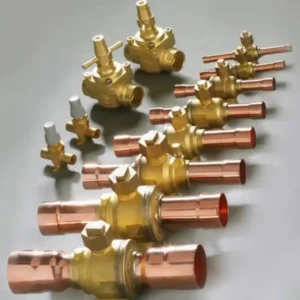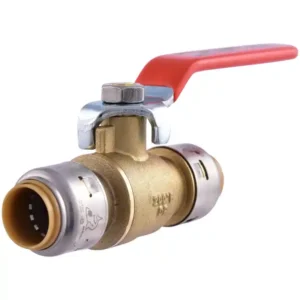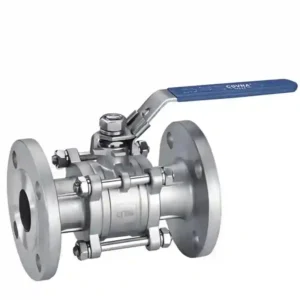

What are the parts of a ball valve?
According to common ball valve body types, the mainstream market is divided into 1pc, 2pc, and 3pc valve bodies. There are obvious differences in the disassembly, assembly, and installation requirements of ball valves with different ball valve body types.
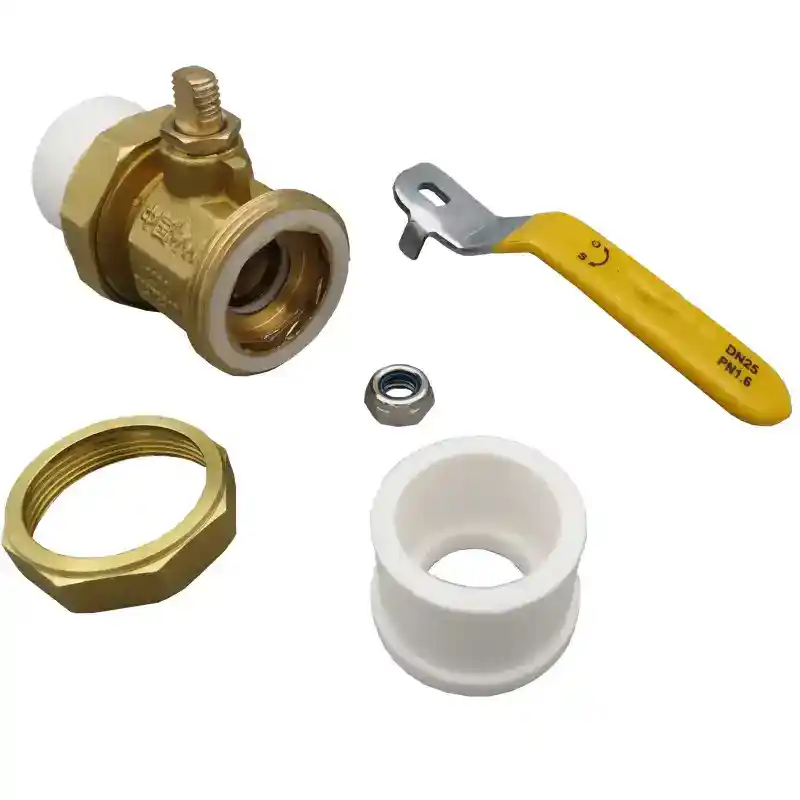
The main ball valve components include:
-
Valve body (ball valve body): the main housing that contains the ball and seat, divided into 1pc, 2pc, and 3pc structures, which determines the valve disassembly and maintenance method;
-
Ball (ball): the opening and closing core component with a through bore; the through bore is divided into full port and reduced bore;
-
Seat seal (ball valve seat): a sealing component made of materials such as PTFE, closely fitted against the ball to achieve medium sealing, and is the key to preventing internal leakage;
-
Stem (stem): connects the handle and the ball, transmitting torque to drive the ball to rotate;
-
Operating handle / actuator interface: manual handle or ISO5211 actuator mounting platform, used to turn the valve;
-
End connections at both ends: threaded, flanged, butt-welded, clamped, etc., used to connect to the pipeline.
Industry tip: Before purchasing and installation, confirm the valve body structure ball valve body types. A 3pc ball valve can complete internal sealing component maintenance without removing the pipeline; a 1pc ball valve cannot have its valve body disassembled, and in case of failure, the entire valve must be replaced.
Ball valve installation steps
ball valve installation guidelines are an important reference for on-site construction. Following standardized installation can avoid valve sticking, external leakage, and pressure-bearing failure, and extend ball valve service life.
Pre-installation preparation
-
Verify valve parameters: confirm that the ball valve nominal pressure and medium temperature are suitable for the working conditions; confirm that the connection type (threaded / flanged / welded) matches the pipeline;
-
Clean the pipeline: thoroughly purge welding slag, iron filings, and impurities inside the pipeline. If impurities enter the valve cavity, they will scratch the ball and ball valve seat, causing sealing failure;
-
Inspect the valve body: confirm that the ball valve has no transportation impact damage. Manually turn the handle; the ball should rotate smoothly without sticking;
-
Confirm flow direction: the vast majority of ball valves are bidirectional and have no mandatory flow direction marking; however, for ball valves with drain ports and DBB double block and bleed function, installation must strictly follow the flow direction marked on the valve body.
Formal installation operations
-
Valve positioning: for manual ball valves, reserve operating space for the handle position; it must not be blocked by walls or supports; if pneumatic / electric actuators are to be installed later, choose a ball valve with an iso 5211 ball valve platform to ensure actuator installation space;
-
Threaded ball valve: wrap thread seal tape around the threads; do not squeeze the seal tape into the valve cavity; do not use a pipe wrench to forcefully clamp the ball valve body. Clamp the pipe joint position instead to prevent the valve body from cracking;
-
Flanged ball valve: place the flange gasket flat; tighten bolts diagonally, evenly, and in stages; do not lock bolts on one side in one go, to avoid flange stress deformation causing gasket leakage;
-
Welded ball valve: provide cooling protection during welding to protect the internal ball valve seat sealing component; high temperature will burn out PTFE seals and cause permanent leakage;
-
Pipeline fixing: a ball valve must not serve as a pipeline support point. Additional supports are required for the pipeline to prevent the valve body from bearing pipeline stress.
Post-installation visual inspection
After installation, visually inspect all connection positions to confirm that there is no obvious misalignment, gasket extrusion, or external force distortion of the valve body; pipe supports are installed in place, and the valve handle can rotate without obstruction.
Operation after installation: ball valve closing rotation turns
How many turns to close a ball valve? is a high-frequency question during the commissioning stage. Ball valves are 90° quarter-turn valves, not multi-turn valves like gate valves and globe valves.
-
Standard operation of ordinary manual ball valves: from the fully open position, the manual handle only needs 1/4 turn (90° rotation) to fully close the ball valve; similarly, reverse 1/4 turn achieves full open. There is no multi-turn tighten-until-dead operation. Do not use excessive force to turn the handle; excessive torque will crush the ball valve seat seal and may even twist off the stem.
-
Large-diameter ball valves operated with gearboxes: large-size flanged ball valves are equipped with gear reduction mechanisms, and the handle needs to be turned several turns to complete 90° ball rotation. In this case, refer to the gearbox nameplate instructions and observe the scale markings to determine the fully open / fully closed positions; do not subjectively judge by the number of turns.
-
Ball valves with electric / pneumatic actuators: do not rely on manually counting turns; use the position fed back by the actuator limit switches and the valve body position indicator as the standard.
Post-installation testing and commissioning
-
Manually open and close the ball valve repeatedly 2–3 times to confirm that the ball rotates smoothly, without jamming or abnormal noise;
-
Conduct pipeline pressure testing: perform pressure tests with the valve in both fully open and fully closed states;
-
Inspection during pressure testing: there is no external leakage at valve connection positions; when the valve is closed, there is no medium leakage at the downstream end. If internal leakage occurs, check whether impurities have damaged the ball valve seat or whether the installation torque is improper.