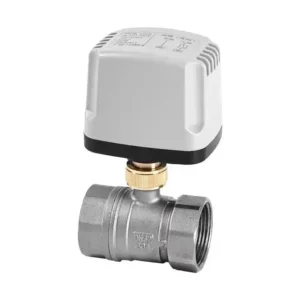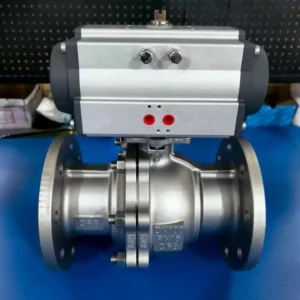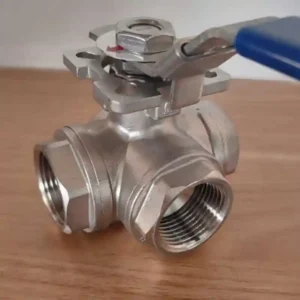

In the field of piping and fluid control, ball valves are widely preferred for their quick operation and reliable sealing. A frequently‑asked question is: What are the four types of ball valves?
Classified by body structure and assembly method, there are four common basic types: one‑piece (integral) ball valves, two‑piece (split‑body) ball valves, three‑piece ball valves, and side entry ball valves.
Understanding their differences helps select the appropriate valve for different working conditions.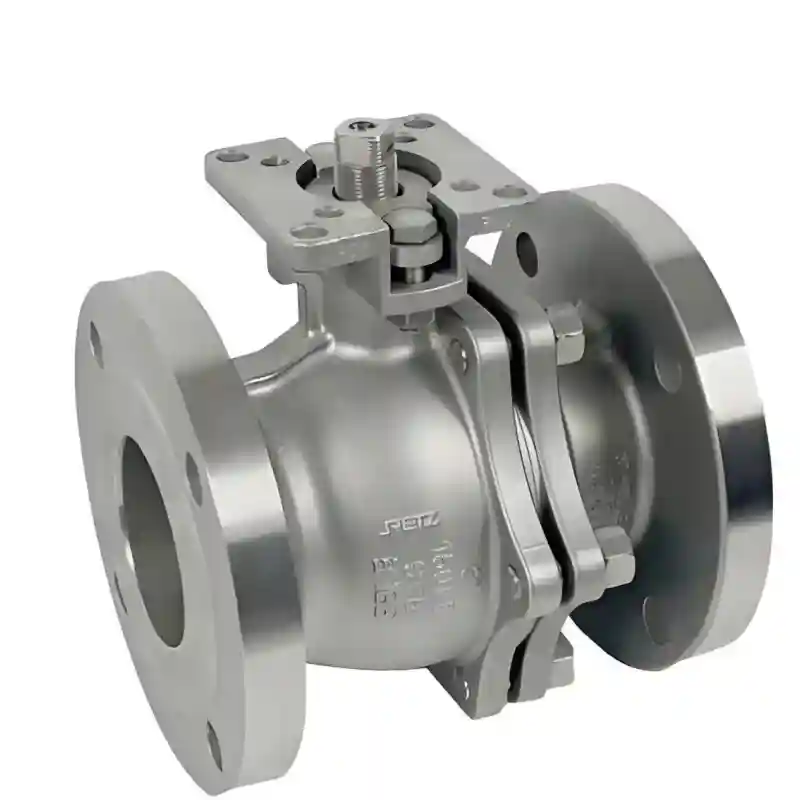
1. One‑piece ball valve
The body of a one‑piece ball valve is a single cast or forged component. The ball and seats are inserted through threaded or welded end connections. Featuring the simplest structure with fewer parts, it delivers low cost and few potential leakage points.
Nevertheless, since the ball is fully enclosed inside the body, on‑site repair is difficult. It is generally applied to small‑bore sizes (≤DN50), medium‑to‑low‑pressure services with infrequent operation, such as domestic water supply and shut‑off for pneumatic branch lines. It excels in cost‑effectiveness but is less suitable for applications requiring regular maintenance or large‑diameter piping.
2. Two‑piece ball valve
A two‑piece ball valve consists of a main body and a secondary body, normally joined by threads or bolts. The ball and seats can be installed from the secondary‑body end.
This structure balances dismountability and sealing performance, facilitating replacement of seats and balls with lower maintenance costs compared with one‑piece designs. As the most widely‑used type in industrial piping, two‑piece ball valves suit liquid and gas media within DN15~DN200 and pressure classes from Class 150 to Class 600, e.g., water treatment, light chemical processes, and compressed‑air systems.
It requires high assembly precision and can be supplied as either a flanged ball valve or threaded ball valve according to requirements.
3. 3 piece ball valve
A 3 piece ball valve is bolted together from three sections: left body, central body (housing the ball), and right body. Its key advantage is that the central section can be removed independently, enabling replacement of the ball, seats and seals without removing the complete pipeline section.
Three‑piece construction is especially suitable for services requiring frequent cleaning or maintenance, such as food & beverage, pharmaceutical, and fine‑chemical industries. Both metal‑seated and soft‑seated configurations are available, supporting high temperatures (over 300 °C) and high pressures (Class 900 and above).
The design readily accommodates a trunnion mounted ball valve construction for large‑bore, high‑pressure pipelines.
4. Side entry ball valve
A side entry ball valve has a monolithic body; the ball is inserted from the side of the body (usually via a top flange), with the stem arranged at an angle or perpendicular to the ball.
This configuration retains the high mechanical strength and low leakage rate of a one‑piece body, while permitting inspection or ball replacement without pipeline disassembly.
Side entry ball valves are commonly deployed in high‑pressure, high‑temperature, or particle‑laden‑media services including oil‑gas gathering & transportation, refinery units, and steam systems.
Distinct from top‑entry designs, side‑entry types offer easier on‑line maintenance and superior body rigidity, making them fit for large‑size pipelines ranging DN50~DN600.
Summary
Ball‑valve selection should not be based solely on price or general‑purpose characteristics. The one‑piece ball valve serves low‑cost, light‑duty applications; the two‑piece ball valve is the workhorse for industrial piping; the 3 piece ball valve offers easy maintenance for hygienic, high‑temperature and high‑pressure conditions; and the side entry ball valve combines monolithic‑body rigidity with convenient on‑line servicing. Strictly speaking, this type should not be included in answers to What are the four types of ball valves.
When selecting ball valves, match the correct structural variant against pressure class, media properties and maintenance frequency to guarantee long‑term stable system operation.