
Stuck Brass Ball Valve Troubleshooting & Repair
When we encounter a stuck brass ball valve, the symptoms include: the handle cannot turn; the handle turns but the ball does not rotate; water still passes through after closure; dripping occurs at the stem, or dry squeaking noises are produced during rotation.
Brass bodies are softer than stainless steel. When binding occurs, do not force-turn the valve with a pipe wrench and extension bar, otherwise the stem may twist off, the valve body may crack, or the ball sealing surface may be scratched.
How to Judge a Stuck Brass Ball Valve
You can identify the fault from the following symptoms:
- Handle will not turn at all: The handle stays fixed in one position and does not move under light force. Commonly caused by long-term inactivity, limescale buildup, over-tight packing or freezing.
- Handle turns, but the valve does not switch: The handle rotates 90°, yet fluid still flows, or leakage persists after closure. Possible causes include worn connection between ball and stem, rounded handle square drive, or broken stem.
- Brass ball valve hard to turn: The handle can rotate but with heavy resistance accompanied by friction noise. This indicates deposits, corrosion or insufficient lubrication on the stem, O-rings, packing or ball surface.
- Flow remains after closure: The valve appears closed, but water or gas still passes downstream. It may result from scratched ball surface, deformed seats, aged seals, or pipe debris trapped between the ball and seat.
- Stem leakage: If there is a brass ball valve leaking from handle, it is usually caused by worn stem O-ring, packing gland or stem surface. Do not merely tighten the gland nut; over-tightening will make the handle harder to turn.
- Abnormal noise or vibration: Whistling or shaking while fluid flows, which may be caused by misaligned ball or deformed seat leading to irregular flow path.
Common Causes: Why is the Brass Ball Valve Hard to Turn?
Sticking of brass ball valves generally comes from three aspects: medium, installation and operation.
- Limescale and mineral deposits: In hard water areas, calcium carbonate accumulates around the ball, seats and stem.
- Corrosion and dezincification: Brass may suffer dezincification under poor water quality, resulting in rough surfaces and increased rotation resistance of stem and ball.
- Pipe debris: Weld slag, sand particles, PTFE tape fragments and rust enter the valve cavity and get stuck between ball and seat.
- Swollen or aged seals: O-rings and PTFE seats may swell or harden after contact with oil, solvents, ammonia, chlorine or high-temperature media.
- Loss of grease: The stem and ball surface lose lubrication after long periods without operation.
- Freezing: Water trapped inside the valve cavity freezes and expands, locking the ball.
- Bent stem or scratched ball: Caused by installation stress, thermal cycling or forced operation.
- Over-tight packing gland: Over-tightened to stop leakage, resulting in stem seizure.
- Wrong medium application: Gas, potable water, compressed air and steam have different requirements for lubricants and sealing materials.
Repair Focus: How to Fix a Stuck Ball Valve
The goal of repair is not simply to “make it turn”, but to restore sealing and operating performance. Follow the steps below in sequence.
- Isolate, depressurize and drain first Shut off the upstream valve, open the downstream drain point and confirm no pressure remains in the pipeline. For gas service, work must be handled by certified personnel; soap bubble test alone is insufficient. For hot water service, cool down the system first to avoid scalding. Take photos to record handle position, body arrow and pipe connection configuration.
- External descaling and handle removal If white limescale appears on the valve body exterior, apply citric acid solution or white vinegar for wet soaking, then clean with a nylon brush. Do not use strong acid such as hydrochloric acid, nor scrub brass aggressively with steel brushes. To remove the handle, take off the handle nut first. If the handle seizes onto the stem, penetrating oil may be applied. Avoid contamination for potable water systems, and ordinary grease is prohibited for gas systems. Tap the side of the handle lightly with a wooden mallet; never strike the top of the stem directly. If the handle square drive has rounded out, replace the handle or the whole valve.
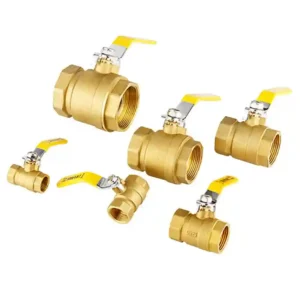
- Can you disassemble brass ball valve? Check construction before disassembly Disassembly is possible, but construction type must be confirmed first:
- Two-piece brass ball valve: Normally one end can be unscrewed. When clamping the body in a vice, use wooden padding to prevent brass damage.
- Three-piece brass ball valve: Remove the middle bolts, record bolt positions and seat orientation.
- One-piece brass ball valve: Field disassembly is generally not recommended, as seats and stem assemblies are hard to remove without damage.
After disassembly, inspect the ball, seats, O-rings, stem and body threads. If the ball surface has deep scratches, elliptical wear or pits, repair has little value. Replace the repair kit or the whole valve if seats are hardened, cracked or swollen. Repair kits for brass ball valves may not be readily available. Replace the valve directly if there is body cracking, bent stem or damaged threads for safety.
- Cleaning, inspection and replacement evaluation Clean components with warm water and neutral detergent. Limescale can be soaked in citric acid. Do not sand the ball sealing surface; once roundness is damaged, leakage will persist after closure. Keep seats and O-rings away from strong solvents. Check whether the stem is straight. Roll the stem on flat glass; replace it if bent. Inspect the valve cavity for corrosion pits. If weld slag or sand is found inside the valve, a strainer should be installed upstream.
- Lubrication and reassembly: Note brass ball valve water flow direction Before reassembly, apply medium-compatible lubricant. Use NSF-certified silicone grease for potable water systems; special gas valve grease or dry lubricant for gas service; ordinary grease is forbidden for oxygen service. Apply only a thin layer of lubricant to stem O-rings, seats and ball contact surfaces. Do not coat the full flow path. Observe brass ball valve water flow direction during assembly. Most manual brass ball valves are bi-directional, but install per the body arrow if marked. Handle parallel to the pipe usually means open, perpendicular means closed. For units with drain ports, check-stop function or three-way design, follow manufacturer markings. Tighten body bolts diagonally and incrementally; do not fully torque in one pass. Tighten the packing gland only enough to stop leakage while maintaining smooth handle operation. Over-tightening will make future operation difficult.
- Testing: If brass ball valve leaking from handle After reassembly, manually open and close the valve 5 to 10 times to confirm no binding. Then apply low-pressure water or air, and check body joints, stem and threads with paper towels. Use soap solution for gas leak testing; open flame is prohibited. If brass ball valve leaking from handle, determine whether the leak originates from stem O-ring, packing or worn stem surface. Minor leakage can be fixed by readjusting the gland. Replace stem seals or the full valve if leakage continues or stem has grooves. If fluid still passes downstream after closure, ball or seat damage may be present, requiring seal component replacement.
Prevention: Prevent Brass Ball Valves from Seizing
- Periodic operation: Fully open and close every 3 to 6 months to prevent long-term adhesion between ball and seat.
- Install strainer: Fit a Y-strainer or pre-filter upstream of the valve to reduce weld slag, sand and rust entering the valve cavity.
- Hard water treatment: Use citric acid for maintenance periodically in hard water areas, but avoid frequent valve disassembly.
- Proper installation: Adequate pipe support to prevent the valve body from bearing pipe stress. Remove seals during welding, or wrap the body with wet cloth for cooling.
- Appropriate sealing materials: Do not overwind PTFE tape or thread sealant so that excess material squeezes into the valve cavity.
- Winter freeze protection: Drain trapped water for outdoor or freeze-prone locations, or select freeze-resistant valve design.
- Correct valve selection: Choose lead free brass ball valve or DZR brass ball valve for potable water; gas service must use dedicated gas ball valves.
- Avoid long-term throttling: Ball valves are designed for full open / full close service. Long-term partial opening will erode seats and increase binding and leakage risks.
- Do not extend handle: Investigate the root cause when resistance occurs; do not force operation with extension bars.